
The fountain of youth is simply having a purpose.
A man with nothing more to do is already dead.
The fountain of youth is simply having a purpose.
A man with nothing more to do is already dead.
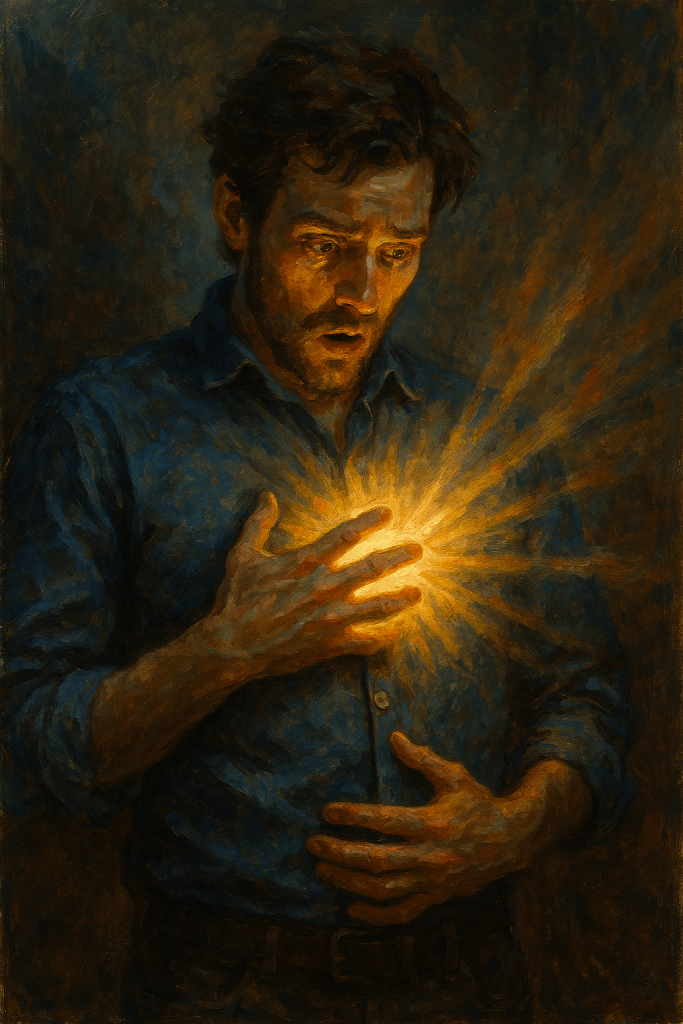
The fact that you can recognize wisdom in others, means that those same insights already exist within you. If they didn’t, you would have no reference to recognize it in others. All the realizations that we find by exploring the world can also be found by exploring within.
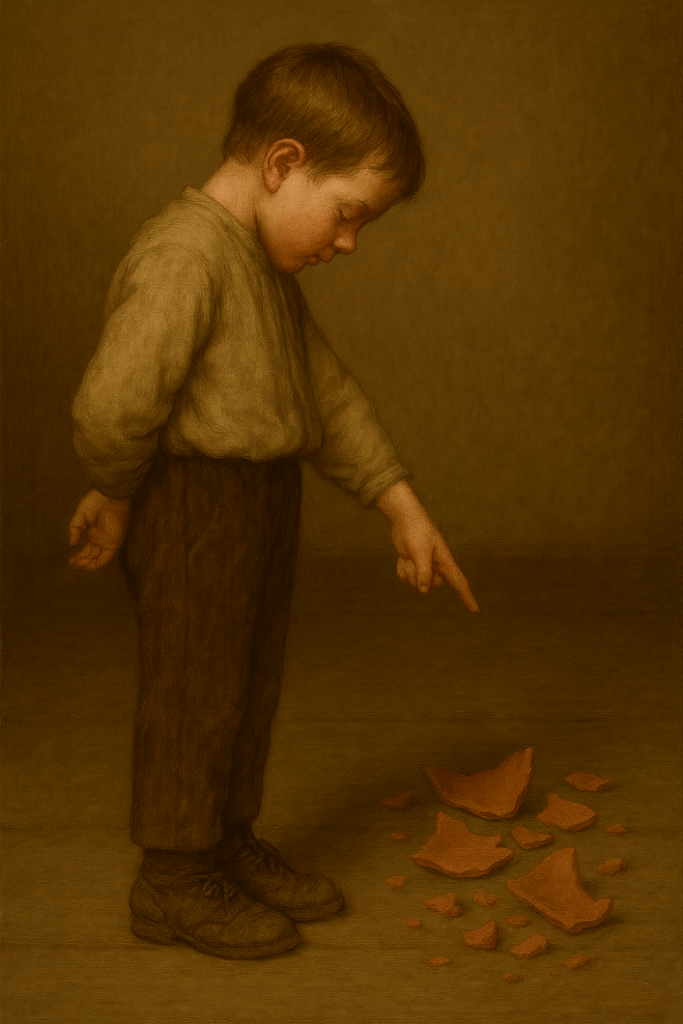
True connection with another cannot come from surface-level interactions. To have a bosom friend requires knowing one another at the level of the soul. Real connection like that comes only through vulnerability, and vulnerability always involves risk. If there wasn’t risk, it would not, by definition, be vulnerable. This is why making true friends is not easy, it is a dangerous business. It means giving others ample opportunity to really hurt you and hate you, but trusting that they will honor you instead.
And, of course, some of the people that we are vulnerable with will let us down. They will betray our trust; they will wound us in our tender places. Being willing to still trust anyone after that is hard. It may go against our natural instincts. It is like being struck on one cheek and then turning the other. But, of course, that is exactly what we are called to do.
True connection with God is no different. It comes by going with Him into most vulnerable of places: our shames and our sins. By acknowledging and confessing these worst parts, we give Him every justification to hurt us and damn us, but we trust that He will forgive and heal us instead. Coming to God is a dangerous business, but it is the only way to become His true child.
For a society to function properly, its people must cooperate with one another. They must share a ruleset. They must have mutually beneficial expectations, and those expectations must be honored. All of this is necessary, because the world is too large and too complex for each of us to handle all aspects of it on our own. The advantage of a well-functioning society is that certain people can dedicate themselves to understanding one particular system and then disseminate to everyone else the essential information without them having to repeat the work. Shared rules also allow us to take complex interactions and reduce them to simple predetermined actions.
From what movies we watch, to how we navigate the road, to how we prioritize world affairs, “trusting the experts” and following predefined rules is the optimal strategy. I do not have enough time to watch every film, so I read reviews to only watch the best ones. I trust the rules of the road, so I can navigate complex group operations, like two lanes merging into one. I listen to news reports so that I know which issues I want to help my society overcome. I have not personally verified all of this information, but I trust in those that have, and assume my life will be optimal as result.
But implicit trust is the most valuable commodity in the entire world, and the exploitation of it can be very lucrative.
What if a movie studio realizes that it can buy falsely positive reviews? The trust of the people will lead to increased ticket sales.
What if a driver realizes that he can hurriedly follow the car in front of him during a zipper merge to advance a space in traffic? He gets to his destination faster.
What if a news agency realize that they can sensationalize the news and fabricate outrage? Their ratings and ad revenue increase.
In each case, trust is turned into advantage, and one party is progressed beyond what could be achieved by honest means. Perhaps the short-term gain is justified by the assurance that one infraction is not going to break the whole system. The general populace will still benefit by trusting the institutions, and this one dishonest gain will amount to little more than a rounding error in the ledgers of society.
But when trust is exploited by one party, others will realize what has happened, and some will want to tip the scales in their favor also. Experience has proven that when the bond of trust has been broken once, and successfully profited from, a mass of other bad actors will soon follow.
And what happens when trust is broken repeatedly? It dies.
I watch a string of bad movies that came highly recommended, and I stop going to the movies altogether.
I get cut off in traffic repeatedly, and I start competing with every other driver on the road.
I realize the causes I supported made me a pawn in some party’s power grab, and I stop listening to the news media entirely.
I do not “trust the experts” anymore. I do not engage in the systems and rules as designed. And I am not the only one becoming cynical. Once enough of us are bitter and disillusioned, the movie industry collapses, violence becomes rampant on the roads, and conspiracy theories abound. The society stops being a society, and becomes instead a mass of angry individuals, all distrusting of one another. Divisions and public violence increase, and eventually the entire nation faces its demise. Perhaps strangest of all, there might even still be a majority of people who want to be honest and want to engage with the systems as intended, but the risk of trust outweighs its benefits, and so separating, not uniting, becomes the new norm.
When one is raised in a cohesive society, it is easy to take its trust systems for granted, but in truth, they must be guarded most carefully. For when they are broken, everything is lost. I do not know how far things can go and still be repaired, but at some point, the death of the nation must become inevitable.

When you do what is right and suffer for it, what follows will reveal the purity of your motivations. Either you will feel regret, and know that you are only a fair-weather disciple, or you will feel conviction, and know that your commitment is true. Without being tried like this, your sincerity is only theoretical.
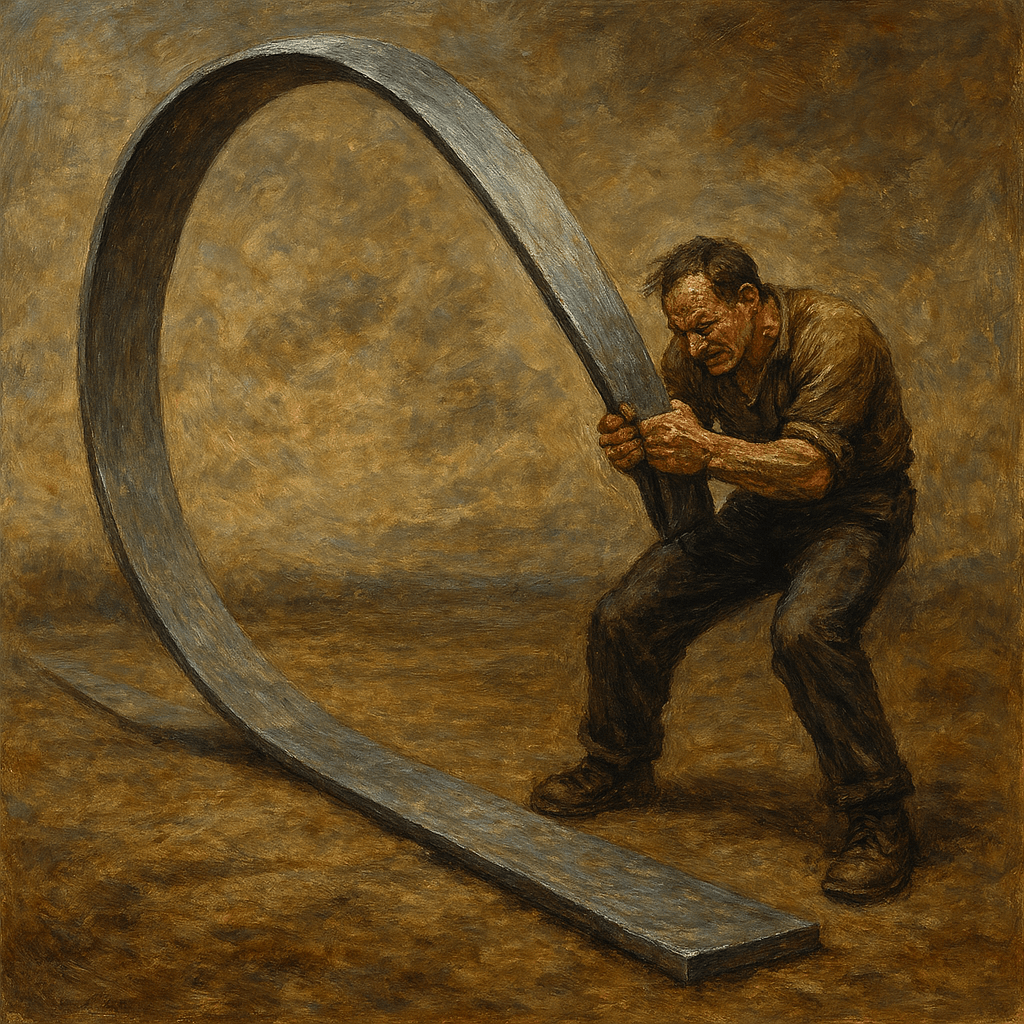
Man is mighty enough that he may bend God's creation
But it will always snap back

It is only when we are able to do what is right when we stand to lose the most that we gain full ownership of the virtue. At this point, no one can deny that we live and die by that truth. So long as the maintaining of our virtue is untested, it isn’t fully ours.
And so, if we are ever to truly own our virtues, each must be tested in the most trying of circumstances. God does not give these trials to hurt us; He gives them so that we can fully own something good.

It’s not uncommon to wish that the people in our lives would treat us better than they do, even that they would treat us as well as we know we ought to treat them. We wish our friends would be the ones to reach out instead of us, that our spouse would say “sorry” first, and that our enemies would forgive us before we forgive them. But we know that we’re supposed to do the right things on our own, regardless of what the people around us do. This can seem unfair, as it might see us always being the bigger person first, always doing for others the things that we wish were done for us.
But really this is only a limited view. If we widen our perspective, we realize that before we ever showed unreciprocated good to someone else, Jesus did so first to us. Jesus was the bigger person who fought for our hearts when we didn’t deserve it. Jesus was the one that took the high road when we were selfish and sinful. Jesus was the one who loved us before we loved him. Thus, any lopsided good that we now put out into the world is only paying it forward.
Some might say that maturity is being willing to do what’s right even when there isn’t any reward, but deeper wisdom is recognizing the reward was already given long before.

The soul is most imperiled, not by suffering, but by believing that it doesn’t need God.
It is not despair that goes before the fall, but pride.
Thus, the world will destroy itself from its richness, not its want.

Once you’ve decided that you don’t like someone, then however they are is the wrong way for someone to be. And if they were the opposite, that would be the wrong way to be, too. It must be the wrong way, because you don’t like them, so how they are must deserve that disliking.
But, of course, then it isn’t really something about them at all. You don’t like them because of something in you, not them.
And the opposite is also true. People can give their love to another person, and then still love that person, even when given absolutely no reason to do so. They love because of something inside of them, not in the other person.
So, whether you look at God’s children and see much to despise, or much to love, is a reflection of what is going on inside of you.
 Spiritual Wanderings