
Changing behavior
Without changing the heart
Is building new structure
On a crumbling foundation
Changing behavior
Without changing the heart
Is building new structure
On a crumbling foundation

People, as a general rule, don’t choose their beliefs
They give their core conviction to a single, ultimate Being
Or Philosophy
Or Cause
And then their beliefs are given to them by that source
So, choose your core conviction wisely

Sometimes, it isn’t the greatness of the task that you do
It’s the greatness of the opposition you overcame to do it

Everyone claims that they long for peace
But then see how they crave contention with the “other side”
And even cheer for acts of violence against them.
They are not open about their lust for savagery
They are restrained only by the need to maintain appearances.
But one day, they will not feel that restraint any longer
And then the true terrors will begin.
All people fail us. At one point or another, each person betrays the bond that they have made with us. This is not an excuse to cut off our relationships, though. It is still right and prudent to invest in people and relationships. But to protect our soul against heartbreak, we must also develop even stronger bonds to the ideal and the transcendent, which will never fail us. Just as we have a relationship with people, we can, and must, have a relationship with each of the virtues. And then we remain committed to the relationship, not just for the person, but for the ideal’s sake.
So,
Become married to the ideal of marriage
Begin a romance with romance
Be a friend of friendship
Fall in love with love
And be loyal to loyalty

Stop trying to change the world. When people use that term today, all they mean is finding fault elsewhere and making others change.
Which doesn’t work, because they are doing the same thing, finding fault in you, and trying to make you change.
And in this cycle no one actually changes. They only become more entrenched.
So, stop trying to change the world.
Just change yourself.
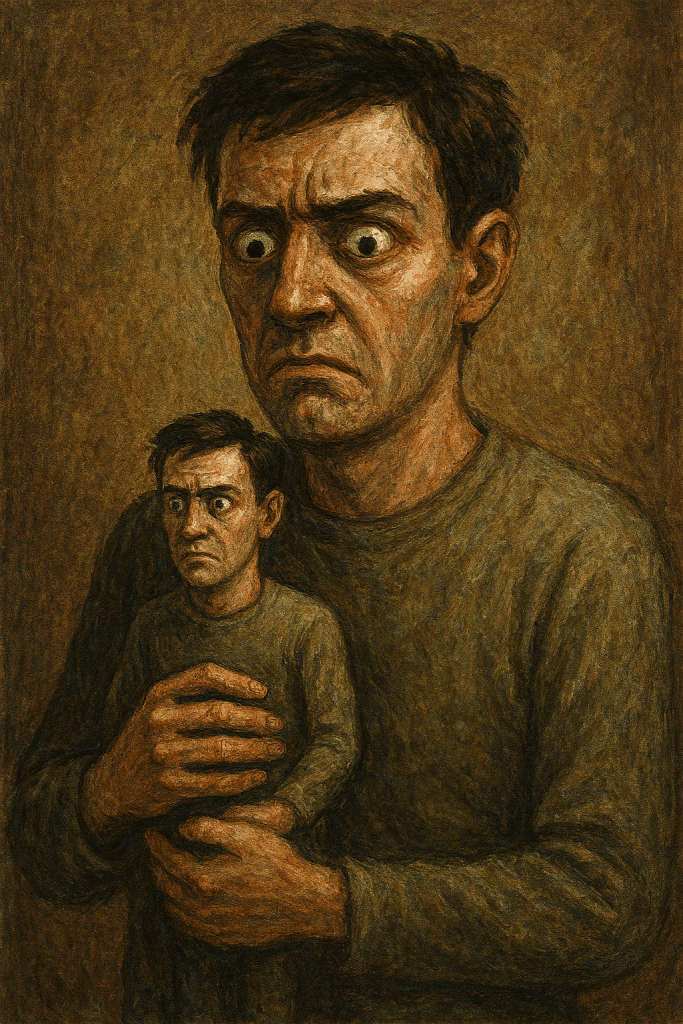
If you insist on a God that accepts a certain part of your identity
Then you worship that identity, not God
Over the past few days, I’ve discussed the possibility of being a Christian and holding fast to the commandments that God has given me but also having love for those who choose to live a different lifestyle. In this final post I will attempt to summarize what I have gone over, and the errors that those who suggest love for another has to include acceptance of their decisions run afoul of.
The first issue is that no one actually believes this. Everyone knows that you don’t support everything that a loved one does. In my last post I gave the example of drunk driving. Any decent, moral person knows that drunk driving is wrong and would perhaps feel compelled to have a serious talk with a loved one who was repeatedly pulled over for it. But does that mean that now they don’t love that person anymore? Of course not.
The only difference is that pretty much everyone agrees that drunk driving is morally wrong, while other lifestyle choices not everyone agrees on the morality of. That’s fine. Perhaps what I call morally wrong you do not. Perhaps you think I am mistaken in being opposed to certain behaviors. Perhaps I will one day learn that you were objectively correct when I meet my Savior and he tells me that I was wrong, and I will have to confess that it must be so. So be it. But even if I have a wrong judgment today, it is a non-sequitur to suggest that that has anything to do with my capacity to love someone in the meantime.
Let me ask you this. Does my “morally wrong” opinion prevent you from loving people like me? If not, then you already know that the point I am making here is true. If it does, then you are projecting your own inability to love onto others.
Another error is that of believing that love is one and the same is acceptance, or that acceptance is a necessary component of love. These are two separate qualities, the first having been defined exhaustively in the gospels, the second only declared a virtue in modern culture. There is no compelling argument that I have ever heard of that acceptance is essential for love.
In fact, the scriptures show an example of love given to those that you do not accept. The purest love, God’s love, is said to be given to us “while we were yet sinners,” (Romans 5:8). He loves us even when we are still in opposition to Him. That’s why His love for us is so sure and transformative. Because He gives it to us wherever we are, motivating us to come to Him wherever He is. He loves us as we fall short, while defining for us exactly what it is we are falling short of.
And each disciple is called to do the same. I will love you, even when I believe that you are wrong, because God has shown me that even the wrong can be loved. This is true love, this is unconditional love, this is love that loves no matter what. This is what God calls us to. Not to abandon our principles to appease our neighbor, but to be stalwart on our principles, loving from the solid foundation of God’s word. That is the love that God has shown to each of us, so that is the love that I will try to emulate as well.
One of the most common ways that people have expressed disbelief to me that I could both love a person and disagree with their lifestyle, is to have them say, “Well what if your son turned out to be gay?”
But I do not find this a difficult question at all. The simple truth is that if one of my children announced to me that he or she was gay, I would still be just as opposed to that lifestyle and still love them just as much. Anyone that questions a parent’s ability to love a child who chooses a different path betrays that they know very little of paternal love.
What is more, those who ask this question don’t seem to realize that they don’t even believe its implication. The question implies that you can’t love your child unless you approve and accept of all they do. To that I say, “Could you still love your son if he got a girl pregnant in High School? Would you have to prove that love by now approving of teenage pregnancy? Could you still love your son if he got arrested for driving under the influence? Would you have to prove that love by now approving of drunk driving?” Of course you would still love your child, and of course you could do so without approving of all their behavior.
Another important aspect of paternal love is its dependability. Children of good parents who hold strong convictions know that their father and mother’s love is sure, a reliable foundation that can be built on. If I were to uproot my core beliefs just to make my child happy, then they wouldn’t really know who I was anymore, and my love would only provide a shallow foundation, and they couldn’t depend on it.
Children need to know that their parents’ love is rooted in something deep that can never be lost, not that the parent relates to them out of fear, constantly shifting their ground to avoid losing the relationship.
If my child did something deeply wrong, and I shifted ground to approve of that behavior, then I would be depriving my child of one of the greatest lessons of love that there is and teaching him something incredibly destructive instead. By my saying, “I will have to redefine ‘good’ so that I can keep loving you,” I am teaching that only the good can be loved. That lie causes incredible damage in children. Think how much more powerful of a lesson I could teach by holding to my principles and my love. That says to my child, “You can be loved no matter what, even when you are bad.“
If we never receive love from those that think that you are wrong, we will never understand that even the wrong can be loved. We will never have hope when we fall short. We will never believe that we can be saved after doing something damnable.
There is a reason why God has spoken to us His truth and His commandments alongside His love and His care. The scriptures show us the example of a parent who will not compromise His standard for us, but who will not stop loving us either. That is the love that can be trusted. That is the love can be built on like a rock. That is the love that saves.
I’ve already made a couple posts challenging the notion that I cannot love my brothers and sisters and also stand opposed to certain lifestyle choices that they engage in. I do not condemn such people, because it is not my place to condemn, and I do not seek opportunity to disparage or insult. I seek to speak with love and consideration, but if the matter of certain behaviors comes up, I will bear my honest testimony based upon the word of God. Thus, I will love my fellow man, but I will not compromise my conscience.
And as I’ve considered this conviction, I’ve realized that it is only from such a foundation that love can be unconditional and reliable. As I consider my own relationship with Christ, I must confess that for a long time I was his enemy, openly disobeying his word as a pattern of life, even though I knew he stood against it. But what does Paul teach of God’s attitude towards enemies like me?
“But God commendeth his love toward us, in that, while we were yet sinners, Christ died for us,” (Romans 5:8).
God loved me, and sent His son to die for me, while I was still a sinner, still an enemy to everything that He stood for. And if He loved me when I was His enemy, what more could I do to lose His love? He was already diametrically opposed to me, so it didn’t matter what I did, His love was always still there. It was the surest, most unconditional thing that I have ever had.
And I truly believe that this is true for sincere disciples of Christ also. We are able to be opposed to sin yet still love the sinner. I would not consider myself to be your enemy, but perhaps you consider me such. Fine, so be it. Then I am at least an enemy that loves you. And even as you continue to do enemy things, and work against me, I will still love you.
Isn’t it obvious that the love that says, “Even though I disagree, even though I will never support your cause…I still love you as a brother or sister” is more powerful than the love that would say, “I will compromise all of my convictions to make you happy?”
Speaking for myself, I would far rather have 100 enemies who still had the basic love of humanity for me, than one “friend” who abandoned his convictions to be by my side. I could always trust in the love that came from the person rooted in his convictions. The “love” of the friend who has abandoned his core is far more unpredictable and conditional.
 Spiritual Wanderings