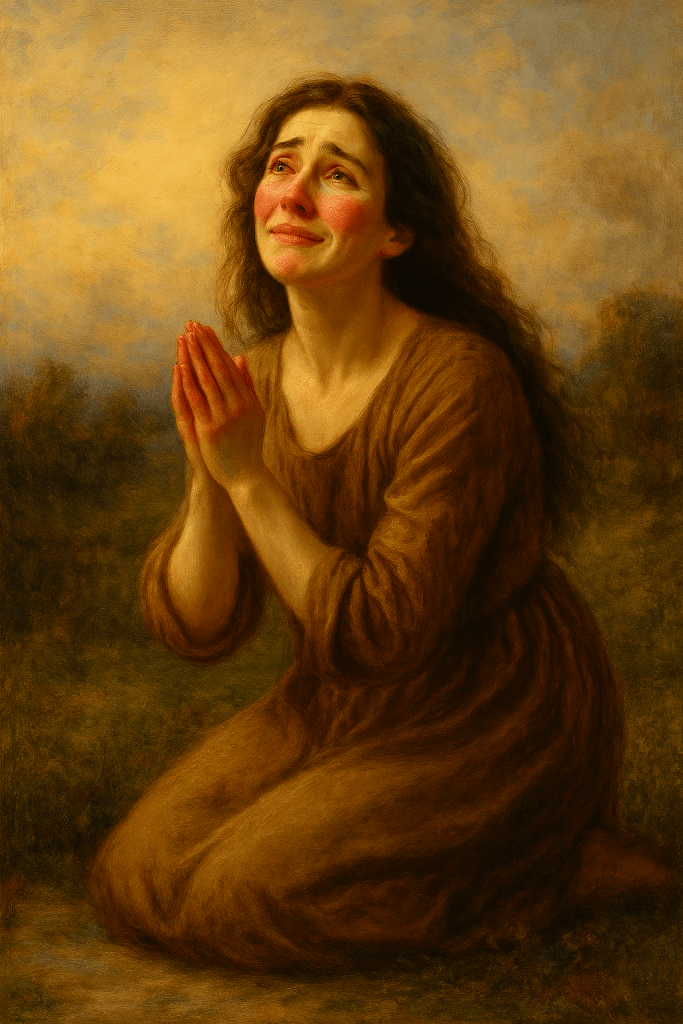
If God isn’t real, then nothing matters.
If God is real, then nothing else matters.
God is all that matters.

If God isn’t real, then nothing matters.
If God is real, then nothing else matters.
God is all that matters.

The day we’re not scared of the changes we’re making
Is the day we’re not really trying

Many feuds in our society today are a lost cause no matter which side of the debate you are on, because both positions are built on a false surface-level paradigm. To find true solutions we must first go deeper, identify the faulty paradigm, and dismiss it entirely.
For example, many of the most common disagreements in marriage, such as who gets their way between high- and low- sexual desire partners, the proper management of finances, and the conditions that justify getting divorced, are typically predicated on the misconception that even after the marriage union has occurred the individual is the supreme entity whose interests must be secured above all others.
People get married today, still believing that their individual happiness is what should be protected first, that their own interests must be sought most, and that their own preferences should drive their decisions. Then man and wife argue about how their individual egos are being bruised, how their individual desires aren’t being met, how the marriage isn’t justifying itself to them on an individual level. Whoever gets their way in such arguments, the answer is wrong, because this is not the paradigm that Jesus affirmed when he was tested by the Pharisees.
And he answered and said unto them, Have ye not read, that he which made them at the beginning made them male and female, And said, For this cause shall a man leave father and mother, and shall cleave to his wife: and they twain shall be one flesh?
Wherefore they are no more twain, but one flesh. What therefore God hath joined together, let not man put asunder.
-Matthew 19:4-6
Our Lord’s words shows that the correct view is that the man and the woman are “no more twain, but one.” They are supposed to subjugate the individual to the marriage, and protect that union’s happiness, seek its interests, and let its preferences drive their decisions.
So long as one holds onto the individual-supreme view, then any position they hold in every disagreement is wrong, and even the opposite positions are wrong, too. There are, therefore, no good options left, at least not until that person goes deeper inside and corrects their core paradigm.
Truth, mercy, justice, hope, love, and courage.
These ideals belong to a higher plane of existence: what the spiritual man calls heaven, the philosopher calls metaphysics, and the mathematical man calls abstraction. Though immaterial and conceptual, these concepts are not sealed off from the living world.
When we lend our lives to these ideals, these ideals become alive. We are the vessels to speak truth, show mercy, enact justice, raise hope, share love, and stand in courage. These principles take form through us.

The frustration and suffering in our lives is directly proportional to the lies that we have come to believe. Complicating matters is that the lies are woven into our society before we were even born, becoming so indoctrinated in us that we can’t even see them for what they are half the time.
The word of God is therefore an essential standard. Whenever we read an eternal principle in the scriptures that seems uncomfortable to our modern sensibilities, we have just identified a lie that rests at our foundation. That is the area where our conception of Truth has been twisted, and we will find greater peace only as we correct that perversion.
So, what do you see as “problematic” in the scriptures? That men and women are meant to function in different roles? That divorce should be virtually unheard of? That fornication, homosexuality, and every other sexual deviance is abominable? That we should not provide preferential treatment to one group over another? That sometimes God declares war? That sin makes us deserving of death? That Christ is the only path to salvation? That spiritual freedom is more important than physical liberty? That all of our possessions and life decisions properly belong to the Lord?
If we see any of these tenets in need of “being fixed,” then we live in a “truth” that is actually a lie. We will forever be frustrated because we are trying to twist the fabric of reality against itself, which is doomed to failure. True reality will not tear. It will snap back and tear us instead. And when that happens it is actually an act of mercy, as each of us needs to be broken before we can rebuild ourselves on the actual Truth.

Our lives are defined by a few pivotal choices, special moments where we are presented with what is easy on one side, and what is right on the other, and then we prove to ourselves and anyone observing whether or not we are a person of principle, someone who will stick to conscience no matter what.
It is important that we don’t see these moments as predetermined by who we already are, though. It is not as if our quality of character is already locked in, and we simply behave according to our predetermined nature. No, these are moments of active free will. Suppose we have a moment where the right thing is to divulge a difficult truth. We can say to ourselves, “I’ve always struggled with honesty, but I wish I were the sort of person who told the truth, no matter what, and here in this moment I can behave as if I were.” Then, we can make the choice to be that person of honesty just in that moment, and that decision transforms us into really being that way.
Do not worry whether you will have the necessary qualities when the time comes, simply resolve to make the choice that is right, whether you think you’re ready for it or not. No matter the hesitation and doubt, you can choose to be the person that you always wanted to be.

In times of comfort, we are able to derive ideals based on pure principles, our logic uncompromised by the instincts of self-preservation or self-advantage that might possess us in times of trouble. But it is only in times of suffering that those ideals are actually tested, transformed from theoretical belief to lived reality. Thus, perfect theory becomes raw conviction, all according to the seasons and wisdom of God.

People love to debate theological differences. Members of different Christian denominations argue the fine points of their faith, members of different religions argue about the true nature of God, and members of different belief systems will argue about the nature of reality or whether there even is a God at all.
It’s a bit of an interesting concept, given that all of these are truth claims, and the truth is immutable. It cannot be defined or changed by the debate; it just is what it is. Truth is unassailable. Even if someone wins a debate arguing against the truth, the truth remains the same and the debater still remains wrong.
Thus, debates about the truth are merely an exercise in opinion, with nothing of substance altered by the outcome. So, what truly is being contested in these sorts of debates? What really is at stake? Only the image and ego of its participants.
Is it any wonder than that these debates so often become emotional and heated? The passion with which many argue suggests that they realize that in reality is their own intelligence and reason that are on the line, that if they cannot prove their point then they have been beaten personally, even if their stance was the correct one.
For this reason, I believe that much of debate is a vain and shallow exercise, one that says much about the participants, and little about the underlying truth.
Throughout this study I have shared different snapshots of my life, showing that I have personally experienced all the stages of moral development. I have been in sharp decline, dramatic rise, extended periods of maintenance, and gradual deterioration. I have explained some patterns I have seen along the way and admitted that there are still things that I am figuring out. Thus, I have only clues and snippets to offer, not the completed solution.
Those realizations, which I have discussed already in this study, can be summarized as follows:
These do not necessarily capture all ways in which one can make dramatic improvements and maintain quality of character, but these are the ones that I have observed so far in my own life.
Of course, if these are principles for maintaining and improving one’s moral character, then their inverse shows us how moral deterioration and freefall occurs. We must all be guarded against the sudden loss of our souls, and also of the gradual decline of our character.
In this study I briefly mentioned the inverse of the principles of progression mentioned above as three principles of digression. Note that these transpire in reverse order of the original states of progression.
In the end, perhaps there is little that is new here. In essence, we have described the well-known process by which people give in to temptation by degrees. It is perhaps unique that we approached it in reverse by first recognizing patterns for spiritual progression, then inverting it to get the familiar pattern of spiritual decline.
This is not surprising. When we investigate a new thread of theological inquiry it is not uncommon to find that it leads to a new expression of an already-familiar idea. This tendency reinforces the universal truth of these ideas, showing that they permeate through all reality, manifesting themselves in many ways.
I hope that this study has been a helpful examination of the different movements that we make in regard to moral character, and the different events that might catalyze those changes. I can say that it has been useful for me on a personal level to look at the matter more closely.
Yesterday I mentioned how sometimes I experience times of gradual moral deterioration. These are not the deeper descents into evil that I experienced previously, but they are gradual compromises on my quality of character. I acknowledged the fact that such struggles are common, one of the problems that everyone faces who tries to walk a godly path.
So, I don’t mean to over overemphasize these common foibles, but I don’t want to downplay them either. The fact is, that while these times of slow decline may not be gravely compromising on their own, they truly are the beginning of the path to losing one’s soul. Slowly testing one’s boundaries, pushing them further and further, is oriented towards eventually taking a step you never meant to, one that really does rack your conscience with guilt.
Times of slow decline must be recognized for what they are. They are the first teasing tastes of ruin. They are the opening chapter in every great tragedy. Yes, they are common and expected, but it is also essential to arrest before they come to full fruition.
In my personal experience, the pattern of moral decline often happens in the inverse of moral ascension. From what I have seen, moral ascension tends to begin with a dramatic moment of redemption, with periodic additional surges when correcting core beliefs, and then maintained with ongoing ritual. Moral decline, however, has typically looked more like ongoing periods of deterioration, followed by periodic concessions away from conscience, resulting in a dramatic moment of intense guilt.
Surely there are exceptions to this pattern, but it is the pattern I see most frequently both in myself and others. Having both perspectives is valuable for having a plan to improve, and also a warning system for know how to avoid regression.