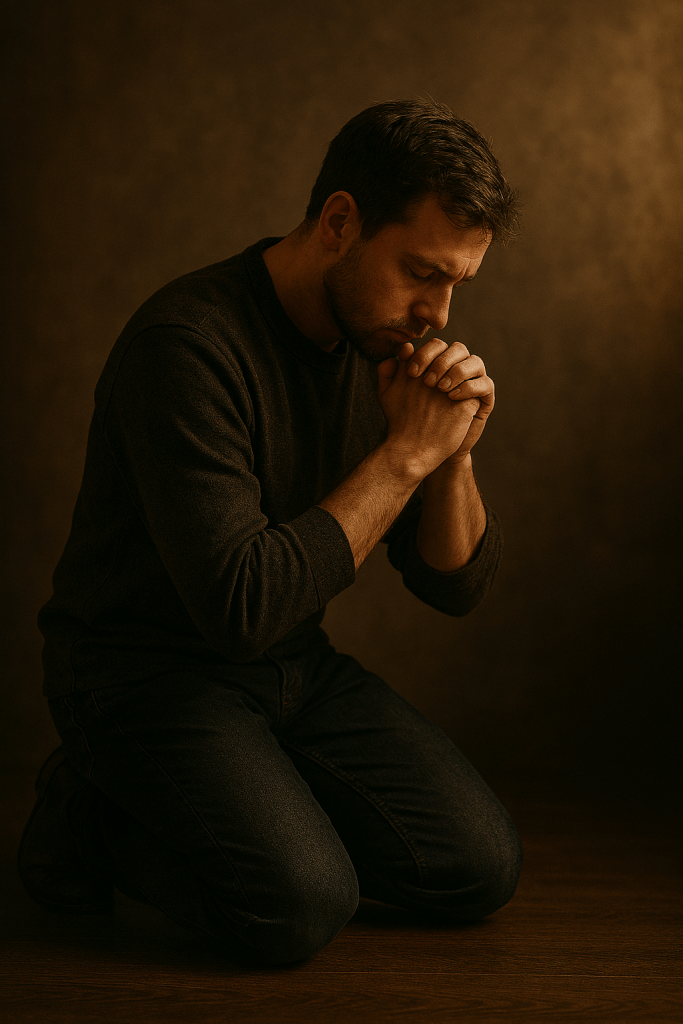
Ascend, Decline, or Plateau- Deterioration

Times of Deterioration)

So far, I’ve shared about my time of great moral decline while in the thick of addiction, a spiritual awakening with a true redemptive experience, long periods of maintenance with daily ritual, and occasional moments of surges in moral improvement when there is a spiritual breakthrough that corrects my core beliefs.

But this account would not be completely honest if I didn’t also mention that sometimes those long periods of maintenance have instead looked like periods of gradual deterioration. Sometimes my plateau periods have had a gradual upward bump, and sometimes they’ve had a gradual downward divot. And even with allowing myself some grace, I certainly can’t condone those periods of deterioration.

So, I’m still figuring some things out. Not only have I not arrived at my perfect destination, but I also haven’t fully figured out my process for getting there. I’m still grateful for the overall trajectory of the last decade and optimistic for the future. I’m definitely in a much better place than I used to be, but I am also still a student who is learning.

The Common Struggle)

I do take solace in the knowledge that what I am describing is by no means an uncommon struggle. Indeed, it seems to be a stumbling block that virtually every man and woman who has tried to live a life of constant self-improvement has tripped over. From every account that I have seen, setbacks and disappointments are an expected part of the journey.

Maybe that doesn’t have to be the story for all of life. Maybe there is an awakening from which there is no more dozing. But also, maybe that’s a state reserved for the afterlife.

Either way, I can still continue forward and upward. I can hold myself to a higher standard while also acknowledging that I do still stumble. That is the honest description for where I am and the work that I am trying to do.

Ascend, Decline, or Plateau- Disordered Within

The Difficulty of Change)

In the first post of this series, I mentioned that I wanted to examine times where we wish to improve our moral character, but we just don’t seem able to. This is a strange phenomenon. One would think that all we have to do to make is a change is just decide to do it. That certainly seems to be enough to make other sorts of changes, such as updates to our daily schedule, our focus of study, and our social connections, but when it comes to changes of moral quality, it often is a very different story. Though we are totally converted to the change in our head, though we promise ourselves that things are going to be different, we fall back into our old foibles again and again.

A huge section of psychological study is just, “I wish I was doing this differently, but I just don’t know how to.” It remains a great riddle that all of humanity has grappled with through the ages.

I don’t pretend to have all the answers, but I have learned a little from what has worked (and what hasn’t) in my own life. In my last post I mentioned that I have had occasional moments of epiphany in my life, times where my core beliefs slid into their proper order, and when that has happened real moral change suddenly became possible. I don’t know if this is the only method to making lasting moral changes, but it does at least seem to be a method.

Searching for a Breakthrough)

Of course, recognizing this pattern does not get me much closer to being able to make changes on a whim. Spiritual epiphanies don’t just occur on demand. In fact, there have been many times where I have known the exact core beliefs that I have out-of-order, but I still haven’t known how to force their rearrangement in my life.

I’ll take a moment here to describe a specific example of that. For years I grappled with Jesus’s words in Matthew 10:37: He that loveth father or mother more than me is not worthy of me: and he that loveth son or daughter more than me is not worthy of me.” It made sense, logically, that Jesus needed to be the highest priority in my life, that I needed to be more devoted to him than to any other. But accepting that in the head was not the same as feeling and living it in my heart. I could tell that in my heart the order was flipped. For me, family was more important than Christ. I didn’t think that was good, I didn’t want to remain that way, I just didn’t know how to make the change happen.

That was my state for years, until one day, out of the blue, I realized that in that scripture I could substitute “obey” for “love,” and “conscience” for “Jesus.” So, it became, “He that obeys father or mother over his own conscience is not worthy of me.” This resonated deeply in my heart. I knew that each of us must follow the impulse of our conscience, even when loved ones disagreed. And really, what was a commitment to follow conscience over family than a choice to love Christ over any other relation? I didn’t just become converted to my substituted-text version of the verse; I also become converted to the original wording!

And then, just like that, I was able to become more consistent in my moral behaviors, because the hierarchy had been improved in my heart. Jesus, and by extension God, really did become first for me, and so it was natural to realign parts of my life to match that order. I successfully made the breakthrough and enjoyed the changes, but not according to my own efforts or will. It just came upon me one day seemingly of its own accord.

What is Disordered?)

I realize this may not be the silver bullet that one might hope for. I cannot bring you to the destination, I can only suggest where you might find the proper path, and then you must still make the journey.

If there is some moral behavior that you have long wanted to change, but been unable to, it might be worth asking, “What is disordered in my core beliefs that keeps me from this change?” Have you set something at a higher priority than you should have? Have you neglected something fundamental that you are languishing without? Have you been too afraid to make a sacrifice that you know needs to be made?

If you can identify this, there still remains the matter of actually making the change in the heart. It is probably a hard thing to do. It might be something that can be done in an instant but scares you to death. It might be something that you want to correct right away, but it will take years to understand exactly how to do so. It might be something that just one day works itself out on its own, and you have no control over exactly when that happens.

Misalignments in our core beliefs are tricky to correct, but that explains why the moral behaviors locked behind them remain stubbornly out of reach. This is hard work, but it’s also the most important work of life.

Ascend, Decline, or Plateau- Quiet Times

Heated then Cooled)

Thus far I have shared from my story how I appeared to be on a spiritual plateau to any outside onlooker, but that in reality I was in a sharp moral decline with a secret addiction, how this came to an abrupt end when I had a truly redemptive experience which made making spiritual changes and progression natural and full of joy. However, that isn’t the end of my journey either.

After the time of spiritual awakening and rapid improvement, I must confess that the passion waned within me. I truly wanted to keep that passion alive, and did many things to try and prolong it, but it was like trying to hold water in my hands, and in the end it trickled away.

That isn’t to say that I went back to a place of steep moral decline, however. Nor is it to say that I never experienced spiritual passion again afterwards. Rather, I entered a cycle of occasional bursts of passion, followed by long periods of quiet ritual.

Bursts of Passion)

The bursts of passion most often seem to come when I have some sort of breakthrough, a key paradigm shift that alters my entire view of life and myself. As it turns out, there are a number of misconceptions and misalignments that I have held, most often learned subliminally from my culture, which have had to be corrected one-at-a-time to unlock higher levels of connection with God.

One example of this has been correcting my views on marriage. Even though I always knew that the world’s view of marriage was improper and disparaging, even though I always knew that the union was truly sacred, I was still being skewed in my heart by the deluge of worldly messages that marriage was transactional, that the concerns of the individual were superior to those of the marriage itself, and that the bond was flimsier than those to a child or even a friend.

When I recognized these flawed paradigms within me, and by the help of God corrected them, my connection and commitment to the Lord surged forward again, and ever since I have realized that identifying and correcting these misalignments is one of the surest ways to natural improvement. Finding and fixing them is one of the greatest quests of my life now, perhaps the greatest of them all.

Quiet Ritual)

It must be acknowledged that epiphanies are rare, though. Would that every day could have a new one, but that has not been my experience. I wonder if it is not according to God’s plan that we both have the capacity for moments of spiritual epiphany and also the tendency to fall back into complacency. Perhaps he meant for us to learn how to make the best use of both.

The best way to use moments of passion and epiphany, so far as I can tell, is to establish lasting changes and begin good habits. The best way to handle the longer stretches of cooler temperament, so far as I can tell, is to turn those habits into daily ritual, leaning on them to keep us consistent with the truths we learned in our passion.

Ascend, Decline, or Plateau- Hidden Movements

Hidden Decline)

In my last post I spoke about my personal experience with living on a spiritual plateau, one where I was basically good, but not making any real or notable sacrifices, not really living any differently than any other “good citizen.” To anyone looking at me from the outside, I was stagnant and consistent.

But that was only from the outside perspective. The truth is, at this time of outer stagnation, I was on a moral decline in my private life, crossing new barriers in my descent into deeper and deeper addiction. So, in reality, I wasn’t holding steady at all. I was in a moral freefall, and every day of external normalcy was just another lie digging me deeper beneath the surface.

My experience has made me wonder how many people really do live on a moral plateau. Is it actually primarily two groups of people, the truly striving and the downward falling, and it’s just that some of the downward falling put on a facade of plateau normalcy?

I do believe that there are some genuine plateau-dwellers, but I’ve definitely learned that people can be making invisible movements beneath the surface for a long, long time before there is any outward sign of how they have degenerated. When their moral life seems to suddenly collapse into a sinkhole, you can be sure that that didn’t just develop overnight.

Hidden Ascension)

But what about the other way around? Is it possible for someone to be improving morally in invisible ways, suddenly thrusting up to new heights seemingly out of the blue? I think so. I believe that we see this exact sort of pattern many times in the scriptures. Think of Moses, fled from Egypt, spending an entire life herding sheep for his father-in-law in Midian. We don’t hear of any great moments of huge moral development during that long sojourn, but it seems likely that he was being prepared, bit by bit, until he was ready to lead God’s people.

Perhaps as Moses abandoned his Egyptian way of life, he learned to surrender any personal plans. Perhaps while tending to the sheep, he developed a sense of leadership. Perhaps in his daily prayers, he developed the ability to obey God in everything, even if he might grumble along the way!

It seems likely to me that Moses was slowly accruing moral fortitude, and then when the divine call came, it appeared to the outside world that he was suddenly surging forward with new spiritual conviction and power!

This is why judgment of the soul is impossible to the mortal man. Only God and our own conscience can tell us how we’re moving beneath the surface, whether we are sinking into secret sin, or building silent strength. One day it may be clear to everyone, but until that pivotal moment, everything is a mystery from the outside view.

Ascend, Decline, or Plateau- True Redemptive Experience

Stagnant and Moving Upward)

For much of my life I was a Christian whose faith to any outside observer would have appeared to have plateaued. I came to church each Sunday, fulfilled all of my basic duties, testified of the importance of Christ, occasionally looked for ways to be helpful, and generally treated everyone with politeness and respect.

I was a good citizen, but I never felt particularly good. I felt stung by Jesus’s words when he declared, “And if ye do good to them which do good to you, what thank have ye? for sinners also do even the same.” (Luke 6:33).

There is a fundamental idea here that basic decent behavior is, well, basic. The path of the true Christian must transcend that into the truly extraordinary. The path of the true Christian requires denying the natural self and demands real sacrifice.

In the years since, I have had moments where I did make some more significant sacrifices, times where I stopped living on the basically good plateau and ascended to a higher form of living.

What Makes the Difference)

So, what was it that took me from resting on the plateau to climbing the mountain? As I look at my story the answer is crystal clear. It was passing through a truly redemptive experience. What immediately preceded my initial changes was that I gained a true conviction of my sin, felt the reality of hell before me, and then felt the reality of being saved. When those things became real, not just theoretical, I didn’t have to have anyone telling me to start living differently. Making changes was simply the most natural thing for me to do.

People that are living on the plateau have to constantly be coaxed or manipulated into works of self-betterment. External motivation might get them to move a little up the mountain, but it isn’t natural, and once the motivation disappears, they’ll most likely slide back to their comfort zone. To such a person, the idea of eternal self-improvement is a terrible burden of perfectionism.

When one has had a truly redemptive experience, though, that same idea of eternal self-improvement now feels like a privilege and an opportunity. It is only a burden if you are already at your paradise. It is an opportunity if you want to go to God’s.

Ascend, Decline, or Plateau- Different Ways of Being

Ways of Being)

In my experience, we tend to be in one of three states in our moral development. The first is ascending, which means that we are progressively becoming better and better people. We are overcoming our bad habits, extending roots of determination and commitment, and moving forward to the sort of man or woman that we want to be.

The second is to be descending, where our bad habits are becoming more pronounced, and new ones are starting. We are willing to go to greater and greater lengths of immorality in pursuit of self-satisfaction. We either have no intention to improve or are declining in spite of our wishes to be better.

The third is to be on a plateau, where we are maintaining a certain level of morality. We may have some virtues, but we are not increasing in them. We may have some vices, but we are not increasing in those either. Perhaps we want to be better but aren’t able to make the change, or perhaps we’re just fine with where we’re at.

Of course, just because a person is in one of these modes of being on a particular day does not mean that they will always be so. There are many who have sought moral improvement, made some changes, then stagnated, then reverted back to previous failures. There are many who have started out a sinner, then paused when the toll on their soul became too much, then committed to a life of improvement. Thus, we can move up and down through these phases, and many of us do so many times throughout our lives.

How to Be)

With this study I want to consider how we find ourselves in each of these phases, why we move from one to the next, why we fail to improve when we really want to, and why we find success when we aren’t even looking for it.

These are no small questions. Psychologists have long noted the great divide between how people mean to be, and how they actually are, which is a very conflicting puzzle. Hopefully this study will be able to shed some light on the matter.

From Failure to Faith

Those that say they will not follow God’s commandments until they are convinced that He is real overlook the fact that even the truly faithful regularly struggle to keep His commandments also. Even a strong belief in God’s reality does not suddenly cause us to swallow our appetites and live as perfect saints.

Indeed, it is our struggle with our moral behavior that leads so many of us to believe in God in the first place. Our belief in Him begins as we let go of our misplaced belief in ourselves. We try to change our hearts on our own, we consistently fail, we lose all trust in our own power, throw our last hope on a God that we are not sure of, and then experience a miracle as He changes what we never could.

Thus, the cynic’s disbelief of the Almighty and dismissal of the commandments is not due to having not explored God enough, but due to having not explored his own heart enough.

Held to Another’s Standards

No one wants to be held to another’s standards,
But they do want the rest of the world held to theirs.

Perpetually Frustrated

Living according to how we think God ought to have designed us
Is to live in perpetual frustration and impotence

A Foundation Built on God- Ritual and Novelty

Daily Ritual)

With my previous post I acknowledged the reality that many of us live, where we must establish the foundation of our lives in God with only a small portion of our time. We can do this by dedicating one-seventh of our days to God when we observe His Sabbath Day. We can also do this on a daily basis, dedicating some of each waking period to our Maker.

Traditionally, this has been done with morning and evening prayers. Morning, meaning that it is the first thing each day, the foundation of our lives that we’ve been talking about. Evening, meaning that it would finish off each day, a golden cap on the top of the structure.

The repeated pattern of these prayers makes them a ritual. Ritual has both an advantage and a disadvantage in its repetitions. The advantage is that our minds are naturally designed to function from triggers and routine. The ritual can thus become the trigger that tells our minds to go into the sober, focused routine. The disadvantage is that repetition can become boring, causing us to become distracted and gain nothing from the experience. I know that that has certainly been my challenge with daily devotional.

Occasional Novelty)

I believe the greatest value in ritual daily devotional would be using it to reach that place of solemnity where we can then engage in sincere, specific-to-the-day communication. Or, even if we don’t have much to communicate on that particular day, to just allow us to feel our way back into alignment with God’s will, relaxing our grip on personal plans and ambitions, becoming open to things according to His will.

There might not be a meaningful epiphany or transformation every single time we have this daily devotional, but the hope would be that we are open to those moments when they do come because our ritual has brought us to a place of readiness every day.

Personal Goal)

Speaking for myself, this sort of approach is different from how I have tried daily prayer in the past. Previously I have tried too hard to make something meaningful happen every single time. I felt like each experience had to be notable and unique. I felt like I had to repeat rituals over and over until something broke through the monotony.

I want to try this simpler method where things can come as they are. I want to have a simple ritual, maybe reciting a few favorite scriptures or the Lord’s prayer, just to bring me to a place of openness, and then just express whatever there is to be expressed, surrender whatever there is to be surrendered, explore whatever there is to be explored, or be silent when it is right to be silent.

If the whole experience lasts only a few minutes, I won’t be concerned about that. My hope is that that would still be enough to have set my foundation on God, and that the rest of my day may look like one that has put Him first. I guess I’ll just have to try it and see how it goes.