
If you do today what you weren’t willing to do yesterday,
You are already someone new
If you do today what you weren’t willing to do yesterday,
You are already someone new
The root of all change
Is telling the truth

God does not save us for who we are, but for who we will become
We’ve all heard the admonition to reflect on “what would Jesus do” and then conduct ourselves in the same manner. This advice brings up the question, though, of how do we know what Jesus would really do in our particular situation? In some cases he showed compassion and reservation, such as when he spared the woman caught in adultery. At other times he showed judgment and passion, such as when he turned the tables of the money-changers in the temple. How can we really know which way he would deal with each situation, or even the things he would do that don’t even occur naturally to our minds?
Anticipating the behavior of another person typically requires a deep and intimate knowledge of that person. This is something else we are encouraged to develop: a personal and intimate relationship with Jesus. We are told that we ought to know his personality, his manner, his attitude. But once again, how do we do that when he isn’t here in the flesh?
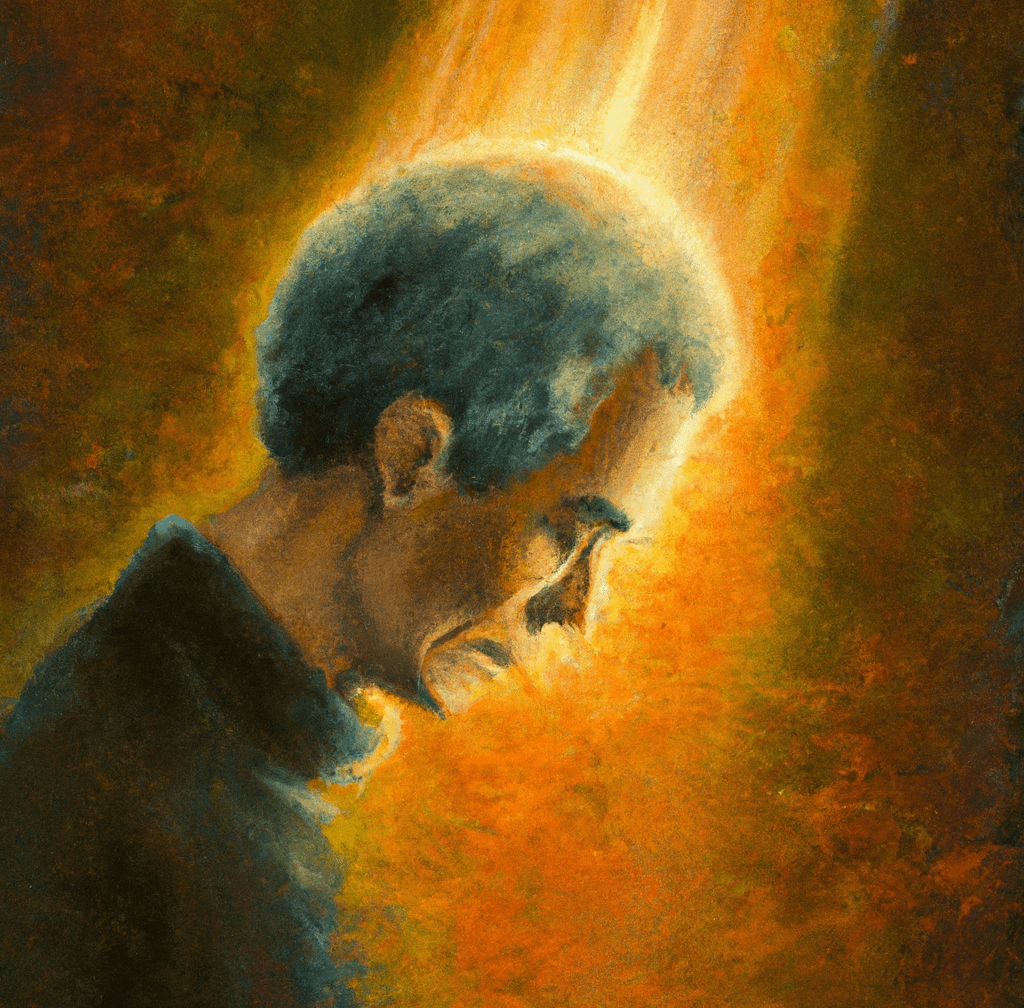
Of course, we can glean some of Christ’s personality and pattern of behavior from the Biblical account, and we might gain further insights through personal, spiritual experiences, but there is also a third way that is perhaps the most reliable method of them all. Jesus told his disciples: “I am the light of the world: he that followeth me shall not walk in darkness, but shall have the light of life” (John 8:12). Paul later confirmed to the Corinthians that he had sensed this light of Christ shining within him: “For God, who commanded the light to shine out of darkness, hath shined in our hearts, to give the light of the knowledge of the glory of God in the face of Jesus Christ” (2 Corinthians 4:6). This light of Christ is in all of us, even in those who have not yet accepted Christ. It is the conscience that always persuades us to do what is right. And this conscience is the key to learning who he is.
When we feel our conscience whisper in our hearts and we follow its counsel, we are at the same time both learning the nature of Jesus Christ and also doing what he would do. The conscience is telling us how he would behave in this instance, and as we do the same we feel his emotions and desires come alive in our own hearts. Thus, the prick of the conscience is an invitation to actually be Christ for a moment, and we are educated to his nature from within our very own selves!
Of course, this is also why following our conscience typically feels so strange and unnatural to us. It almost always means setting aside our own personality and choices, and stepping into an entirely different personality and pattern of behavior. This is a hard thing to do, but the more we practice it the more natural it becomes. Bit-by-bit we will be transformed from our old nature into Christ’s, taking on his attitude and likeness until we become his true representative. Thus, we can come to a deeper and more intimate knowledge of Christ than any other person. We will know him even as ourselves, because we will ourselves be as him.
If you truly want to know who Christ is, the tool to do so is already there in your heart. Practice bending yourself to the light he has put in you, and you will become a foremost expert on who the man really is. And then, everyone who sees you will also see the image of their Savior, and learn of him by you.

Seeds are one of the most miraculous things I know of, and they have been quietly working their wonders every day for untold years. Seeds usually come in a miniscule package, sometimes no more than a pinpoint, yet from their confines entire trees will emerge, stand for hundreds of years, and produce millions of new seeds of their own.
I also find incredible how the saplings that emerge from the seed is able to take dirt and nutrient from the earth and transform it into stem and leaf. The transformation of material is one of the most strange and mysterious things, and the more we learn of the complex process by how it works the more miraculous it seems.
And here is one more miracle of seeds, most of them have incredible versatility, able to lay in sterile or hostile environments for multiple years, appearing absolutely dead to the world, but will still germinate and grow long after they fell from their parent tree. In some cases, seeds have been known to still grow after laying as a dead husk for more than a thousand years! Somehow they retain the potential for life without food or batteries or nourishment.
When a seed lays dormant, all that it is waiting for is the correct environment. Once it is put in the right levels of moisture, temperature, and oxygen, it finally begins to flourish.
And so it is with people.
I have met men and women who moved through their lives in a catatonic state, feeling useless and reaching for nothing. It can be all too easy to write such people off, to assume that if they have already spent years in this lifeless same state then they will remain there forever.
But these people still have the potential for life—real life. It may be laying dormant inside of them, but that doesn’t mean it is dead. Like a seed, they are often just waiting for the proper environment to flourish, and from what I’ve seen, that proper environment is being brought into the light of God’s love. I have seen how lethargic and passionless men and women fell into the soil of belief, were rained on by the saving power of Jesus Christ, and sprouted towards the sun! Suddenly they wanted to go back to school and get the education they had abandoned, and change jobs for something more purposeful, and begin engaging in their home and family! They started seeing and helping the needy around them, and meeting with their brothers and sisters with sincere purpose, and finding joy and nourishment in the little wonders they had never noticed before.
Not only did they sprout upward, but they also reached further downward, deepening their roots and stability. These people began operating from a seat of power, sure enough to finally thrive.
Before this sprouting, these people appeared to be dead. But they were not dead, they simply hadn’t yet been born. There are many people who are still waiting to start living for the first time, so help plant them somewhere good if you can, somewhere that they can finally open their shell and live.

Always trust that others can change,
But never think that you can make them.
Transformation will come from within or not at all.

“Hitting rock bottom” is a common phrase in addiction recovery and twelve-step programs. Addicts will include it when describing the shocking depths they descended to before they were willing to wholly commit to recovery. They lost jobs, were imprisoned, lost their families, declared bankruptcy, were excommunicated from their church, lost their physical and mental health, and perhaps even found themselves on death’s doorstep. In short, they sunk as low as they possibly could, and then, having “hit rock bottom,” they finally started to look upward.
This pattern is so common that some addicts will attest that no one will ever find real recovery until they first hit rock bottom. It’s not that everyone’s rock bottom is the same, but they claim that one must hit their personal moment of absolute devastation before they can recover. Some will even tell newcomers who haven’t suffered enough hardship from the addiction that they aren’t possibly going to get better until they first get much worse.
I absolutely disagree with such claims. I think there is a real pattern being recognized, but extrapolating that pattern to say it is an absolute rule for each and every single individual is a terrible mistake. No one should ever be told that they cannot yet begin the process of getting better.
But as I just said, this doesn’t mean that there isn’t a real pattern occurring here. I saw it in my initial recovery group of six members. We each had our own highs and lows, but only one of us totally stopped working the program. I have to say, from the very first meeting I had my doubts about his commitment. The most obvious difference between him and the rest of us was that he was still young, unmarried, and had relatively little to lose if he didn’t get better right away.
Well, that’s not true, we all had just as much to lose, but for some of us the losses were occurring in the present, whereas for him much of the potential losses were still in the future. Since that time, I have met other young addicts who were able to stick to a program, even without their feet being held to the fire by the threat of losing marriage and family, but they are a small demographic in our ranks.
Fear of real and dramatic loss is one of the greatest motivators for change. It isn’t the only motivator, and people can achieve recovery without it, but there will always be more scared and desperate individuals in recovery than cocky and sure.
Of course, fear does not properly account for the phenomenon of getting sober after “hitting rock bottom.” Fear is an emotion that comes from potential unpleasant outcomes. Fear is always looking forward to a future experience, usually one that may or may not even occur. But “hitting rock bottom” would mean that the thing you were afraid of has already occurred. The loss has happened, the relationship has ended, the freedom has been taken. Fear has already been replaced with reality. So what else is it about these moments that might inspire real change?
Well, these are pivot points. They are moments that force a huge reality check on us. Up until these moments we might have been in denial, finding other things to blame for our problems, but huge tragedies like these usually make us take a hard look inside. We finally see ourselves as we actually are, and having gained that perspective we get to make a choice whether we will accept what we see or not. We have a chance to say to ourselves “no, I cannot tolerate this. I cannot be this way. I will do whatever it takes to change.”
Each new low presents a new chance to have that introspection and to make that commitment to change. They are stations along the railway, and at each one we have the option to change trains if we want. There is a train station when you are caught the first time. There is a train station when you lose your marriage. There is a train station when you go to jail. One might take the first exit, another the second, another the third, and another might never get off the ride at all.
Thus, “hitting rock bottom” really means the time you reach the pivot point where you finally decide enough is enough. Each person has a different point where this occurs for them, and it is based entirely on their individual personality and choice. Many of us are too stubborn to choose to change until we have suffered great loss, but as I have said already, I do know others who made a real change far sooner on their journey. It’s entirely up to you.
7 And Joseph saw his brethren, and he knew them, but made himself strange unto them, and spake roughly unto them; and he said unto them, Whence come ye? And they said, From the land of Canaan to buy food.

8 And Joseph knew his brethren, but they knew not him.

9 And Joseph remembered the dreams which he dreamed of them, and said unto them, Ye are spies; to see the nakedness of the land ye are come.
The fulfillment of his visions is not lost on Joseph, and he reflects on them, according to verse 9. He has been greatly blessed during this last decade by God, and now here is the culmination of his reward for having trusted in the Lord. Joseph remained faithful, even when things went against him for so very, very long, and God has not forgotten His long ago promises.
One thing of note is that Joseph recognizes his brethren, but they do not recognize him. Obviously, it would be easier to recognize a group of ten men, than a single one in isolation, and presumably Joseph has been made to look very different, likely adopting Egyptian standards of dress and grooming. But I also think the lack of recognition in Joseph’s brothers goes to show what a very different man he has become. He has grown, matured, and become powerful. Joseph has gone through a metamorphosis, such that he is a new creature in God.
But Joseph’s brothers? It’s been at least twenty years since he saw them, and they are still recognizable as the same beings that they were before. As we will see, they have matured to some degree from what they were before, but generally they are much the same.
The hope of each of us should be that we are transformed, turned into a more wonderful person, even to the point of being unrecognizable from our past self. Honestly, it would be tragic to instead remain as the same person that we always were, never growing and never evolving. To be purified is divine and to remain stagnant is base.
It is evident that God did not intend for us to remain static. We are not merely meant to exist, we are to thrive. To accomplish this, each one of us requires fundamental change, a complete transformation, to discover the divine potential that God has placed within us.
And, since the dawn of mankind, it has been taught that sacrifice is an essential element of that change (Moses 5:6). I have been taught this since I was young, and I believed in it, though like Adam I did not understand the full reasons behind it.
But the scriptures do not only teach us the behaviors that we are meant to follow, they reveal to us the purposes for them. It was for this reason that I began my study, and I was not disappointed. Through these passages I was able to find a few different reasons for why sacrifice is so essential to becoming who we were born to be.
When God created humanity, He commanded us to “be fruitful, and multiply, and replenish the earth, and subdue it: and have dominion” (Genesis 1:28), and so we are justified in seeking our own preservation and well-being.
But we are also mortal, and it is in our nature to take this injunction beyond its intended measure. We do not limit ourselves to seeking security and nurturing, we fall into greed, and the appetites of the flesh are insatiable once we begin to feed them.
And so the spiritual side must strive to maintain control, to keep our ambitions within worthy bounds. God encourages this by asking us to do things that are repulsive to the mortal self, but pleasing to the spiritual. This trains us to surrender the temporary, in order to secure the eternal. These tasks, by necessity, must be hard. If they were easy for us to perform, then no lesson of self-control would be gained.
Luke 10:41-42- And Jesus answered and said unto her, Martha, Martha, thou art careful and troubled about many things:
But one thing is needful: and Mary hath chosen that good part, which shall not be taken away from her.
Matthew 26:41- Watch and pray, that ye enter not into temptation: the spirit indeed is willing, but the flesh is weak.
Sacrifice teaches us self-mastery, and weans our mortal appetites, but that is not all. As mentioned before, it also serves the purpose of effecting our transformation. Not a one of us came to Earth to stay the same, every one of us requires a fundamental change. If we come to earth and are not transformed, then we are as the servant who buried his master’s money, and was then deemed an unprofitable servant for having not improved upon it (Matthew 25:14-28).
Now I have been one of those Christians that says I need to be changed by Christ without meaning it. I have said it only because it is the thing that is supposed to be said. I have said it while still trying to save myself by my own grit and merit. I have said it believing it to be true of others, but that I was mostly alright just the way that I was.
And you know what? I have learned that I am totally inadequate just the way that I am. I have learned that I let myself down hard when I am just myself alone. I spent a long while trying to “find myself” when “myself” was the whole problem. I needed to be “finding him.” Or, I needed to be finding my “other self,” that self which is like Christ, that seed that was planted in my heart at birth and can grow to become like my savior if I stop worrying so much about being “just me.”
Galatians 2:20- I am crucified with Christ: nevertheless I live; yet not I, but Christ liveth in me: and the life which I now live in the flesh I live by the faith of the Son of God, who loved me, and gave himself for me.
Matthew 16:25- For whosoever will save his life shall lose it: and whosoever will lose his life for my sake shall find it.
Once, humanity required no transformation, and no sacrifice. In the Garden of Eden, Adam and Eve interacted with God directly. They required no mediator to do so, for they were worthy in and of themselves. After the Fall they were cast out, and from that time on were no longer capable of enjoying God’s presence. They and their children began the pattern of sacrifice (Genesis 4:3-4), but that, in and of itself, would not have been sufficient to restore them to God. The death of an animal does not unveil divinity.
Even the spiritual sacrifices which accompanied the animal offerings (things like surrendering sin and devoting one’s heart to the will of God) would not be enough to undo the effects of the Fall. Each of us have taken the Apple in our own way, and each of us know that when we did so, we stained our soul in a way that we alone are powerless to expunge. No, the only reason why our sacrifices are not lost in the cold vacuum of eternal damnation is because of the enabling power of Christ’s atonement. Out of all of us, Christ alone never partook of his own, personal Apple. Christ alone was sired with the power to break past the limitations of mortal death. Since pre-Fall Adam and Eve, Christ alone is worthy, in and of himself.
Thus when we make sacrifice, we do not do it to appease God, that could never work. We do it, as we have already seen, to surrender our fallen parts in place of Christ’s risen ones. We do it to become a part of him, to be adopted into his body, and to rise with his glory.
Galatians 3:26-27-For ye are all the children of God by faith in Christ Jesus.
For as many of you as have been baptized into Christ have put on Christ.
1 Nephi 10:6- Wherefore, all mankind were in a lost and in a fallen state, and ever would be save they should rely on this Redeemer.
Matthew 10:38-39- And he that taketh not his cross, and followeth after me, is not worthy of me.
He that findeth his life shall lose it: and he that loseth his life for my sake shall find it.
 Spiritual Wanderings