Always Right

It is often easier to accept that God’s laws and principles were right for ancient people than to accept that they still apply today. So much has changed since the time of chariots and slings. Jesus and his apostles never had smartphones or cryptocurrency or space travel or AI. Can words of scripture from thousands of years ago truly never expire?

This is the testimony of all true believers.

Faith in God includes faith that His way was right in 3000 BC, 34 AD, and even in the 21st century. While the situation surrounding man is in constant flux, the word of God is rooted in something eternal, something that runs from before our root and extends beyond our end. So long as we remain human, God’s way will always be right.

Views of a Building

Some might look at the foundation of the building and say:

“Look, it’s forced to sit there beneath everything else, subservient and in the dirt! That’s a fact that it is under everything else, you can’t deny it! That’s wrong, and we have to change it. We have to pull the foundation above the level of the ground, even put it at the top of the building!”

Of course, doing that would make the entire thing topple.

Some look at the foundation of the building and say:

“No, it is supporting the entire building! It’s really the most important part of it all! Better than all the rest. We should all aspire to be steady foundations like that.”

Both views have a claim to some fact, and by that each assumes that they are in the right and are incredulous at anyone with a different perspective. “I see a fact,” they say, “and that means that I am right.” But narrow-minded facts lacking context can lead us astray, just as surely as total ignorance.

There is also a third group of people, who are able to back up and take in a fuller perspective. They might say:

“Foundation, top floor, elevator shafts, facade…they are all building. They all serve an essential and beautiful purpose. The foundation is good, the first floor is good, and the top floor is good. They are different, but that is by design. No part is better, no part is worse, they’re just different. A foundation without a top is useless. A top without a foundation is ruinous. So, appreciate them for what they are and embrace them all.”

The Most Important Change

The most important change to make
Is to develop the ability to make changes

Answers, but Not Truth

We are exhausted and cynical
Running into dead-ends everywhere
Because we live in a world full of answers
But not truth

False Moral Dilemmas- Conclusion

Summary)

In this series I explored the world’s strange fascination with moral dilemmas, noted how many of them are unbelievable and contrived, and how even the ones with a historical precedent always had a moral option, even if you have to look outside the box to find it. Another key point that I mentioned was the importance of recognizing disengagement as an option. If you are presented options A and B, and both would compromise your conscience, you could always just do nothing at all.

I also pointed out how both outside-the-box thinking and moral inaction are demonstrated in the life of Jesus. It is from him that we see that the perfect path, with no moral compromise, is actually possible.

At least, it is possible in theory. I also acknowledged that each of us will, of course, compromise ourselves at some point, but that we need to accept and confess that failure, not try to sweep it under the rug by saying we had no choice but to do wrong. We can both have grace for our poor choices while admitting that they were, indeed, poor choices.

The Uncomfortable Truth)

Accepting these truths can be uncomfortable as they leave us no way to hide from the reality of difficult moral choices. Believing that there is no good choice is the easier option, as it justifies us in shrinking from painful consequences. Once we accept that there is always a good path, then we can no longer betray God in ignorance. Then, any time that we do something to get what we want or to avoid pain, we do it with eyes wide open, and we know that we will have to account for it someday.

It is, therefore, both a blessing and a burden to know that choosing good is always an option. That knowledge might condemn us to dissatisfaction or pain in the short term, but it is also the path to ultimate redemption.

Wresting the Truth

The frustration and suffering in our lives is directly proportional to the lies that we have come to believe. Complicating matters is that the lies are woven into our society before we were even born, becoming so indoctrinated in us that we can’t even see them for what they are half the time.

The word of God is therefore an essential standard. Whenever we read an eternal principle in the scriptures that seems uncomfortable to our modern sensibilities, we have just identified a lie that rests at our foundation. That is the area where our conception of Truth has been twisted, and we will find greater peace only as we correct that perversion.

So, what do you see as “problematic” in the scriptures? That men and women are meant to function in different roles? That divorce should be virtually unheard of? That fornication, homosexuality, and every other sexual deviance is abominable? That we should not provide preferential treatment to one group over another? That sometimes God declares war? That sin makes us deserving of death? That Christ is the only path to salvation? That spiritual freedom is more important than physical liberty? That all of our possessions and life decisions properly belong to the Lord?

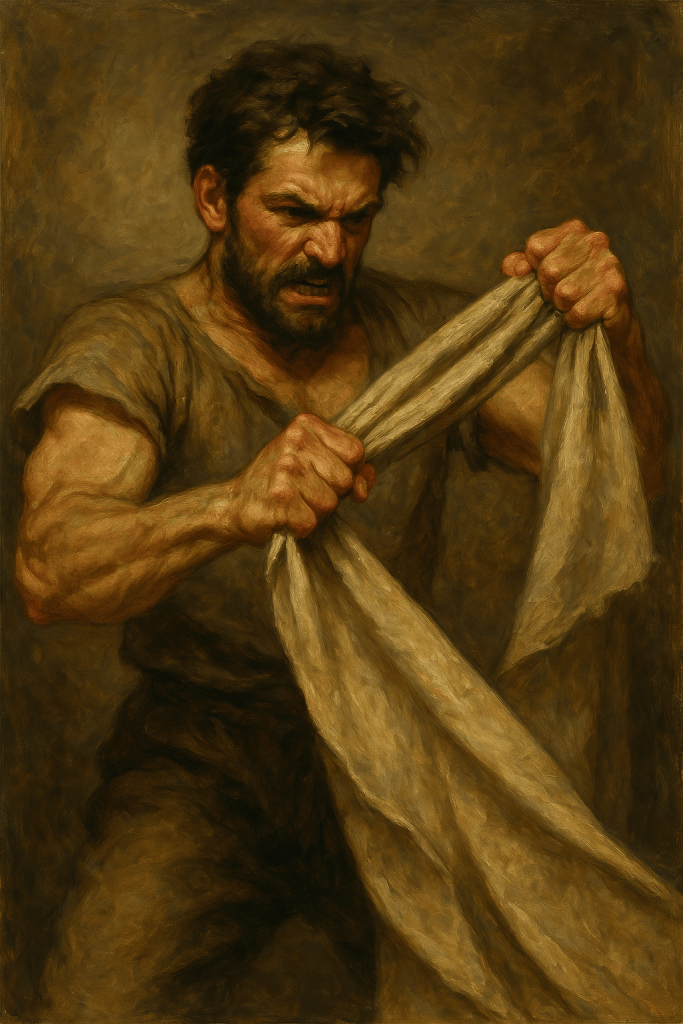
If we see any of these tenets in need of “being fixed,” then we live in a “truth” that is actually a lie. We will forever be frustrated because we are trying to twist the fabric of reality against itself, which is doomed to failure. True reality will not tear. It will snap back and tear us instead. And when that happens it is actually an act of mercy, as each of us needs to be broken before we can rebuild ourselves on the actual Truth.

The Subject of Debate

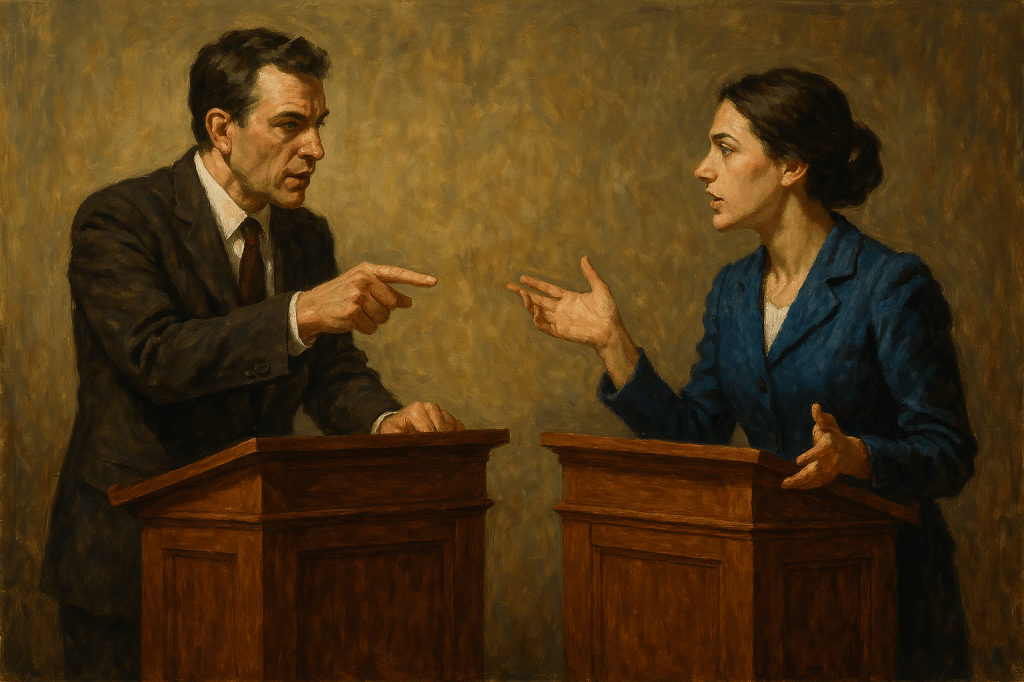
People love to debate theological differences. Members of different Christian denominations argue the fine points of their faith, members of different religions argue about the true nature of God, and members of different belief systems will argue about the nature of reality or whether there even is a God at all.

It’s a bit of an interesting concept, given that all of these are truth claims, and the truth is immutable. It cannot be defined or changed by the debate; it just is what it is. Truth is unassailable. Even if someone wins a debate arguing against the truth, the truth remains the same and the debater still remains wrong.

Thus, debates about the truth are merely an exercise in opinion, with nothing of substance altered by the outcome. So, what truly is being contested in these sorts of debates? What really is at stake? Only the image and ego of its participants.

Is it any wonder than that these debates so often become emotional and heated? The passion with which many argue suggests that they realize that in reality is their own intelligence and reason that are on the line, that if they cannot prove their point then they have been beaten personally, even if their stance was the correct one.

For this reason, I believe that much of debate is a vain and shallow exercise, one that says much about the participants, and little about the underlying truth.

Scriptural Analysis- Exodus 23:1-3, 6-7

1 Thou shalt not raise a false report: put not thine hand with the wicked to be an unrighteous witness.

2 Thou shalt not follow a multitude to do evil; neither shalt thou speak in a cause to decline after many to wrest judgment:

3 Neither shalt thou countenance a poor man in his cause.

6 Thou shalt not wrest the judgment of thy poor in his cause.

7 Keep thee far from a false matter; and the innocent and righteous slay thou not: for I will not justify the wicked.

We have had laws that the judges would enforce upon the general populace, but today’s laws now apply to the judges themselves, and the goings-on in their courtrooms. Thus we have rules not only of what to judge, but also of how to judge.

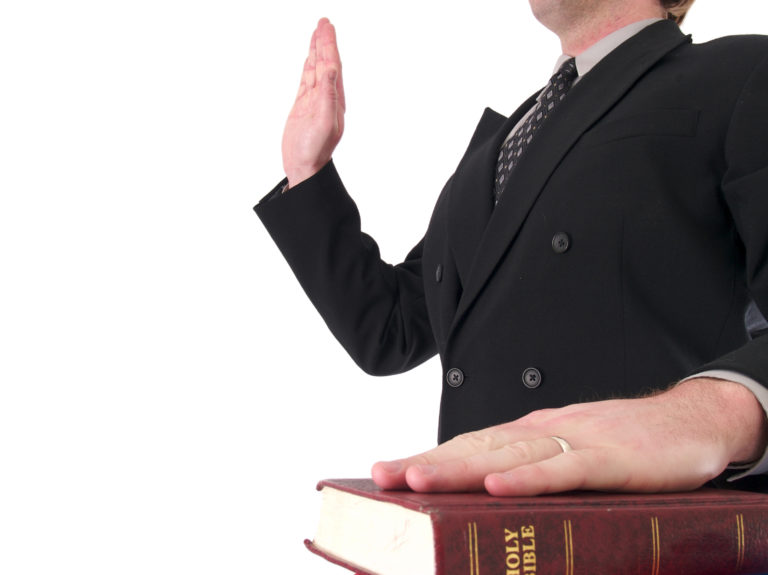
From verses 1 and 2 we learn that there is to be no false testimony. Every witness is to speak what is true, even if there is a large multitude that would pressure the witness to do otherwise. From this we see that the Truth itself is of higher status than personal or public interest. It does not matter what we want, or what the masses want, if it isn’t true it isn’t to be spoken.

Verses 3 and 6 make clear that every person is to be judged the same as every other. To “countenance a poor man” would mean to rule in his favor out of compassion, even though his case is weak, and that is forbidden. But neither are we to “wrest the judgment” against him out of disdain when his case is strong. The status of the person is not what matters, what matters is what is true and right in the case, with no regard for the status of the individuals being judged.

It could be that the poor man is impoverished due to no fault of his own, and is generally deserving of compassion. Or it could be that the poor man is impoverished because he lives a foolish and hedonistic lifestyle, and is generally deserving of consequence. And yes, a sense of compassion and a sense of justice are both virtues, but they are not higher virtues than the Truth. They do not justify us in coming near “to a false matter.” If anything is clear from today’s verses, it is that there is a hierarchy of virtues, and the Truth sits atop them all.