
How to Get the Praise You Deserve: Summary

I’ve spent more than a week discussing how we desire approval and validation in our lives. It’s a common and basic longing, but there was a lot to unpack on the subject. Let’s review some of the lessons we’ve learned along the way.

Our Need for Validation and Approval)

It might seem vain for us to need constant validation and approval, and we might have spent quite some time trying to squash those emotions because we viewed them as being beneath us. But this is the same as trying to deny any of our other basic needs. Just as we need food and rest for our bodies, we also have requirements for our emotional health, including these. If you didn’t need some sense of validation in your life, then your heart wouldn’t keep longing for it.

And just as how we can satiate our physical hunger with food that is bad for us, so too we can seek out unhealthy forms of validation. Acknowledging that our hearts need validation is not the same as saying that all validation is worthy. Demanding fame and attention are perhaps the most detrimental ways of dealing with this need, but there are other mistaken ways to deal with it as well. Perhaps the most common of these is tying our peace and happiness to the responses of those in our immediate vicinity. Allowing ourselves to be miserable unless one, specific person gives us a kind word puts us in their power in a way that we never should.

During this study we considered the two kinds of validation and approval that are actually a good thing to pursue, and fortunately each is entirely within our power to obtain.

Approval of Self)

The first method we discussed was to approve and validate your very own self. This means taking the time out of our day to look yourself in the mirror, verbalize all the good things that you have seen yourself do, and express appreciation to yourself for how you are helping your own life and the life of others.

Self-validation also means recognizing our behaviors that we do not approve of and overcoming them. Paul recognized this reality of people betraying their own conscience when he said, “For that which I do I allow not: for what I would, that do I not; but what I hate, that do I” (Romans 7:15). So long as we are disappointed with our own behavior then we are never going to feel fully approved or validated, no matter what affirmation we might hear from others.

Of course, overcoming our evil nature not only brings a sense of self-approval, it also invites the one other kind of approval that is healthy to pursue.

Divine Approval)

For am I now seeking the approval of man, or of God? Or am I trying to please man? If I were still trying to please man, I would not be a servant of Christ. - Galatians 1:10

In this verse Paul denounces the idea of seeking man’s approval, but he does promote seeking the approval of God. And what a relief, as this is actually the far more straightforward target to hit. Playing for the applause of the world means constantly altering one’s behavior to the ever-shifting demands of society. The way to satisfy God, however, has always remained the same. We must keep his commandments.

However, as we discussed earlier, obeying the commandments as they are written is not all that we must do. They provide an essential foundation and will bring a sense of validity in and of themselves, but upon that base we are supposed to actively build. We must put good into the world, taking our talents and using them to shine a light to others. It is in this combination of obedience and righteous productivity that I have felt the greatest sense of validation and approval in my life by far.

I also took some time to discuss that we can cultivate our ability to hear God’s approval of us. It may be that He has been trying to express His appreciation for some time, but He has been speaking in a language that you haven’t recognized. I suggested getting into the habit of seeing all that is beautiful in this world as a way of God telling you directly that He sees you, that He loves you, and that He appreciates what you are doing. If you come across something that seems to uniquely bring you joy, something that touches your heart more than the hearts of others, then consider it a gift from a Father who knows you perfectly and give gratitude for it. The more you give gratitude for these moments, the more you’ll start seeing these “love notes” placed all around you.

Conclusion)

Like many things, validation and approval represent a two-edged sword. On the one hand we can become obsessed with shallow counterfeits, chasing never-obtainable ideals. And even if we did achieve the constant attention of loved ones and the highest fame of the world, we would find ourselves still dissatisfied even so.

But on the other hand, there is such a thing as real validation and real approval. It is when we receive these gifts from our own selves and from God. It is here that genuine satisfaction occurs, that our anxieties are stilled, and we finally repose in peace. This is what it means to live life richly and with contentment, a richness and contentment that the world can never take from us, for the world never gave it to us to begin with.

Our desire for validation and approval were given to us for a reason. Not to be a source of perpetual frustration, but to lead us to eternal glory. Hopefully the principles we’ve discussed here can be helpful for you in your journey. They’ve certainly been helpful to me.

How to Get the Praise You Deserve: Part Three

Being Nice to Myself)

In my last post I spoke about a practice of giving myself words of validation and appreciation. I explained how this process has helped to satisfy my need to have my good deeds seen and acknowledged. By providing this kindness for myself, I able to let go of unhealthy obsessions, such as trying to coerce love and attention out of others.

The way that I give myself this validation and appreciation is very simple, with only a few steps to follow. Basically, these steps come down to showing myself the same consideration and attention that I would to another person. I certainly don’t want to be sending myself a message that I am being taken for granted!

The steps I follow in this process are:

  • Set aside time. I wouldn’t want to praise the good someone else had done in an offhand manner, so I don’t do that to myself either. I like to wait until the evening, after the kids have gone down and I am able to have a conversation with myself free from distraction. This practice doesn’t ever take me too long, but I make sure it can last for as long as it needs.
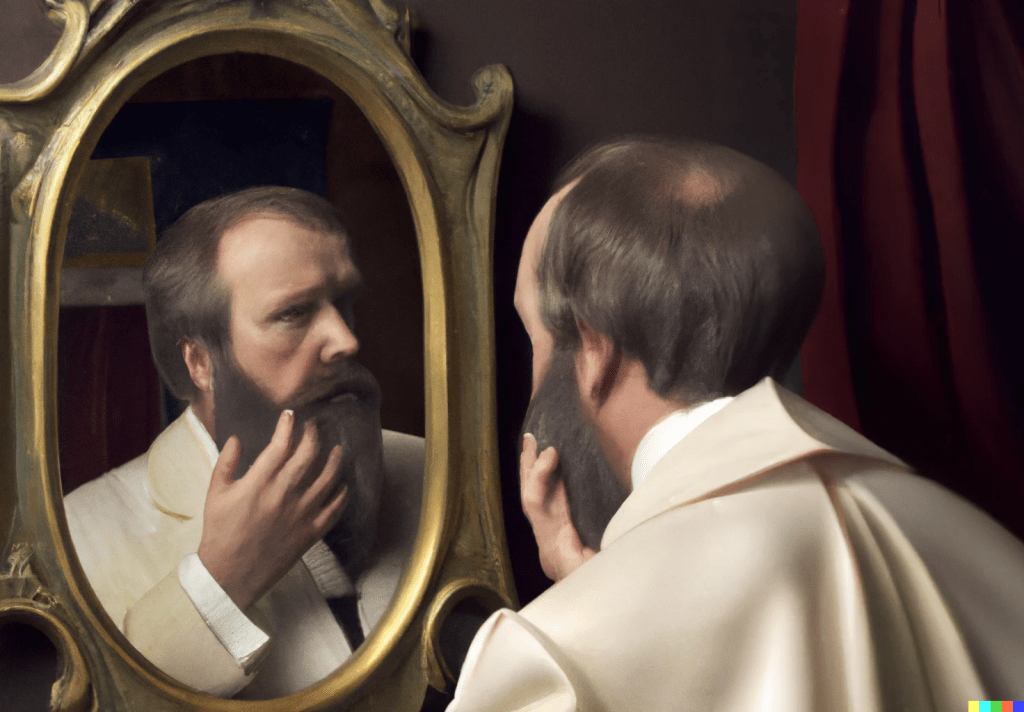
  • Look myself in the eye. This, of course, requires a mirror. I don’t want to hear these words of kindness from a faceless, inner place. I make the effort to look myself full in the eye and show my sincerity as I speak.
  • Speak out loud. It’s easy to be self-conscious about this practice, and at first it was tempting to just think the words in my head or mutter them under my breath. But I realized that I needed to literally hear these words. This is another reason why I wait for the evening, when I can go to an isolated place and not suddenly have someone walk in on me.
  • Be specific. The last thing I want to do is broadly tell myself “good job, today.” The whole point of this is to call out all of the individual things that I did that I feel proud of. One-by-one, I go through each point and acknowledge and express gratitude for it directly. And I use my knowledge of my own inner workings to call out things that no one else could. Like “I know you were a bit unsure about approaching that stranger to see if he needed help, but you were bold and went forward anyhow.” As you can see, I’m not only specific about the event (approaching the stranger), but also about the good quality shown (being bold).
  • Pause and listen. Once I’ve covered all the things that were at the forefront of the mind, I pause to listen to my own heart. Have I forgotten something? Did some of my words not feel right? I make sure that I stay in this moment until I feel totally seen and appreciated.
  • Reiterate my love. Last of all, I make sure that I know that I love and care for myself, that I see and appreciate myself, and that I will continue to be there for myself.

And this is the process that I follow. When I am on top of my self-care and recovery, I try to do it once every day. It does take a commitment of time and effort, but frankly that’s a big part of what gives it its value. All of us want to know that we’re worth it for someone to go out of their way to care for us, and why shouldn’t that someone be our own self? Honestly, even if we had another person who perfectly fulfilled that need for us, we still need to learn to treat ourselves this way as well.

I can attest that as I have done this work, I have seen a marked improvement in my emotional outlook and a definite increase in my life satisfaction. I highly recommend that you give this practice a try and see what it does for you.

All that being said, self-appreciation isn’t the end of the story. There is one particular source that I still feel we all need to feel the approval of: God. The rest of these posts will be exploring that side of things, I’ll see you tomorrow as we dive into it!

How to Get the Praise You Deserve: Part Two

A Somber Realization)

Yesterday I brought up the common sensation we all have of not being appreciated as we ought to be. I examined why others don’t validate us in the way that we wish they would, and I also pointed out that in many cases they literally can’t.

At this point one has to make their peace with a fact of life: you will never receive exactly the validation, recognition, and appreciation that you desire from other people. Some people, some of the time, might say some of the right words, but there will always be some things left unseen, unappreciated, and unsaid.

This realization brings one to a crossroad. On the one hand, you could simply accept this dissatisfaction as a necessary part of life, an unpleasant but unavoidable reality that you just have to bear and move on with. On the other hand, you could start to consider outside solutions. Maybe no other person can give you all the validation that you need, but is it possible that you’ve been looking in the wrong place for it all along?

To choose that satisfaction is impossible is the more cynical option, it is to accept life as inherently broken. Unfortunately, some might aspire to such a cynical view as a show of strength. They might say, “I don’t need anyone else’s approval to be happy.” In my experience, however, simply denying the longing inside me does nothing to make it actually go away. I might say it doesn’t bother me anymore…but really it does. And so long as it’s going to keep bothering me, I may as well see if there’s not an alternative.

And in my contemplating, I have come up with two better, more reliable sources of validation. Today we will look at the first.

Love Myself)

One of the problems I mentioned with seeking approval and validation from others is that most of the good we do in life will be imperceptible to those around us. Another reason was that even when our good is recognized, the exact words of affirmation that we need to hear are a personal secret. Only we know exactly what qualities we feel that we most need to be appreciated for.

And so, what better person to provide the specific and targeted validation that we need than our own selves? Of all the people on Earth, only we know all the good that we have done, and only we know what qualities we exercised to do it.

I first considered giving approval and validation to myself after learning about Internal Family Systems, which suggests that your personality exists as several different entities, such as the wounded child who still hurts from a trauma in your past, and the protector who pushes others away in order to protect that child. My therapist guided me through a program in which I, as the authentic self, work with each of these different parts, unburdening them and giving them validation. After a while, I realized that I didn’t have to wait for those hurt and frustrated parts to come and find me, though, I could proactively care for them by letting my authentic self speak words of kindness and praise to them at any time that I wished.

Matters of Concern)

Even after having the idea of giving myself this self-appreciation, I still had my skepticisms about the practice. On the one hand, I suspected that I wouldn’t be satisfied. I felt that what I really wanted was validation from others, people who had said that they cared for me, but then took my contributions to the relationship for granted. How was validating myself supposed to resolve those relationship problems? My other concern was that I would give myself an over-inflated ego. I already felt like I was obsessed with the praise of others, wouldn’t patting myself on the back just extend my narcissism further?

I think that these were valid concerns to have, and I’m glad that I had them in mind from the beginning. Since I knew what dangers to watch out for, I felt I could experiment, and at the first sign of trouble I could abandon the practice altogether.

Thus I moved forward, and though I did not start this practice until recently, much to my surprise I have already seen both of these concerns be emphatically refuted. It is true that I have still felt taken for granted in some of my relationships, but now that I am receiving validation from myself, I no longer feel like I have to get the approval of others. For years these other people have been my only hope for validation, so I had a codependent relationship with them. I haven’t dared to speak my mind, for fear of losing what little I had. Now that I’ve learned that I can meet those needs without them, though, I am finally free to speak up for myself. I can tell them how I feel, and if they respond with hostility, I am perfectly content to end the unhealthy relationship.

And it has been much the same with my other concern. Being able to receive approval and validation from myself has disintegrated the need for the praise of the world. After a showing love and appreciation to myself, I really feel okay with the idea that I might never have the broader love and acclaim that I once dreamed of. As it turns out, it isn’t really fame that I wanted, it was a listening ear, even if only my own.

Self-Care)

Recognizing and calling out the good things that I do is now one of my fundamental practices of self-care. It has taken my peace and fulfillment out of the hands of unreliable sources and brought them under my own jurisdiction.

So how exactly do I do this practice? I’m out of time for today, but I’ll spell out the simple steps I follow with tomorrow’s post. Maybe it’ll be useful for you as well.

How to Get the Praise You Deserve: Part One

Lacking Validation)

Something I’m sure that all of us have noticed is that there’s never any shortage of people to criticize us when we do something wrong!

Do what you feel in your heart to be right - for you'll be criticized anyway ~ Eleanor Roosevelt

Whatever course you decide upon, there is always someone to tell you that you are wrong. ~ Ralph Waldo Emerson

Remember, the only taste of success some people have is when they take a bite out of you. ~ Zig Ziglar

Great spirits have always encountered violent opposition from mediocre minds. ~ Albert Einstein

All that was great in the past was ridiculed, condemned, combated, suppressed ~ Nikola Tesla 

Whether to shine a light on what is wrong with us, or else to disparage what is right with us, there is always another who will criticize and tear us down. Unfortunately, it doesn’t seem to work the other way. When we feel that we are deserving of praise, there never seem to be enough to appreciate what we have accomplished.

Some might say that this is just a pessimistic view, that we are more prone to remember the negative commentary than the positive. At least to some degree, this is true. I have caught myself bemoaning the lack of appreciation for something I have done, when suddenly I remember that someone actually had complimented me about this earlier.

However, even after recognizing this phenomenon, I still feel that neither I, nor anyone else, receives an adequate dose of being seen or appreciated. I am convinced of this, because I have realized that much of this notion of being unappreciated is an inevitable reality of our human existence. Let us consider why this is so.

Not Being Seen)

It seems to me that the majority of things that I would like to receive validation and appreciation on are things that no one else will even see. Not because they are inconsiderate, not because they are inattentive, but because they occur in the secret recesses of the heart where I am the only witness.

Day-to-day behaviors of mine might seem meaningless or arbitrary to any other person, even though they required a moral choice on my part. It could be that I felt an old grudge rising up and I let it go, or that I drove down a different street to avoid an object of lust, or that I perfectly coordinated my schedule to make sure I had ample time to play with my son.

Dozens of these moments might occur in a single day, with no fanfare and no recognition. I suppose I could draw attention to them, spelling out to others exactly what I went through inside, but in most cases that would feel like petty boasting.

These are good moments in our lives, perhaps the best moments, yet by their nature they will pass unnoticed by any other.

Not Being Acknowledged)

Sometimes the good that we do is witnessed by other people, but they fail to recognize or appreciate it. Whether as a father working to provide for his family, or a mother caring for her children, or a church leader picking up the phone whenever a member of his parish calls, or a citizen volunteering in the community, we all have ways that we do good simply as a matter of habit.

Unfortunately, when we make a pattern of doing good, it is easy for others to take that good for granted. They don’t see doing our duty every day as a moral decision, and most days it might not be…but some days it totally is! Just because something is a duty, doesn’t mean it isn’t worthy of recognition.

On the flip side, the world also tends not to recognize when we are justified in retaliating against another but chose not to do so. It’s not very common that we say to one another “thank you for not demanding your pound of flesh from me” even when it required a superhuman effort from the other person not to do so!

Not Hearing the Right Words)

Finally, we have the situation where someone does recognize that praise is deserved, but they lack the time and insight to be specific and meaningful with it. Not all words of appreciation are created equal. A generic “good job, everyone” to the entire group doesn’t begin to acknowledge your individual efforts and virtues. Even worse, many who know that they ought to compliment another feel awkward about doing it and will avoid making any sort of eye contact. This suggests that the giving of praise is a chore to them, rather than a sincere expression of appreciation. Earlier I suggested that pessimism might cause us to forget most of the compliments we receive, but perhaps the real issue is that most of the praise we get is phony, so we don’t make note of it anyway.

Of course, sometimes people do show us appreciation that is heartfelt, sincere, and made while holding our gaze. And while the gesture is appreciated, sometimes even this won’t land just how we would like. This is because people will compliment us based off of the qualities that they think are important, rather than the ones that we really needed to hear. I might say to you, “that’s a wonderful poem you’ve written, the rhyming and the meter are perfect,” and in your own head you might think “well…yeah…I’ve always been good at rhyming and meter, but this was the first time I tried to have a spiritual connection through my craft.” By complimenting the polish rather than the subject matter I have failed to give you the praise you needed to hear most.

Of course, knowing which specific virtues you need to have reaffirmed requires an intimate knowledge of your inner self. The right words for the same behavior will be totally different from one person to the next, so knowing the exact words to say is often beyond the capability of the one giving the praise. We can appreciate that the intention was on the mark, even if the words weren’t quite, but the sense of dissatisfaction may persist all the same.

Alone in Our Needs)

To receive sincere appreciation and refreshing validation is a very rare occurrence. The lack of them is in some part due to the laziness and thoughtlessness of others, but as we’ve illustrated, much of it is simply beyond the capability of others to provide for us.

Are we to simply accept this sense of dissatisfaction as having no solution? Well, yes and no. We need to accept that we are never going to have complete satisfaction from other people, but we don’t have to accept that other people are the only ones who can satisfy this need.

Throughout the rest of this study I will discuss what other sources of validation we can have. I will begin tomorrow by introducing a new practice I have recently implemented in my life, one that has already brought me much of the validation and contentment I have longed for. See you then!