Yesterday I discussed some of my issues with the question, “How can you say you follow Jesus and his commandment to love everyone, while also not accepting members of the LGBT community?” And for today’s discussion, we can even drop the parts about Jesus’s teachings and religious belief. Leaving us the more general assertion that if you do not accept someone’s sexual or gender identity, that you do not love them.
This assertion is built upon the assumption that love = acceptance. That assumption is everywhere in our society today, but nowhere have I seen it justified. Love and acceptance are clearly two different concepts, with two different meanings entirely, so why would we assume that they were equivalent, or that one was the necessary component of the other? It is not immediately apparent to me that this is the case, and I have never seen any argument, let alone a convincing one, that such a claim is logical.
Love Defined by Whom?)
And how can we determine whether someone has genuine love for another person or not? A spouse might say that she loves her husband every day right up until she serves him divorce papers. A father might struggle to ever say that he loves his children, even though he sacrifices for them every day. Is not the man who feels the love most qualified to know that it is really there? How can we tell a person that there is no love in his heart, when we do not personally feel what stirs within him?
I believe that when people suggest that love = acceptance, what they really mean is, “I can only feel loved if you accept me.” What they are describing then is not an inability for love to be sent by the lover, but an inability to receive it by the loved. Such a plain admission is unlikely, because usually in these conversations there is an intention to place the problem in the other person, but requiring acceptance says more about the person who demands it than the person not providing it.
If a person is unable to receive love unless special, personally defined criteria are met, then the solution is to examine what walls they have built up on their own side, to ask, “What is wrong in me that receiving love does not come naturally?” Just as if I find that I really am unable to love a person while fundamentally disagreeing with them, then the solution is for me to examine what walls I have built up on my side, to ask, “What is wrong in me that giving love is not natural?” If both of us will work inward, rather than at the other, then we will achieve the shared goal of love being given and received.
22 And for the sides of the tabernacle westward thou shalt make six boards.

23 And two boards shalt thou make for the corners of the tabernacle in the two sides.

24 And they shall be coupled together beneath, and they shall be coupled together above the head of it unto one ring: thus shall it be for them both; they shall be for the two corners.

25 And they shall be eight boards, and their sockets of silver, sixteen sockets; two sockets under one board, and two sockets under another board.
Yesterday we heard how the sides of the tabernacle would be formed by erecting twenty boards side-by-side, now we hear of the back of the tabernacle, on the West side, which was to be made of six main boards and two corner boards. It is not specified if there was anything unique about the corner boards. Perhaps they were not as wide as the others, or perhaps they were folded in ninety-degrees to form a corner, or perhaps they were laid at an angle between the back and the side of the tabernacle.
In any case, the width of the tabernacle seems to be, at most, eight boards at one-and-a-half cubits each, or 12 cubits in all. As mentioned yesterday, the length of the tabernacle was 30 cubits and the height was 10, so it was 2.5 times as long as it was wide, 3 times as long as it was tall and only slightly wider than it was tall.
The first curtain laid over the tabernacle was twenty-eight cubits long, and the second was thirty. Covering from the north side to the south side would be 10 cubits for the height of one wall, 10 cubits for the height of the other, and the 12 cubits mentioned for the width in today’s verses, coming to a total of 32 cubits, which would suggest that neither of the curtains could reach all the way from end-to-end. This might mean that the curtains ended in ropes and that were staked into the ground, or it might mean that the socketed parts of the boards were embedded in the ground, which would make all the walls shorter, which could then be covered by both layers of curtain.
One last point is how the corners are “coupled” together at the top and the bottom. This would suggest that there was some sort of fastener that would hold the north wall and the south wall to the back. This is the first we’ve heard of supporting elements to hold the tabernacle as one, but we will hear more of these elements in tomorrow’s verses.
18 And thou shalt make the boards for the tabernacle, twenty boards on the south side southward.

19 And thou shalt make forty sockets of silver under the twenty boards; two sockets under one board for his two tenons, and two sockets under another board for his two tenons.

20 And for the second side of the tabernacle on the north side there shall be twenty boards:

21 And their forty sockets of silver; two sockets under one board, and two sockets under another board.
Today we start to get the count of the boards. The tabernacle would have two long sides, which would face to the North and the South. They would each be comprised of 20 boards, each board was a cubit-and-a-half wide, so 30 cubits length in all, or approximately 45 feet.
The first layer of curtains we were told was to be made of ten parts, each four cubits wide, so forty cubits for the whole, which would be enough to cover the entire length of thirty cubits for the tabernacle and the ten cubits of height for the back wall. The second layer of curtains was made of eleven parts, so forty-four cubits for the whole, which would be enough to cover the top, the back, and have a little left over at the front to form a border around the entrance, as was described in those earlier verses.
Yesterday we also heard how each board would be forked into two tenons at the base, and today we hear that these would each be inserted into a double socket made of silver, providing a solid foundation for the structure.
One would hope that a man and woman wouldn’t have any secrets from one another by the time they decide to get married, but this is far from guaranteed. Certainly I was guilty of keeping my wife in the dark from all the deepest parts of me. Previously I mentioned that I kept my addiction to lust concealed from her, but that wasn’t all, I was also hiding my wounds.
It may seem a strange thing, but I was able to tell my wife about my problems with pornography before I could tell her how I got hit as a child, and how I felt ashamed for wincing before each blow. Obviously the addiction was the part of my life that made her more upset, the one that directly hurt her, but it still was the easier thing for me to confess to. I never thought that she would despise me for having suffered abuse, but talking about it brought up areas that were still raw and tender. I couldn’t go there without bringing up all of the attached horrible feelings, so I had always stayed away.
My heart is broken within me; all my bones shake - Jeremiah 23:9

Unto the woman he said, I will greatly multiply thy sorrow and thy conception; in sorrow thou shalt bring forth children;
And unto Adam he said, cursed is the ground for thy sake; in sorrow shalt thou eat of it all the days of thy life; - Genesis 3:16-17
All of us have these deep, soul-shaking wounds. As Brené Brown has said, “Every single person has a story that will break your heart. Nobody rides for free.”
If you listen to the stories of two different people, one might have endured a more horrifying pain for a more extended period of time, but both lives will still hold significant trauma. The hardest thing you have ever had to go through, no matter how small it might seem compared to others, is still the hardest thing you have ever had to go through. Simply by virtue of being your greatest pain, it will warp your psyche and become your personal definition of suffering.
Coming to terms with that pain, and developing our relationship with it, is one of the most difficult things we will ever do in life. Virtually all of us will make mistakes in this arena, and we will come up with flawed reactions that end up causing even more pain further down the road.
The Spirit of the Lord is upon me; he hath sent me to heal the brokenhearted, to preach deliverance to the captives - Luke 4:18

And the Lord said unto Moses, Make thee a fiery serpent, and set it upon a pole: and it shall come to pass, that every one that is bitten, when he looketh upon it, shall live. - Numbers 21:8
Jesus teaches us that it is good for us to mourn our sorrows, and reassures us with the knowledge that we can be comforted (Matthew 5:4). But there is a clear line between mourning our sorrows and wallowing in them. It is one thing to recognize that you have been a victim, and another to make victimhood your key defining feature.
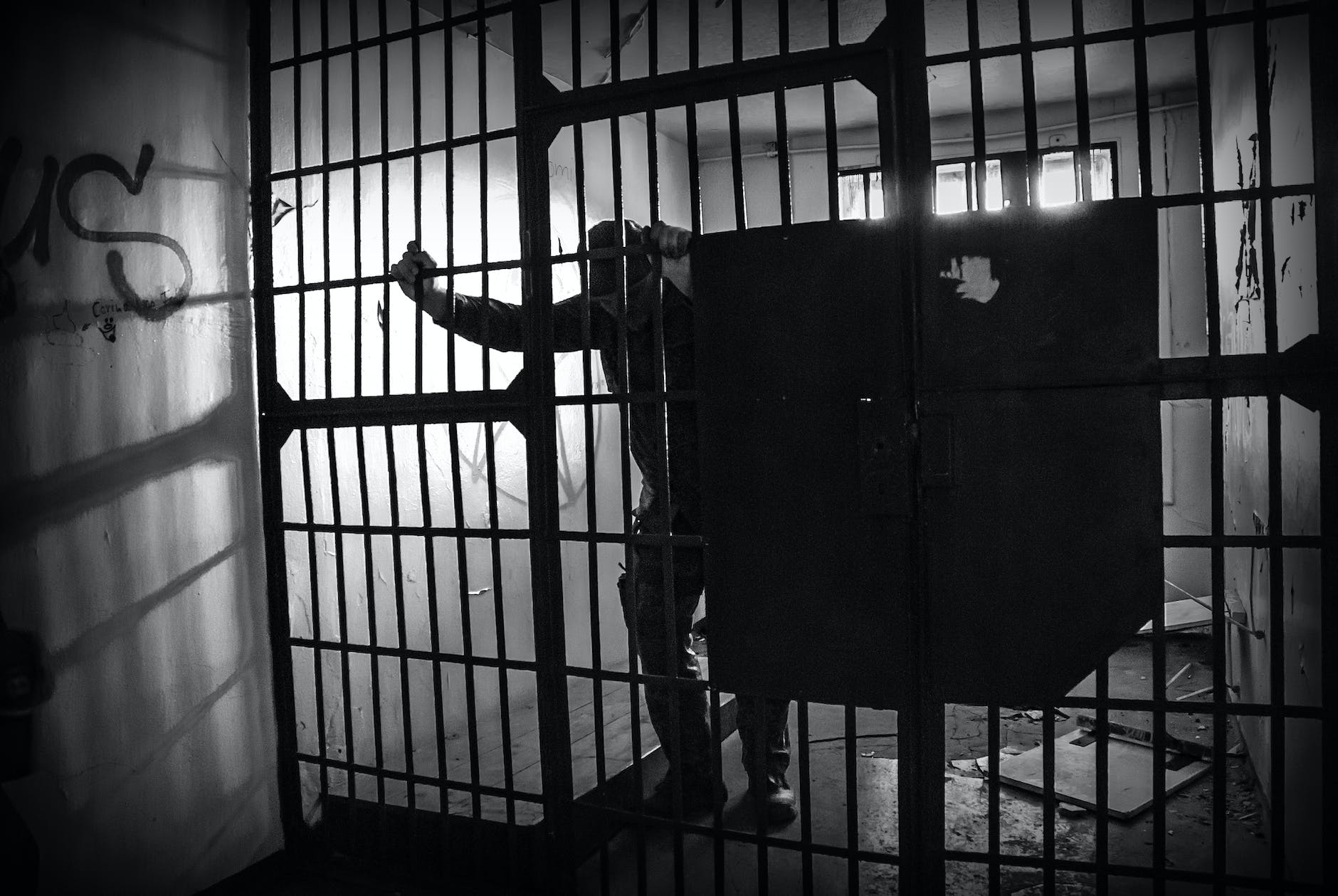
Over-identifying with our pains and obsessing on what happened to us can lead us to reject the deliverance that is offered, because we start thinking that healing means saying our wounds didn’t matter. Even more perversely, holding on to our damage can be used as a way to justify our own misbehavior afterward. Thus, God is offering us to look to him and live, but we first have to choose to stop remaining a prisoner.
And if men come unto me I will show unto them their weakness. I give unto men weakness that they may be humble; and my grace is sufficient for all men that humble themselves before me; for if they humble themselves before me, and have faith in me, then will I make weak things become strong unto them. - Ether 12:27

Thus says the LORD: "Cursed is the man who trusts in man and makes flesh his strength" - Jeremiah 17:5
The intended effect of our wounds is that in our weakness we might turn to God, who will heal and make us strong. But that requires stepping fully into our hurt, letting it wash over us, and asking for God to meet us in the middle of all that pain. But what if He doesn’t show up? What if we are consumed?
It is natural to have a fear of facing the pain, and thus many of us will never even try to take that step. We instead try to bury our wound. We act tough, we say “yeah, it happened, but so what?” We claim that our wounds made us stronger, that they made us grow a thicker skin. Or maybe we try to deny that they ever happened, changing the subject anytime someone brings the matter up. In either case, we put on a show that the wounds are unimportant and don’t need to be examined, and that we are well and past them, but nothing could be further from the truth. If we really were past them, there would be no fear of bringing them into the light. A tough wall around the wound only reveals how upset we still are about it.
Surely he hath borne our griefs, and carried our sorrows - Isaiah 53:4

Behold, I stand at the door, and knock: if any man hear my voice, and open the door, I will come in to him, and will sup with him, and he with me. - Revelations 3:20
One way or another, wound tends to lead to building up walls. Sometimes walls are a good thing, a necessary survival mechanism for keeping our oppressor out. Our natural instinct with physical wounds is also to cover them up, to shield them from any outside aggravation. But walls tend not to discriminate. Often they keep everything out, not only the source of the pain. Obviously this becomes a problem if we now stand before the physician and we still can’t expose our wound for healing. We need to let the physician in, even if it will initially cause even more pain, so that we can start becoming better.
Jesus stands at the door and knocks. He is reverential and respectful of our pain, so he does not force his way into our wounds. If we absolutely refuse his healing he will wait. If we never accept his help he will never force it upon us. But he really can help us if we will let him. He has felt it, he has borne it, he has descended into it and risen above it.
If we will not let Christ in, then the wound will fester. It will grow and it will infect. Most addicts don’t initially recognize the connection between their shameful behavior and the unhealed pains for their youth, but through time and exploration the links become clear. One of the greatest sources of trouble in our lives is things that we should have cried about but never did.
***
At the start of this post I mentioned being struck as a child. This pain was most typically the result of not being able to play quietly enough. I was expected to keep entertained by myself, in a way that was contained and non-intrusive. I would try to do that, really I would, but I was a boisterous boy, and I would raise my volume without realizing it, and then I would be hit. A few days ago I mentioned that a key part of my façade is that I try to be a people pleaser, never a bother to anyone. Can you see the connection to that from this wound?
There was also a wound of isolation. I was homeschooled, and any would-be friends were told over-and-over that I wasn’t able to play with them until they stopped asking altogether. As I came into my adolescence I wanted to have meaningful relationships with girls, but I was such an outsider to every social norm that I could never relate to them. Can you see how this wound connects to my addiction for pretend-love-on-demand?
And there were also wounds for being unintelligent. I was pushed to get into college as early as possible, being punished when I did poorly on the admission tests, and being treated as the stupid child for not making it in until I was sixteen. Can you see why I cheated for better grades and made up a façade of being ultra-intelligent?
Our shame is nothing more than a misguided way to cope with our wounds. It tries to alleviate painful shortcomings, but tragically it often does so in a way that only reinforces them. Relying on cheating and lust gave me artificial grades and relationships in the short term, but they further confirmed to me that I wasn’t intelligent or social enough for the real thing.
Our façade is nothing more than an over-compensation for the wound, where we pretend to be all the things that our wounds have told us we are not. In our childhood mind it seemed that we were denied connection and love because of these shortcomings, and so we end up with the false belief that we must project strengths in these areas to be worthy of that connection love.
And so, the wound is a layer deeper than either the shame or the façade, but it is not the true core of who we are either. Defining ourselves based on our wound prevents us from living with truth and joy, same as identifying at the other two levels. There still remains a deeper layer to uncover.
In fact, the reason the wound hurts us so much, is because it is a direct assault at that deeper core. Our wounds put us on such a long and misguided path because they make us forget who we really are. They make us forget our own divine self.



 Spiritual Wanderings