2 On the first day of the first month shalt thou set up the tabernacle of the tent of the congregation.
The Israelites have now completed a great work, the creation of a beautiful tabernacle! It is incredible that they produced something like this having just come out of slavery and now living in the middle of the wilderness. Currently, the tabernacle is disassembled in its several parts, and now those parts need to come together in the desired form.
This again brings to mind the creation of the Earth at the beginning of Genesis. There, each day of creation was focused on its own element, each treated as an individual unit. But when we walk around the earth today, we see all these individual elements combined together in harmony. Land and water and animals and plants and stars and sun and people all overlapping in their systems and functions, all combined to the glory of God. So, too, the individually magnificent Ark of the Covenant, and brass altar, and golden menorah, and woven tapestries would all be assembled to one higher whole.
In the following verses, God will describe the correct order for all these separate parts to come together. This sequence would not only apply to this initial assembly, but every time that the Israelites traveled to a new destination and there reared the tabernacle. This repeated assembly is symbolic of how divine creation is not a singular event, but one that must be repeated and refreshed. We see this in God’s creation, where the elements of the earth are cyclically reassembled into the bodies of the new generation of people, animals, and plants. We see it in the hearts of the disciples that are continually refreshed, renewed, and recommitted as they toil through life’s distractions and sorrows.
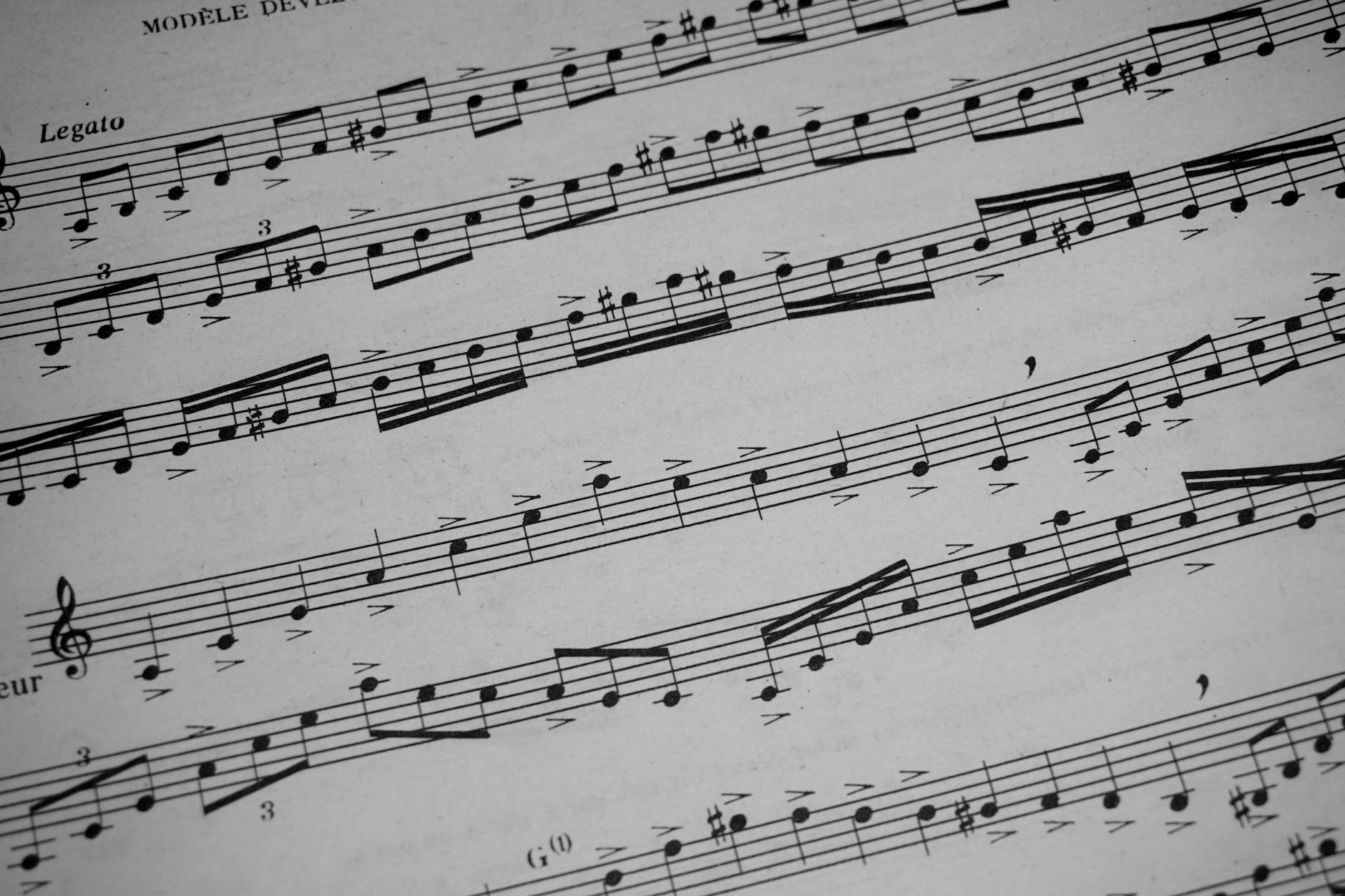
Individual notes might have a beautiful resonance, but if they stand alone they seem random and purposeless. It requires as an external composer who can arrange them in a sequence for them to have a greater function and beauty. Each note knows nothing of the greater song, yet each is essential to it.
So it is for the stars in the heavens. Individually each is beautiful, but if separated from the rest there are no constellations, no signs of the seasons, no greater whole in the heavens. The full picture only comes when all are taken as a whole, but the whole can only exist because of the individual contribution of each member.
And so it is also for us and the good that we do. We do not know the greater song, the greater sign that we are a part of. We try to live good lives, we try to help where we can, we try to make something beautiful, and each of our efforts are worthy in their own way, but they tend to be localized and short-lived. But if we could see how all of our small, random efforts were being combined and arranged alongside of one another, we would realize that a great author and composer has arranged us with purpose and intent, forming a crescendo, a constellation, a beautiful, greater whole.
Now and again, if we are lucky, we occasionally catch the smallest glimpse of the larger picture, just enough to convince us that there is a symphony and a shape formed through all of humanity. That greater whole surpasses each individual part, but it can only exist because of each individual. I am sure that when we pass over to the other side we will finally be able to appreciate the finished work at a distance, and we will find closure in knowing the vast beauty we were all a part of.
I have spent quite some time talking about the situation of an addict trying to move away from the past and a wife who is still wounded by it. The addict is trying to define himself by new actions, but the wife still has things to say about the old ones, creating a friction between them. I have spoken with many addicts who felt that they were trying to let go of their old identity but their wife was still trying to cast them in it.
This disparity is especially pronounced when the addict’s behavior was kept a secret from his wife. The addict would have had years to grapple with his immoral behavior, fight through his sense of identity, and ultimately conclude that he was going to live a higher way. He would have done all of this at his own pace, according to his own leisure. The wife, of course, has had an entirely different situation. All at once she has had dumped on her years of history that she never knew about. She has to process all the same questions of her husband’s identity that he had literal decades to resolve. If she is casting her husband in the role of the liar addict, it is because she is still coming to terms with the fact that he played that role for years. Many times this inner conflict will outwardly manifest in an outburst of anger. This is entirely understandable, and even inevitable.
That isn’t to say that every angry outburst can be condoned, though. I pointed out at the start of this series that there are lines which it is never okay to cross. There are words designed to break another person and make them lose faith in themselves, and these are never appropriate. Of course, it’s hard to say exactly at what point this line is crossed, because it depends on the nature of the person being berated and it depends on the intent of the speaker.
The same goes for actions that ruin the reputation of the addict. In some cases it might be proper to enlighten others to the full nature of the man they thought they knew, while at other times it is purely an act of vengeance.
Of course there are also destructive, reactionary behaviors such as having an affair or punishing the addict through his children, which are never appropriate. There can even be instances of the wife trying to inflict physical harm on her husband, which is also always unacceptable.
I could go on, but the point is that there are lines that must not be crossed, and it is up to the addict to lay those out around himself and then get away from any situation where they are trespassed over. Of course, the wife should have these lines for herself as well. There are certain behaviors that she should not tolerate, such as being lied to, and she should remove herself from the situation if those behaviors are continuing. In short, each spouse needs to have their own boundaries.
Doing the Work)
In this series I have also talked about the need for each spouse to do their own work. The best thing that the addict can do for the relationship is to sincerely work his recovery and show his wife by example that he is genuinely becoming a new person. Also, I discussed the need for him to understand the pain that is behind his wife’s anger, and do the work of recognizing and empathizing with those overwhelming emotions. As for the wife, the best thing that she can do is work with a counselor to address the storm inside her heart. She must come to terms with who her husband is, what it does and doesn’t say about herself, and what she wants to do as a result. At some point she also needs to let of her anger and hate, in order to live a life free of corrosion.
The addiction and trauma recovery program that my wife and I went to strongly encouraged each spouse not to make any life decisions for a year. They told us we needed to get to a grounded place. We each needed to find out who our authentic self was and calmly make decisions that were consistent with it. At the end of it all we wanted to make choices that we could honestly say were done in good conscience.
But as I have discussed previously, that presupposed that each of us really would do our own work. Sometimes it was hard for us to take a hands-off approach to the other’s recovery. We each had wounds and egos, and when they got bumped and bruised we each wanted to explain why the other person was always at fault for it. It was easier to blame the other than to do the hard work on our own self.
Certainly I wouldn’t expect any couple to be perfect in this regard. There will be missteps, there will be lines that get crossed and apologies that need to be made, and that goes for both the husband and the wife. There does need to be some allowance for one another not being perfect.
Let me conclude by saying that I have seen for myself that even such deeply flawed and deeply wounded persons as an addict and his wife are still able to make their way through if they sincerely try. People that seemed doomed to collapse under their pain and weakness can reveal a surprising degree of resilience when they are living honestly. With a little help from professional counseling and a lot of help from God, they can make it if they try.
NOTE: Throughout this series I refer to the addict as “he” and the injured partner as his “wife.” This is merely a convenience for maintaining consistency. It is entirely possible for the addict to be a woman and the injured partner to be her husband. It is also entirely possible for the strained relationship to be between non-romantic partners, such as with a parent and a child.
I have made the case that both the addict and his spouse have their individual work of recovery and that each of them needs to be active in it for their own sake. I have stated that this is the only way for them to become whole individually, which is already a worthwhile endeavor, but that this is also a prerequisite if they are ever again to be whole in their union together.
This brings up the question of what happens if both members of the relationship aren’t doing their work? Or what if only the addict is, or only the spouse? I thought it would be worth-while to consider all of the possible configurations and all of the different choices that they lead to. Like the branches of a tree, each individual decision splits into multiple possible futures. Today I will cover the most common and general options, which may manifest themselves in numerous ways.
No One is Doing Their Work)
The first option is that the addict isn’t really working on addiction recovery and the wife isn’t really working on trauma recovery. Perhaps they make an effort at first and burn out, or only ever go through the motions, or don’t even make any overtures towards getting better at all. Whether consciously or not, they decide that the effort of recovery isn’t worth it, and they would rather continue with things as they are.
There are two main ways that this situation might play out. The first is that the addict publicly continues to do behavior that is damaging and hurtful and the spouse continues to be incensed at his choices. Argument and self-justification will be constants in their household, thoughtless actions and harsh words will damage one another, creating great emotional scarring in them both. Either they will have a totally loveless union, or they will decide to part ways bitterly.
The other option is that each of them tries to deny the reality of what’s going on. The addict tries to hide his offensive behavior and the wife knows it is happening but turns a blind eye. For the sake of comfort or appearances they try to live as if there isn’t anything wrong at all, silently agreeing to just not bring the matter up anymore. Of course, no matter of pretend will take away the damage. They are living a lie, and the mutual disrespect will stretch a great hole in their hearts.
One is Working)
The next option is that only one member of the relationship is doing their work. It might be the addict sincerely striving to overcome his behavior, but his wife insists on holding onto hurt and anger, or it might be that the wife is working to heal her wounds and forgive, but her husband has no intention of ever changing.
Pretty soon this disjointed approach will separate the two into very different circles. One is trying to live a healthy and productive life, the other is constantly stuck in place. One outcome of this would be divorce. It might be that the healing partner seeks to move on to a relationship that is on more equal footing, or it might be that the complacent partner wants to stop feeling guilty for not trying.
Another outcome might be that they stay together, but start living totally different lives. Perhaps due to pressures of family or community, they feel that they have to hold the relationship together. Perhaps the member of the partnership who is actually trying feels that he/she must sacrifice his/her own interests to provide greater stability to the children. I believe the risk for unhealthy self-denial is very high here, but only you can judge your own situation.
Both Are Doing Their Work)
The final and best option is that both the addict and the wife are doing their work. The addict is overcoming his nature, the wife unburdening herself from the problems that don’t belong to her. Each of them is looking ahead to a life that is abundant and centered on truth.
An obvious outcome of this is that the addict and the wife find that they can rebuild their relationship. Or perhaps more accurately, they find that they can build a new one together. They sweep out the old and start anew. They will enjoy a union that exceeds any that they had before, for the first time they are building it on a foundation of truth.
It must be noted, though, that even in the situation where both parties do their work, it is possible that they find they are no longer compatible with one another. Perhaps they came together due to unresolved insecurities and encouraged the worst in one another. In this case, it might be to the benefit of both to let each other go with a full heart, hoping that they will find a union that is better fit to their healthy self.
The Ends)
Here we have multiple paths, but really there are only three outcomes. They are a dysfunctional relationship, a painful separation, or mutual wholeness. Each decision comes with a heavy cost. Making real change is expensive up front, but avoiding real change takes its toll over the rest of your life. Perhaps you had intended to spend your time and energy elsewhere in life, but believe me when I say that this is the only work that really matters. This is the work of the soul, and you owe it to yourself to do what is right, no matter what follows.
NOTE: Throughout this series I refer to the addict as “he” and the injured partner as his “wife.” This is merely a convenience for maintaining consistency. It is entirely possible for the addict to be a woman and the injured partner to be her husband. It is also entirely possible for the strained relationship to be between non-romantic partners, such as with a parent and a child.
In my last post I pointed out that many of our emotions are regulated by our subconscious mind, meaning that a spouse who has been hurt by her addict-husband’s behavior might have sudden bursts of tremendous anger, which unbeknownst to her is actually covering up the intense grief brimming just beneath the surface.
I’ve already mentioned that anger is often a secondary emotion, used to mask our fears or pain. Since anger is the side that gets presented publicly, it is what people typically address when interacting with us, either by appeasing to, or reasoning with, or arguing against it. But since the anger isn’t the real underlying issue, anything addressed towards it isn’t actually going to help. Interfacing with a wounded wife’s anger does nothing to help her grow past it.
Now an injured wife might feel upset at the notion that she needs to grow past her anger. She might say that her husband is deserving of her anger, that his actions have natural consequences. And while this is true, the reason for a wife to deal with her underlying issues is for her own sake, not her husband’s. Even if she has no intention to restore her relationship with her husband, it is still to her own benefit that she get past her mask of anger and process the pain hiding underneath.
Even if a wife felt like her husband needed to be punished for what he had done, it is a terrible fate to take upon oneself the role of executor. Staying in a place of rage only makes the wife a continual prisoner to the pain that her husband inflicted upon her. Shouting and berating might feel like she is claiming control of the situation, but needing to do these things only reveals that the wife still lives under the power of her addict-husband’s choices.
Just as surely as the addict needs to become free of his addiction, his spouse needs to be made free of his addiction also. They each have their own work to do here.
Doing Your Own Work)
It is inevitable that the path of healing for both spouses will involve one another. Even if they decide to go their separate ways, they each must resolve the idea of the other person in their mind. The addict must come to terms with the loved one he has hurt. The spouse must come to terms with the loved one that hurt her.
Some of this work can be done together with late-night conversations and couple’s therapy sessions, but much of this work is going to be individual. In fact, a key step in the recovery journey is for both parties to stop trying to manage the journey of the other. The husband needs to not set a timeline for his wife to stop hurting, and the wife needs to stop evaluating whether her husband is recovering in the “right” way. Obviously each needs to be active and sincere in their work and needs to seek out the best resources that they can, but so long as their efforts are genuine they should be trusted to progress at their own pace.
For my wife and I this meant meeting with our own therapists and working our own professional recovery program. It meant having our own homework, meeting with our own groups, and making our own plans of action. We would talk to each other about all the things we needed to talk about, we would update one another on our journey, but we each found healing in our own way and in our own time. After we had each come to a healthier, truer place, we were able to come together and decide what the relationship would be moving forward.
Of course, what I’m describing is not necessarily the process by which every marriage will be saved. There are couples who did their work and still decided that they didn’t have a future together, but they were able to part ways as whole individuals. And that is what this is really about, doing the work to process your own issues and make yourself whole, and that is prerequisite to having a meaningful life, whether together or apart. This process isn’t guaranteed to make your marriage whole, though it is the only way that your marriage even stands a chance.
NOTE: Throughout this series I refer to the addict as “he” and the injured partner as his “wife.” This is merely a convenience for maintaining consistency. It is entirely possible for the addict to be a woman and the injured partner to be her husband. It is also entirely possible for the strained relationship to be between non-romantic partners, such as with a parent and a child.
Now there is at Jerusalem by the sheep market a pool, which is called in the Hebrew tongue Bethesda, having five porches. In these lay a great multitude of impotent folk, of blind, halt, withered, waiting for the moving of the water. For an angel went down at a certain season into the pool, and troubled the water: whosoever then first after the troubling of the water stepped in was made whole of whatsoever disease he had. And a certain man was there, which had an infirmity thirty and eight years. When Jesus saw him lie, and knew that he had been now a long time in that case, he saith unto him, Wilt thou be made whole? The impotent man answered him, Sir, I have no man, when the water is troubled, to put me into the pool: but while I am coming, another steppeth down before me. Jesus saith unto him, Rise, take up thy bed, and walk. And immediately the man was made whole, and took up his bed, and walked: and on the same day was the sabbath.
COMMENTARY
Sir, I have no man, when the water is troubled, to put me into the pool Previously I examined our reluctance to admit when we are wounded or broken. But then, even when we are willing to admit as much, we still might struggle to know what to do with that fact. Once we know that we have a problem we tend to look for solutions, but if the correct solution is not immediately evident, we usually end up chasing fruitless remedies, or trying to medicate the pain with addiction and disconnection. Such was the man at the pool of Bethesda, forever waiting for a healing that he was incapable of receiving. It was the place to go, the thing to do, the world’s solution for his problem. But it just wasn’t going to work for him.
When Jesus saw him lie, he saith unto him, Wilt thou be made whole? The man could not find his healing, because he could not meet the terms under which it was doled out. He was physically incapable of finding success. I have felt the same when I have said to myself I need to be healed by God, but I have to earn it first by becoming perfect. This is a physical impossibility, and if I insist on this path, I will only ensure that I am never healed. Jesus comes with another offer, comes with terms that each of us can meet. It is simple: “wilt thou be made whole?” The simplicity of the way often makes us skeptical. True healing and change cannot come so freely we think. And normally, no, true healing isn’t and can’t be so free in our fallen world. That is why we call it a miracle.




 Spiritual Wanderings