Hatred or Love of Self

Over the past few decades, deaths of despair have climbed steadily in the United States. We seem to be a culture progressing into deeper and broader levels of hopelessness and personal anguish.

Many have pointed out how more and more people seem to hold an intense self-hatred also, the most likely cause of these increasing deaths. Naturally, it is assumed that the cure would be more self-love. More self-affirmation. More “me time.” But this assumes that self-hatred and self-love are mutually exclusive, and that they cannot exist in the same body.

In my experience, that assumption could not be further from the truth. Indeed, I have seen in my own life how the times of overabundant “self-love” have fueled the self-hatred that followed. Urging people to pursue more self-love might be like seeing someone who is drowning and bringing them a helpful glass of water.

In my experience, love is the cure to despair, but not self-love, divine love. I don’t need to find myself, I need to find Him. I don’t need to give myself what I want, I need to give myself what He wants for me. The true self-love that actually drives out self-hatred is only found in the love that we cultivate with our Creator.

A Pivotal Moment- The Death of God

Mankind Ascending)

In the late 19th century, Nietzsche boldly proclaimed the Death of God. The world had passed through its Enlightenment Era, scientific discoveries were breaking barrier after barrier, and industrialization would see a dramatic increase in the average wealth of the everyday citizen. With things becoming so self-manageable and positive, what need was there for God?

Even as he made this observation, Nietzsche’s words also showed extreme caution. He foresaw existential quagmires as people gave up their traditional morals and purpose. Would we be able to find a new source for motivation and decency, or would we be blessed all the way into a state of despondency and depravity?

As it turned out, humanity’s ascension was not without serious setback. There was a crippling depression, terrible world wars, organized crime waves, and continued racism. Did these serious problems dispel Nietzsche’s vision of a godless society? Actually, no. If anything, they seem to have hardened that vision in our cultural mind. So now mankind was ascendant, but also cynical, a most dangerous combination. As a whole, we still believed that we didn’t need God, but also a growing resentment against Him, one another, and all of creation.

Competition and Nihilism)

Though Nietzsche might have hoped that we would find some new unifying principle, we never did, and so shifted into a zero-sum game where every side seems to feel that they can advance only at the loss of the others. Significant portions of society have bought into the idea that everything is a struggle for power. This mindset pits poor against rich, women against men, and black against white.

If we are not all children of God, members of a universal family, then why not look out for our own interests and play for our own advantage? From this perspective, we have only to look at whoever was doing best at the turn of the century, and clearly those people were “winning,” so now everyone else needs to compete against them and grow by taking away from them.

So obsessed have we become by this game, that we have ignored the fact that no one even cares about the prize anymore. They want to win just so that they can say that they are winning, but they’re the most miserable “winners” the world has ever known. Not only have we not found a new unifying principle outside of God, but we also haven’t found a purpose outside of Him either. We say that all we want now is career, fame, and fun, but do those goals really sustain us?

Look at the end result of these worldly pursuits: incredible rates of depression, suicide, singleness, childlessness, abortion, obesity, drug abuse, alcohol abuse, media consumption, complacency, declining education, indifference, dearth of creativity, crime, and mass murder to name a few. So now we’re striving against each other to get at the top of the heap, but one has to stop and ask, what is even the point?!

A Current-Day Analysis)

It is a most disturbing picture. Nietzsche correctly saw that humanity was entering a new era, but it did not turn out to be the utopia that so many hoped it would be. The dream has become a nightmare. Suddenly, old and “quaint” fables like the Tower of Babel and Icarus flying too close to the sun become incredibly relevant. We have ascended on high, but was to our ruin and not our salvation?

As I said in my previous post, the world seems to be shifting again, but I am undecided as to whether it is to something better or worse. Now that we have this deeper analysis of society in front of mind, we are ready to look at some of those changes in the proper context and can discuss what they do or don’t say about this deep underlying sickness.
Scriptural Analysis- Genesis 3:1-3

1 Now the serpent was more subtil than any beast of the field which the Lord God had made. And he said unto the woman, Yea, hath God said, Ye shall not eat of every tree of the garden?

2 And the woman said unto the serpent, We may eat of the fruit of the trees of the garden:

3 But of the fruit of the tree which is in the midst of the garden, God hath said, Ye shall not eat of it, neither shall ye touch it, lest ye die.

I find very interesting the question Satan leads off with. Drawing attention to the fact that God had forbidden the eating of this fruit seems a risky tactic, more likely to prevent Eve from doing so than anything else. Wouldn’t it have made more sense to distract her from that memory while he tried to get her to eat it?

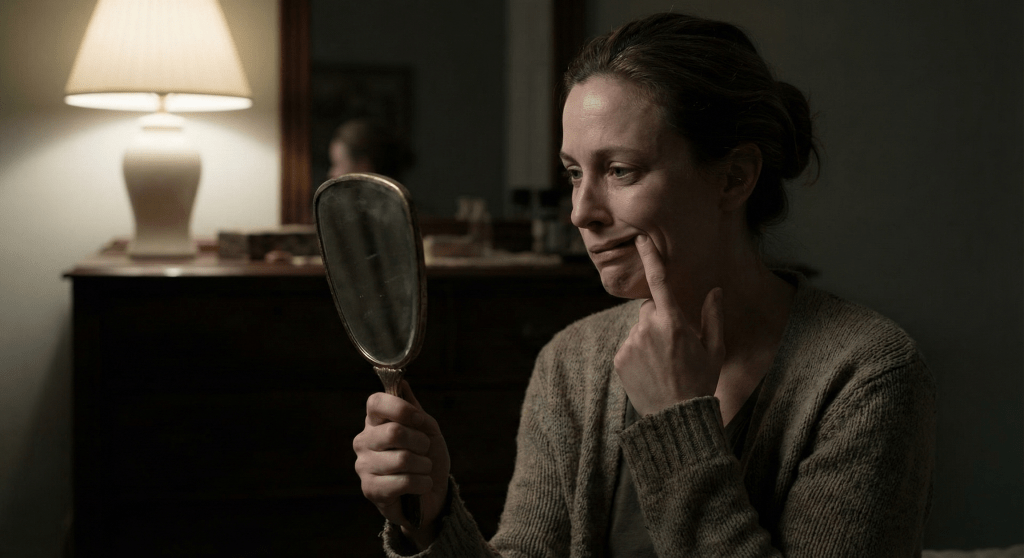
But then she might trespass God’s commandments, but it would just be an accident, not a willful choice, and that is not what Satan wants. I firmly believe that Satan wants us to know what we do is wrong as we do it. He doesn’t want us to ignorantly partake in behaviors that cause us self-harm, he wants us to look ourselves in the eye with shame because we knew better and did it anyway. He wants us to lose faith in ourselves, to give ourselves over to despair.

Optimism in a Falling World- Question

I have always meant for these studies to be based around universal and timeless questions, rather than obsess over whatever the latest social controversy is. But of course I am a member of this world and I cannot help but feel affected by the great, rolling movements that disturb it.

And in all these passing tumults I have often seen a repeated theme of discord. I have an overwhelming sense of sides unwilling to work together, of a world falling apart, and of an impending fallout looming ahead. And as one man in a sea of billions I feel helpless to turn that tide. Even the scriptures foretell of our world falling to ruin before the second coming of Jesus Christ.

When I consider thoughts like these I find it very difficult to invest in what appears to be a losing battle. What would be the point? Shouldn’t I just take care of myself and let the world fall away?

But that doesn’t feel right to my heart either. Despair has never been one of the virtues championed by the gospel! With this study I want to examine how we can remain optimistic in a world falling away. What exactly is our duty to society as it becomes increasingly disinterested with our mission? How did the early disciples remain motivated in the face of apostasy and martyrdom? What can we do to increase our sense of hope, and what is that hope founded in?

In the meantime I’d love to hear about your own experiences dealing with cynicism. Have you ever lost faith in humanity, but then found it restored? Or are you even now struggling to keep your “perfect brightness of hope” alive? What have you asked in prayer and done in your actions to help with this matter?

Who Am I?- Personal Example #1

Every day I try to start with some clear commitments. Things like limiting my use of digital entertainment, making time for regular prayers, actively avoiding temptation where I can, etc. As I have shared before, though, sometimes I rattle those commitments off without really thinking about them, while other times I am able to be intentional in the ritual, and really feel the commitment as I make it.

Even when I make a commitment sincerely, though, a day is a very long period of time. Once committed, it is easy to dismiss the first distraction, perhaps more difficult to turn from the second, some compromises are made on the third, and resolve is entirely forgotten come the fourth.

This happened to me just yesterday, where I gradually fell from my commitments and reverted back to a default, auto-pilot mode of life. I felt it happen, and having already fallen, found it very easy to say “well, that’s the entire day gone down the toilet. I suppose I can always try again tomorrow.”

A few hours later I was playing on my phone and felt a prick of my conscience to stop and engage more with the life around me. At first I dismissed it, the day was already ruined after all. Tomorrow.

Then the feeling came back, and with it the thought that I had forgotten myself. I had had a bad moment, and from that had decided to give up on myself for the entire rest of the day, and God was very not okay with that.

God was asking me to come back to myself, to recognize that no matter how many mistakes I had made, and no matter how recently they had been, my heart was still within reach and I was still worth fighting for. God wasn’t trying to take the phone out of my hands, He was trying to take out the shame that was making me hide. He was trying to awaken the real me.

So I put down the phone and thought “alright, I’ll be myself then. I’ll be myself right now.”

Count Your Blessings- Matthew 18:27-30, 32-33

Then the lord of that servant was moved with compassion, and loosed him, and forgave him the debt.
But the same servant went out, and found one of his fellowservants, which owed him an hundred pence: and he laid hands on him, and took him by the throat, saying, Pay me that thou owest.
And his fellowservant fell down at his feet, and besought him, saying, Have patience with me, and I will pay thee all.
And he would not: but went and cast him into prison, till he should pay the debt.
Then his lord, after that he had called him, said unto him, O thou wicked servant, I forgave thee all that debt, because thou desiredst me:
Shouldest not thou also have had compassion on thy fellowservant, even as I had pity on thee?

COMMENTARY

I forgave all that debt, shouldest not thou have had compassion, even as I had pity on thee?
Though the servant had been granted a great gift, the gratitude of it was not alive in his heart. At least not enough to share it with his neighbor. This illustrates one of the tragic results of getting lost in despair: how it sours our behavior towards those around us. One simply cannot lift another while they are themselves sinking.
Thus it is not enough to be blessed in life, one needs to feel that sense of being blessed as well. It is actually very easy to have all the good things in this world, and still feel empty inside and incapable of showing genuine love to another.
You cannot act as one that was found, if all you remember is what is was like to be lost. You cannot live as one that is saved, if you only recollect they way you were destroyed. Many times the act of remembering how we were saved before, is exactly what we need to save us again today.

Count Your Blessings- Question

There is a great deal of hardship in the world right now, and there will only continue to be so. Not just because of the long-term effects brought on by this global pandemic, but also because of the ceaseless local and personal trials that are forever bringing people to their absolute lowest points.

There are those that are becoming hopeless, and then doing desperate, tragic things because of it. Despair is one of the worst states to be in, one of the surest ways to crush a soul. As I consider how one combats such feelings of darkness, I believe it is essential to count one’s blessings.

I know that to anyone who is at the end of their rope such a recommendation might seem flippant, an attempt to just sweep real troubles under the rug. But that is not my intention at all. I genuinely believe that reflecting on the good in one’s life does a multitude of wonderful things for the soul, including refreshing and preserving it. I believe it is essential for the happiness of the afflicted, I believe it is essential for the continued happiness of the blessed.

As we take a look at all the ways in which counting one’s blessings continues those same blessings, I would love to hear from your own experiences as well. What sorts of things make you feel that you cannot muster up gratitude? How do you combat the pull towards despair? In what ways does the recognition of God’s blessings lift you through the hard times?

What Chance Do I Have?- Moroni 10:20-22, 1 Corinthians 9:10

Wherefore, there must be faith; and if there must be faith there must also be hope; and if there must be hope there must also be charity.
And except ye have charity ye can in nowise be saved in the kingdom of God; neither can ye be saved in the kingdom of God if ye have not faith; neither can ye if ye have no hope.
And if ye have no hope ye must needs be in despair; and despair cometh because of iniquity.

Or saith he it altogether for our sakes? For our sakes, no doubt, this is written: that he that ploweth should plow in hope; and that he that thresheth in hope should be partaker of his hope.

COMMENTARY

Wherefore, there must be faith; and if there must be faith there must also be hope
And if ye have no hope ye must needs be in despair
If we are unable to live in hope of our success, then all our discipleship will crumble in despair. If I have no hope of triumph, how could I act in faith? It would feel like a vain effort, and I would consign myself to inevitable ruin.
Hope is therefore not just some nice virtue to make our lives more pleasant, it is absolutely essential for our spiritual survival. For many, the entire struggle of discipleship is the struggle to simply maintain their hope.

He that ploweth should plow in hope
In which case one must understand that hope is not some vague thing that you either have or don’t have. Hope, like faith, can be exercised, can be cultivated, and can be grown. We must dare to hope, work ourselves up to it, strive for it continually. Even if you have only a little hope, plow and thresh in it, and the promise is given that you will partake of more.