Evidence in the Lack of Evidence

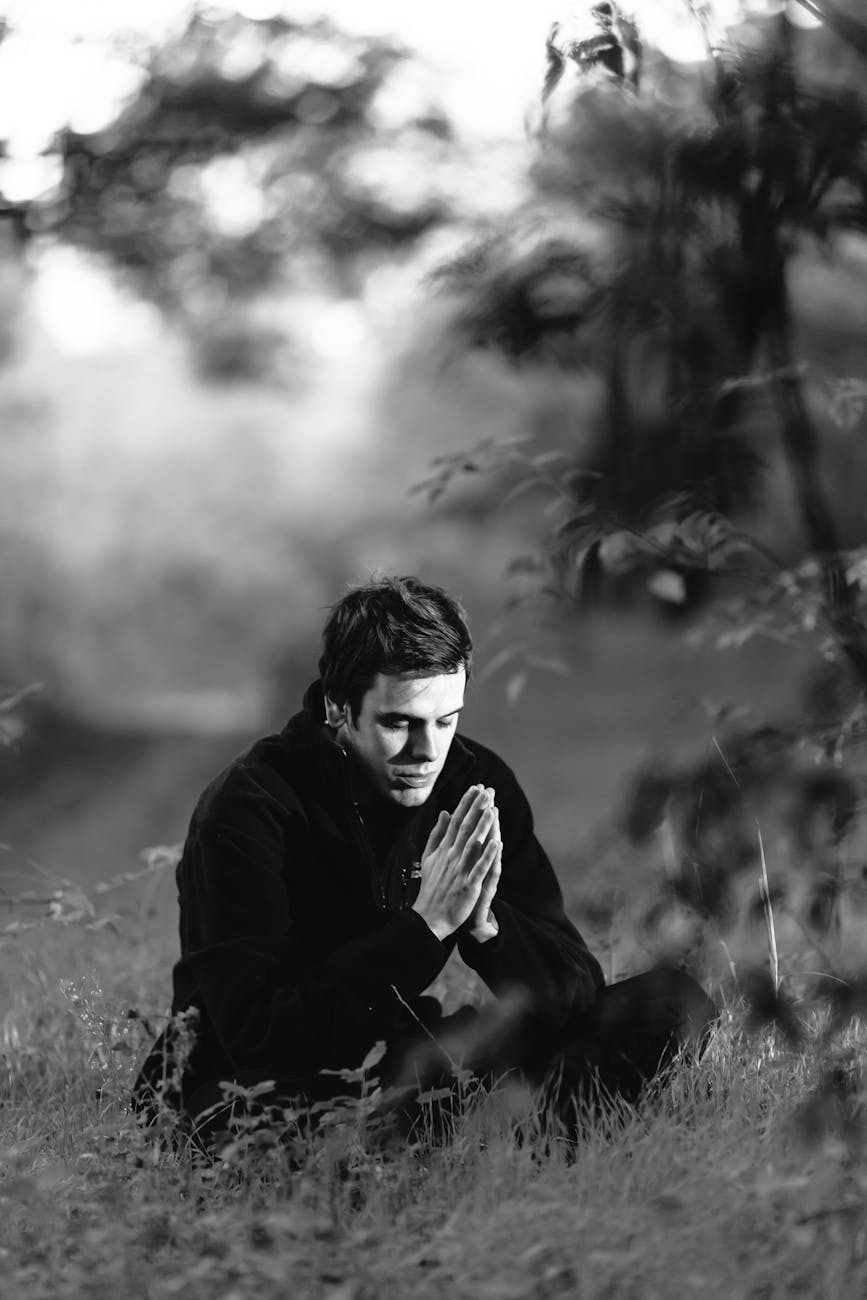
At key points in life, you must choose between that which is most beneficial to you and that which you know to be right. You will have to decide if you follow your conscience, even when there is no reason to assume a positive outcome for yourself.

It only stands to reason, however, that if you ever want to live in the hands of the supernatural, beyond the confines of mortal logic, that at some point you must make a choice just like this. Earthly outcomes follow choices based on earthly evidence. If you ever want a heavenly outcome, at some point you must leap with nothing earthly in view to catch you.

Thus, watch for these moments where there is no evidence that things will work out well, and in those moments take courage in the knowledge that the lack of evidence is the greatest evidence of all.

If God Can Do Anything

Because I believe that God can do anything, I believe that He can make any desired miracle come true for me! But even more impressive, because He can do anything, He can also make things work out without the miracle. Indeed, it requires less faith to believe that God can change the world to match my heart, than to believe that God can change my heart to survive in spite of the world.

Believe in the bigger God. Believe in the God who can make you whole, with or without the thing you most desire.

Is the Old Testament God Evil? – Response to Common Defenses #1

Yesterday I shared some of the common defenses to criticisms of God commanding the destruction of innocents in the Old Testament. I divided those defenses into three categories, and I would like to respond to each of those categories one at a time, explaining what I find convincing or unconvincing about them. Today, I will look at the first category, which was defenses that say that God never actually commanded such a slaughter. Here are two examples of this argument:

  1. God is exaggerating. If I say my favorite sports team “murdered” the other team in last night’s game I’m using the exact same sort of hyperbole. We never do read a verse describing the actual slaying of children, it was only the enemy army that was killed.
  2. This was the work of man, not God. Either corrupt leaders claimed to do this under God’s command, or translators misattributed these messages to God when it was really called for by man.

I wanted to start with these arguments because, frankly, I find them particularly unhelpful. That isn’t me saying that these claims are false, for all I know they could be completely valid, I’m just saying they are only conjecture and that they dodge the real issue.

Personally, it does not bother me to say that the Bible is the word of God…seen through a human lens. I am fine with acknowledging that it has several different versions of the same stories, not all of the details agree with one another, there is the possibility of human malfeasance and error, and some cultural nuances are lost on most of today’s readers. Because of all this, it is possible that when I read a passage, I am not actually getting the pure intention with which it was originally spoken.

But I think it is a dangerous to make oneself judge over which parts are genuinely from God and which parts should be cut out of our faith. To those that say that these passages are misinterpreted, or misattributed, or misunderstood, my reply is, “well, you may be exactly right…but what if God really did say this?”

If your testimony is dependent upon a particular reading of the Bible, and at some point you learn that your reading is false, does that mean that you no longer believe? If we can only accept God with the understanding that He did not order the destruction of these Canaanite nations, then must we reject Him if actually He did make that order? Is that the same conditional faith that we wish to inspire in others? To put their whole hearts and trust in God…well, as long as He didn’t order the destruction of the Canaanites?

Speaking for myself, I don’t know whether God really commanded the slaughter of innocents, but I seek to maintain my faith in Him regardless of whether He did or not. I seek to be able to trust in Him no matter if I understand His reasons or not. To that end, I choose to interpret these difficult passages as literal and accurate, so that I may work my heart into a place of believing no matter what.

Summary)

To be clear, I’m not saying that it is worthless to learn the evidence that lays behind these sorts of claims. I’m all for educating people to the fact that God may not have really commanded this thing. As long as that is not the end of the discussion, as long as there follows: “but even if He really did say to slaughter every man, woman, and child, I am still at peace because…”

Which is exactly what I hope to establish as I pursue this study. Thus, tomorrow I will continue by responding to the defenses that are designed to maintain faith in God regardless of Him ordering such a destruction.

Scriptural Analysis- Exodus 23:10-12

10 And six years thou shalt sow thy land, and shalt gather in the fruits thereof:

11 But the seventh year thou shalt let it rest and lie still; that the poor of thy people may eat: and what they leave the beasts of the field shall eat. In like manner thou shalt deal with thy vineyard, and with thy oliveyard.

12 Six days thou shalt do thy work, and on the seventh day thou shalt rest: that thine ox and thine ass may rest, and the son of thy handmaid, and the stranger, may be refreshed.

Today the laws of the sabbath are expanded and we are given the concept of a sabbath year, which is that after six years of working the field, then the field must be left to rest for the seventh. This is actually very practical, as sowing the same land over and over will take out all of its nutrients, and giving it a rest year to replenish those nutrients is better in the long run.

Of course, the land might naturally produce even without sowing. Vines and trees would continue to produce their grapes and their olives, and these were to be left for the poor and the animals. One can see why Jesus would later reprove the Pharisees for missing the point of the sabbath. From these verses it is clear that the sabbath was for the people, not the people for the sabbath.

Of course, for the owner of the field, having a year of no productivity would require an act of faith. When the Israelites were given manna they were told that God would allow them a double portion on the day before the sabbath, so they wouldn’t have to gather on the rest day. Once again, the owner of the field would have to trust that God would provide enough surplus in the six other years that he could rely on what he had stored up through the seventh. The Israelite might pursue his own wealth and ambition, but every seventh year he would be drawn back to remember his constant dependence on the Lord.

When the Light is Extinguished

When the light is fully extinguished
Nothing ‘fore us will be distinguished
Then anything might take form in the dark

The Basis for Following the Commandments: Part Three

In my last post I discussed how a belief that the Judeo-Christian God is real, benevolent, and all-powerful are necessary components to accepting the commandments taught in traditional Western ethics. However, those beliefs alone do not get us all the way to being convinced of exactly which law we need to live by. Today we will talk about the second aspect of our testimony that is necessary to follow these commandments. In order to abide by these rules, we have to believe that they are really coming to us from the God that we believe in.

The commandments that have been taught to us in traditional Western culture have all been derived from the Bible. They include the ten commandments that were given to Moses, as well as the others that are scattered throughout the sacred text. We follow them because we consider them to be the words of God, Himself, and since we believe that He is real, benevolent, and all-powerful, we are inclined to follow the instructions that He has given us. He would know, better than anyone else, what behavior would be for our own good, and following His plan would be the most certain way to achieve happiness and peace.

But what if one believes in God, but not necessarily in the authenticity of the words of scripture? We are thousands of years from the first writing of those words, and it is strictly a function of faith to say, “yes, these words really did come from the mouth of the Lord, and not just the pen of man.”

One doesn’t even have to get lost in academic arguments on the authenticity of the text. In my observation, the reasons why most people dismiss the Bible has nothing to do with scholarly analysis, but just because their default is not to believe something that is so fantastic and far removed from them. Even if one accepts that a loving God probably would leave instructions to His children, they might struggle to accept anything that purports to be that instruction. They have lost their capacity to believe in the incredible.

I turn these questions over to you. Do you believe that the Bible is genuinely the word of God? And if it is, do you accept that the commandments written therein are His genuine instructions to you?

If the answer to any of those is “no,” why is that? As with the questions of God’s reality, is there some experience or barrier in your life that prevents you from believing in anything that purports to be scripture? And even if you are prevented from believing by default, would you be willing to abide by the commandments contained in the Bible even while unsure of their authenticity, if only to see if they come alive for you as you do so?

If, on the other hand, the answer to all of those questions is “yes,” then we have established that God is real and His commandments are the same as what is taught in traditional Western tradition. Even with all that, though, there remains yet one more pillar of faith that must be established. Even if these are God’s commandments, how absolute are they? Is it permissible for us to flex and bend them? We will discuss that matter in the next post.

Right Before Belief

Sometimes you have to do what’s right
Before you believe in it
To find out that it’s real

Scriptural Analysis- Exodus 16:4-5

4 Then said the Lord unto Moses, Behold, I will rain bread from heaven for you; and the people shall go out and gather a certain rate every day, that I may prove them, whether they will walk in my law, or no.

5 And it shall come to pass, that on the sixth day they shall prepare that which they bring in; and it shall be twice as much as they gather daily.

After Israel’s grumbling the Lord gave Moses His answer, and note how He returns faithfulness for faithlessness. The Israelites had suddenly abandoned their trust in God, certain that He had brought them to ruin. They had become utterly hopeless and despondent. But though they had abandoned their faith in Him, God was still faithful in helping and preserving them. By a miracle He would rain bread down, literally a blessing from heaven. A reward in place of punishment.

There was going to be a catch to all this, though. God said that with this blessing would also come a test, to “prove them, whether they will walk in my law, or no.” And so He listed out some requirements for how the Israelites were to respond to this manna from heaven. There would be a virtually unlimited source available to them, but they were only to gather the necessary portion day-by-day, except on the sixth day they could gather twice as much, so that they could eat on the sabbath. These instructions would later be reiterated in more explicit detail, so that there could be no misunderstanding among the Jews.

It seems to me that God was making a point with this test. Did the Israelites complain and lose faith simply because they didn’t feel provided for, or because of some pull towards infidelity that lived deep inside of them? Would they keep His commandments once He had provided for them, or would they still feel compelled to hold something back? Was their faithlessness really about a problem with God, or was it a problem in themselves? We will see for ourselves as we read on.

Scriptural Analysis- Exodus 15:2

2 The Lord is my strength and song, and he is become my salvation: he is my God, and I will prepare him an habitation; my father’s God, and I will exalt him.

The song continues, calling the Lord Israel’s strength, song, and salvation. They proclaim that He will be their God, instead of any strange gods, such as those they must have become acquainted with in Egypt. They will favor Him above all others and be true to Him. As we will see, sometimes they would make good on that promise and sometimes not.

Something else that stands out in their promise is that they would “prepare him an habitation.” Israel had already been commanded to keep “the Lord’s law in the mouth,” and to hold his lessons “upon thine hand, and for a memorial between thine eyes.” Paul would also speak of the law being “written in their hearts” in later years. All of this represents giving God a habitation in one’s own person. His home would be in their minds, their hearts, and their deeds.

But, of course, there would also be a literal manifestation of these words, and very soon. Moses and the Israelites are also speaking of the tabernacle that they will build in the wilderness, that the Lord may abide with them as they go along their way. They would literally make God a part of their community, complete with His very own house, an actual neighbor in their city!

Scriptural Analysis- Exodus 15:1

1 Then sang Moses and the children of Israel this song unto the Lord, and spake, saying, I will sing unto the Lord, for he hath triumphed gloriously: the horse and his rider hath he thrown into the sea. 

We now return to the account of the Israelites, after they had finally rid themselves of the oppression of Egypt. After the miraculous escape through the Red Sea, it would appear that the Israelites understood that the Egyptian tyranny was permanently behind them, and so they wrote a song to commemorate the occasion.

Of course, the songs in the Old Testament lose much of their artistic merit in translation. They read awkwardly in their English counterpart, devoid of meter and tune. Instead it is the themes and ideas of the song that have been prioritized, and so those are the qualities that I will focus this study on.

This song was clearly meant to be a song of praise, focused on extolling the power and salvation of the Lord in freeing captive Israel. More specifically, it is focused on the event of God overthrowing the Egyptians in the sea. The song summons that particular image in its very first sentence, and will return to it again and again. The song is firmly tied to that event, and seems to have been written while the thrill of it was still fresh in the mind.

And this is the great power that rests in music. The thrill and rapture of an isolated moment can be imprinted into the notes and lyrics, like a mold, and then those emotions can be cast and recast into the hearts of future generations. I believe this was the purpose of this song, to transport all future believers to that singular moment of God’s power made manifest upon the waters of the Red Sea, though we never stood upon the shores ourselves.