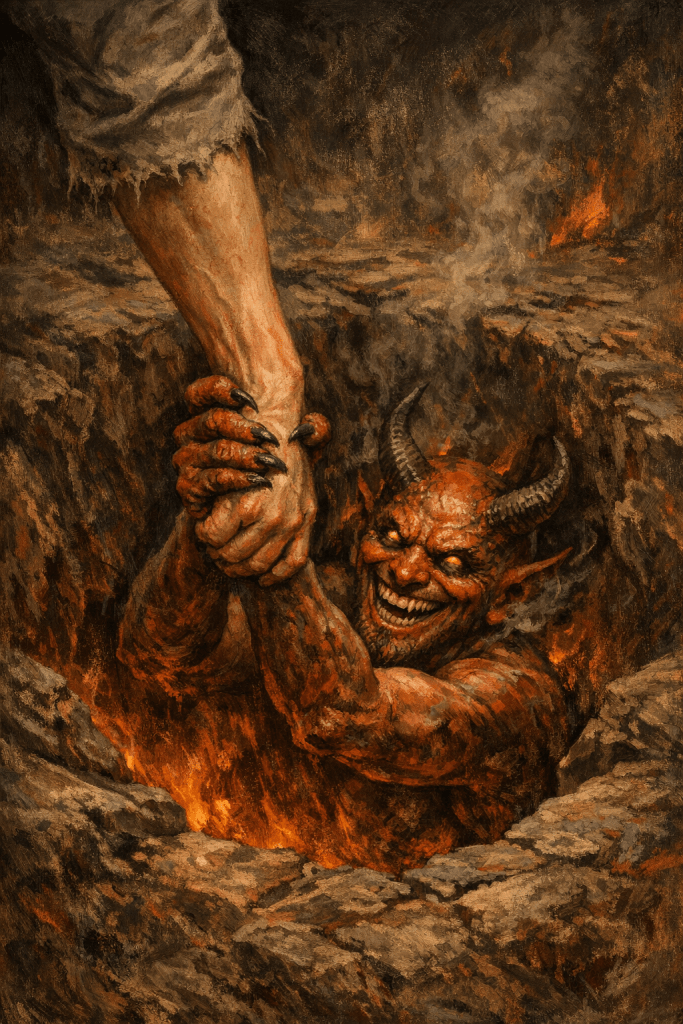
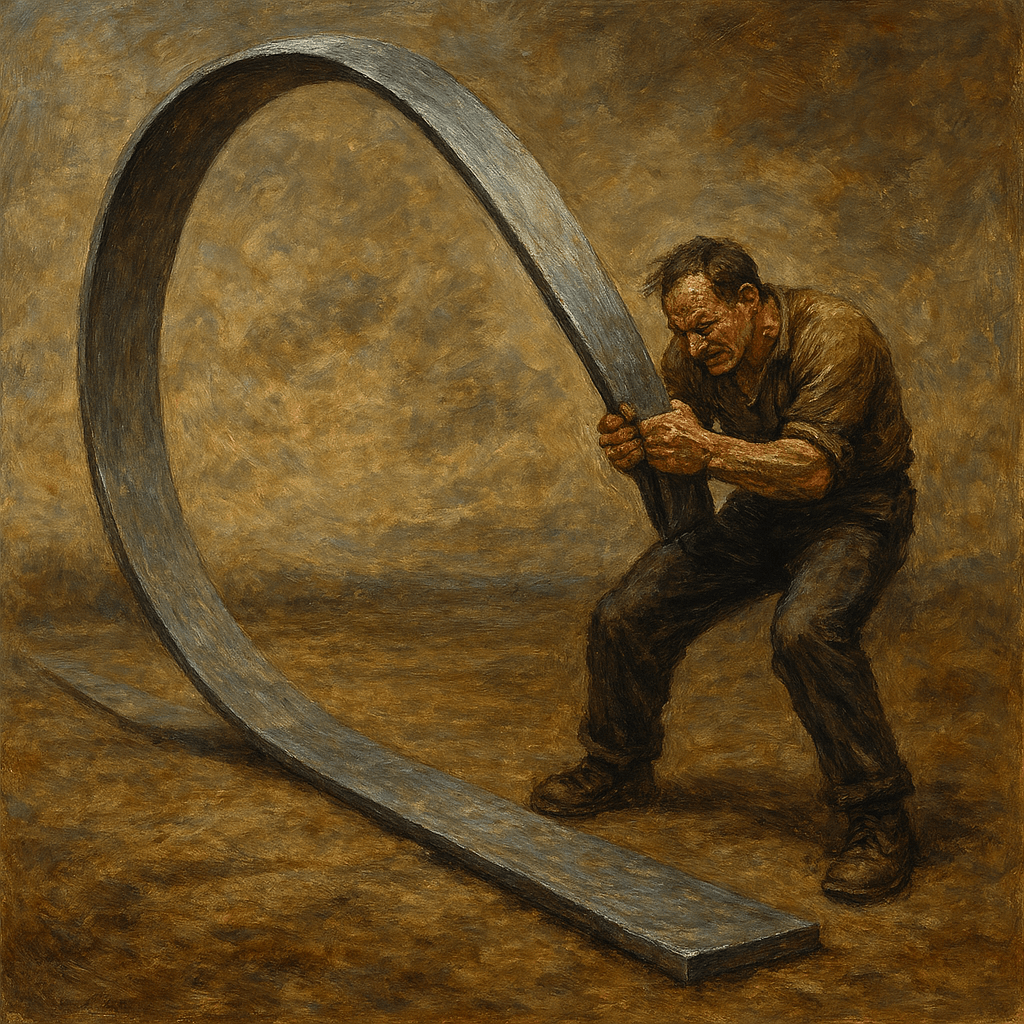
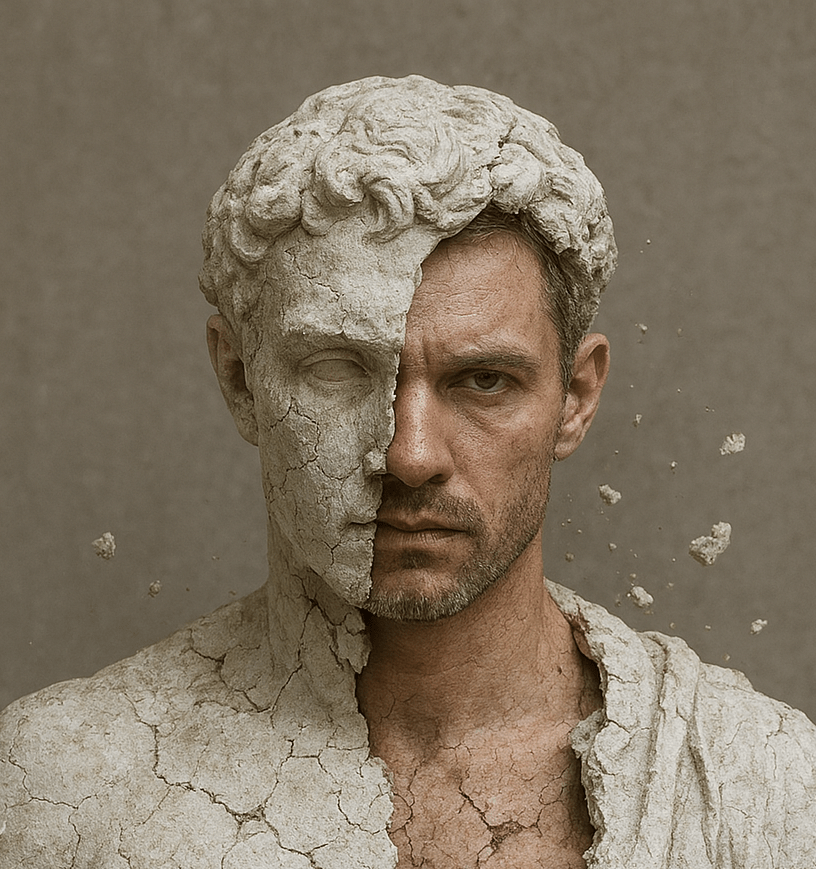
Man is mighty enough that he may bend God's creation
But it will always snap back

Man is mighty enough that he may bend God's creation
But it will always snap back
27 Whatsoever shall touch the flesh thereof shall be holy: and when there is sprinkled of the blood thereof upon any garment, thou shalt wash that whereon it was sprinkled in the holy place.
28 But the earthen vessel wherein it is sodden shall be broken: and if it be sodden in a brasen pot, it shall be both scoured, and rinsed in water.
29 All the males among the priests shall eat thereof: it is most holy.
30 And no sin offering, whereof any of the blood is brought into the tabernacle of the congregation to reconcile withal in the holy place, shall be eaten: it shall be burnt in the fire.
I discussed yesterday how the animal to be sacrificed not only stood in for the sinner but was also symbolic of purification as well. Today’s verses continue to make that dual meaning even clearer. It is a symbol from man of what is wrong, what he must give up, but it is also a symbol from God of what is right, what He gives to us out of mercy. How fitting a duality, given that it is in our broken and wrong places that so many of us truly discover the Lord.
Verse 28 emphasizes the purifying quality of the sacrificed animal in an interesting way. It talks about how if a clay pot held the meat at any point, it must be broken, whereas a brass pot could be reused, though it had to be scoured first. Some scholars have suggested that this scouring was not about removing impurities from the brass vessel, but to removing purity. The brass pot had to be reclaimed them from its exalted state to one of regular, earthly use, whereas the clay pot had to be broken was because its material was porous, thus the residue holiness couldn’t be scrubbed out.
That interpretation might be accurate, though I see another possibility as well. Perhaps the two different treatments were symbolic of the differing effects that God’s purification has on His children. Some people receive the purification of God as a condemnation because they are still united to their sin, thus the purifying process breaks them. It would make sense that cruder, “earthen” vessels would be used to symbolize that. Meanwhile, the other effect of God’s purification is that those who are already more aligned to Him survive and become improved by the experience. That is represented by the more durable, refined brass pot.
And, of course, this pattern continues fractally. Even inside the righteous soul that survives God’s purification, there is still the part that is broken and the part that is improved. Both exist within the same person. Part of us is shattered and discarded when we meet the Lord, but part of us finally comes into its own and shines.
19 And the Lord spake unto Moses, saying,
20 This is the offering of Aaron and of his sons, which they shall offer unto the Lord in the day when he is anointed; the tenth part of an ephah of fine flour for a meat offering perpetual, half of it in the morning, and half thereof at night.
21 In a pan it shall be made with oil; and when it is baken, thou shalt bring it in: and the baken pieces of the meat offering shalt thou offer for a sweet savour unto the Lord.
22 And the priest of his sons that is anointed in his stead shall offer it: it is a statute for ever unto the Lord; it shall be wholly burnt.
23 For every meat offering for the priest shall be wholly burnt: it shall not be eaten.
In addition to the burnt offering of a lamb, once every night and once every morning, there was also to be a meat offering of flour every night and morning. The flour was to be baked first, then burned as a bread or a wafer until fully consumed.
We have already heard that when the meat offering was from a common Israelite, there was a portion given to the priests. But since the meat offering described here was from the priests themselves, there was no portion for them, and all of it was given to the Lord. There can be seen in this a hierarchy, a flow, moving upwards and ultimately finding its destination in God. Just as God is the originator of all things, He is the terminus of all things as well.
All of our creations stem from the first creation made by God. And all of our sacrifices ultimately find their rest in Him. We come and go as links in a chain. At the beginning of the chain is a post, and at the end of the chain is a post, and both posts are God.

Perhaps the greatest obstacle to God winning our souls is that true conversion requires an interaction with the genuine self. And we, being a highly social and impressionable species, very rarely exist as our genuine self. Most of us spend our lives as a collage of other people’s thoughts and beliefs and attitudes. We hear a question, and we immediately know the pre-scripted answer that we have been told by others. God reaches out to us, but all He finds is fragments of Darwin, Nietzsche, and Oprah.
And so, before God corrects the false image we have of Him, He first must shake loose the false image we have of our own self. He thwarts our pretend identity. He puts us in situations where our pale imitations and our tired platitudes fail spectacularly. He does for us what He did for Abram, and Jacob, and Saul, stripping us down and leaving us barren, and lame, and blind.
Seek the death of the false self. Unearth the real you. Learn how to think outside the catechisms that you have been given. Only then will you be able to find your real identity, like Abraham, and Israel, and Paul. Only when you have the real you can a proper introduction be made between you and the Father.
We have many stories of people who are in want of strength, who plead for the Lord to empower them for the task ahead, and so it is in some cases. However, many of us carry a burden that is exactly the opposite. We have been given a passion that is too powerful for us to handle on their own.
If we turn that passion to self-indulgence it damages us with its overpowering stream. if we try to ignore it, it builds up pressure until it bursts out in painful ways. This passion could be a great gift, but it will instead be a great danger if we never learn what to do with it.
God gave us this passion so that we are meant to do with it is pour it back into Him. He is not only the well that forever gives He is also the well that can forever take. Only into Him can we safely disperse our passion, our energy, and our drive, and not be harmed by the flowing power.
We were never designed to operate on our own. God made us with oversized hearts so that we can fit the extra parts into Him.
1 And if his oblation be a sacrifice of peace offering, if he offer it of the herd; whether it be a male or female, he shall offer it without blemish before the Lord.
In the last chapter we learned about the Meat Offering, which was a voluntary offering of celebration, something that an Israelite would bring when feeling abundant in the blessings of the Lord. Today we start hearing about the Peace Offering, which was also a voluntary and celebratory offering, but this one meant to commemorate a different category of gratitude and blessing.
The Old Testament record does not spell out what the nature of the Peace Offering’s celebration was, but scholars and tradition believe that it had to do with reconciliation and unity. As we will learn in Leviticus 7, one unique aspect of the Peace Offering was that the sacrificed animal would be consumed as a meal shared between God, the priests, and the Israelite making the offering. This is something that we haven’t come across in any of the other offerings. It is this aspect of the offering that sees God, priest, and offeror breaking bread together that has led to the interpretation that it was meant to commemorate a moment of unity, or oneness.
Perhaps the offeror would make this offering when he felt cleaned from his old sins, or healed from a disease, or was reunited with an estranged family member, or was delivered from a burden, or received a long-sought-for answer to prayer. Any moment that made him feel particularly reunited with the good in the universe. Thus, it was a celebration, but one with deeper emotional weight than the merrymaking of a Meat Offering.
| Sacrifice | Eligible oblation | Steps | Explanation |
| Peace Offering | Gratitude for reconciliation |

It is often easier to accept that God’s laws and principles were right for ancient people than to accept that they still apply today. So much has changed since the time of chariots and slings. Jesus and his apostles never had smartphones or cryptocurrency or space travel or AI. Can words of scripture from thousands of years ago truly never expire?
This is the testimony of all true believers.
Faith in God includes faith that His way was right in 3000 BC, 34 AD, and even in the 21st century. While the situation surrounding man is in constant flux, the word of God is rooted in something eternal, something that runs from before our root and extends beyond our end. So long as we remain human, God’s way will always be right.

If you were an all-knowing God,
And aware that harder and more dangerous times were ahead,
It would be an act of unkindness
To not prepare your people with progressive trials and hardship.
8 And thou shalt bring the meat offering that is made of these things unto the Lord: and when it is presented unto the priest, he shall bring it unto the altar.
9 And the priest shall take from the meat offering a memorial thereof, and shall burn it upon the altar: it is an offering made by fire, of a sweet savour unto the Lord.
10 And that which is left of the meat offering shall be Aaron’s and his sons’: it is a thing most holy of the offerings of the Lord made by fire.
Here we read how part of the offering was burned unto the Lord, but then all the remainder was given to Aaron and his sons, the priest class, being their portion and reward from the Lord. Today, we do not have a specific tribe of priests separate from the rest of us, rather each worthy man may volunteer to administer in the Lord’s rituals, whatever his heritage. And even more broadly, every man, woman, and child may volunteer to assist in the work of the Lord, spreading His kingdom in many different ways. To us who take part in His labor, I can only assume that the same promise made to the Israelite priests applies to us, that we will receive a portion of the Lord’s own.
And that is not only for this life, but more importantly, for life in the eternities. Remember that Jesus promised his disciples they would be given things from their Father for both their earthly needs and for their heavenly reward. The same, I believe, is true for us. At least, it is if we first adopt the burdens and responsibilities of our Lord.
| Sacrifice | Eligible oblation | Steps | Explanation |
| Meat Offering | Flour, oil, frankincense | Giving gratitude for blessings | |
| Separate ingredients burned on altar | Body, spirit, and prayer uniting in gratitude | ||
| Ingredients baked into unleavened cakes | Devotion to God’s law, unsullied by pagan practices | ||
| Portion given to priests | God’s treasures shared with us |

We are all imperfect people, with imperfect conceptions of God. There are things that we want Him to be that He just isn’t, and things that we don’t want Him to be, that He just is.
Each of us must improve our conception of God, and at one point or another that will have to involve surrendering to a Lord we never knew and never wanted.
In other words, If God has never offended you, you have not yet met the true God.