Scriptural Analysis- Exodus 12:35-38

35 And the children of Israel did according to the word of Moses; and they borrowed of the Egyptians jewels of silver, and jewels of gold, and raiment: 

36 And the Lord gave the people favour in the sight of the Egyptians, so that they lent unto them such things as they required. And they spoiled the Egyptians.

37 And the children of Israel journeyed from Rameses to Succoth, about six hundred thousand on foot that were men, beside children.

38 And a mixed multitude went up also with them; and flocks, and herds, even very much cattle.

I pointed out earlier that when God instructed the Israelites to take the jewels of their Egyptian neighbors, it had the appearance of a conquering army taking the spoils of war. Verse 36 makes this interpretation concrete by saying the Egyptians were indeed “spoiled.” Though the Israelites had not raised a single hand against their overlords, yet they carried the trophies of their triumph over them.

Moving on, in verse 37 we hear exactly how large the Israelite nation had become. Back in Exodus 1, we were told that there were only 70 souls when Jacob and his family first entered into Egypt. Since that time, just their men were nearly 10,000 times greater in number! If their men “on foot” were 600,000, then presumably there were approximately 600,000 women, and probably more than 600,000 children, bringing their total up and to and even exceeding 2 million! One can see why the Egyptians had been worried about their growing strength. The “on foot” description of the 600,000 men seems to mean men who were still strong enough to travel forward under their own power, and therefore also fit to carry a sword. It was justifiable that Egypt would be concerned about this potential army within their borders, though their solution to that problem was certainly not justified.

Verse 38 tells us that they also took up all of their flocks, herds, and cattle, which of course Pharaoh had previously tried to deny them. Also of interest is that “a mixed multitude went up also with them.” This might have been the remnants of other nations that had been conquered by the Egyptians and made to serve alongside the Israelites. It might have been Egyptians who had intermarried with the Israelites or been converted to the Lord by His miracles.

Of course, we will see a theme soon enough of the Israelites being seduced from God by the strangers in their midst. It is possible that this “mixed multitude” was the first group to tempt them to sin. Though we will not have it spelled out to us in Exodus, a later recounting in Numbers shows that it was this group of foreigners who first began to complain to Moses in the wilderness, leading the way for the Israelites to also tempt the Lord. Thus, even in this moment of triumph, there are already the seeds of a downfall.
Scriptural Analysis- Exodus 12:34, 39

34 And the people took their dough before it was leavened, their kneadingtroughs being bound up in their clothes upon their shoulders.

39 And they baked unleavened cakes of the dough which they brought forth out of Egypt, for it was not leavened; because they were thrust out of Egypt, and could not tarry, neither had they prepared for themselves any victual.

We just read how the Egyptians were anxious to hurry the Israelites out of their land. Today’s verses explain even more of this haste, describing the Israelites as being “thrust out, and could not tarry,” with no time for even their dough to rise. Hence the wisdom in God telling them beforehand to prepare all of their bread to be unleavened. He knew the great hurry that would soon be upon them.

I mentioned yesterday that it sounded like Pharaoh had summoned Moses and Aaron in the very same night that all the firstborn of Egypt had been slain, and given today’s verses it sounds like the Israelites had to be out of their homes by the very next morning. Waiting for the dough to rise would only have been a matter of hours after all, not days, and they apparently didn’t have that long to spare. An immediate departure would also explain why God told them to have staff in hand, shoes on feet, and to burn any leftover lamb.

To sum up, it seems most likely to me that on the evening of the tenth day of Abib the Israelites had their Passover feast, the Egyptian firstborn were killed during the night, that same night Pharaoh commanded the Israelites to leave, and all the camp was gone in the morning. I never realized before how rapidly all these events might have transpired, and if it was this way then it shows just how quickly God can change everything, accomplishing the impossible in an instant!

Scriptural Analysis- Exodus 12:28-30

28 And the children of Israel went away, and did as the Lord had commanded Moses and Aaron, so did they.

29 And it came to pass, that at midnight the Lord smote all the firstborn in the land of Egypt, from the firstborn of Pharaoh that sat on his throne unto the firstborn of the captive that was in the dungeon; and all the firstborn of cattle.

30 And Pharaoh rose up in the night, he, and all his servants, and all the Egyptians; and there was a great cry in Egypt; for there was not a house where there was not one dead.

The Israelites obeyed Moses’s word. We will see many other instances where they did not, but here they did exercise the faith necessary to be preserved from destruction, and so it was only the Egyptian firstborn who met their fate that night. The manner of the Egyptians’ deaths is not described, but perhaps it was not silent, for we are told that their families were awoken in the middle of the night and discovered what God had done.

Verse 30 reinforces the totality of this night of destruction: “there was not a house where there was not one dead.” The word used for “house” is bayith, which is sometimes used to mean a “household.” That meaning makes more sense to me, as presumably there could have been a dwelling place that had no firstborn sleeping within its walls, but every “household” would have had a complete family unit with a firstborn who had perished.

Thus, every life in Egypt was touched that night. Each person either died, or lost a close family member. This was an act of great surgical precision by God, taking a minimum number of lives, yet ensuring that everyone would have their heart broken at once. Where human acts of conquest tend to be broad and imprecise, with all manner of collateral damage, God was able to take just what He meant to take, and leave the rest untouched.

Scriptural Analysis- Exodus 12:24-27

24 And ye shall observe this thing for an ordinance to thee and to thy sons for ever.

25 And it shall come to pass, when ye be come to the land which the Lord will give you, according as he hath promised, that ye shall keep this service.

26 And it shall come to pass, when your children shall say unto you, What mean ye by this service?

27 That ye shall say, It is the sacrifice of the Lord’s passover, who passed over the houses of the children of Israel in Egypt, when he smote the Egyptians, and delivered our houses. And the people bowed the head and worshipped.

The notion that the yearly observation of the Passover was meant to remind the Israelites of what God had done for them is not up for debate. God explicitly instructed His people that when their children asked for an explanation of the ritual that they should tell the story of how He had delivered Israel from Egypt. God gave the symbol, and also the interpretation of it. He did the same when He gave the prior Pharaoh the vision of the cattle and grain, and then gave Joseph the interpretation of it. Christ, too, would teach by parable, and then explain its meaning to his disciples.

That isn’t to say that God’s works are single-dimensional, there are many combined lessons and symbols that can be found in them, but we should be careful when we look for these extra interpretations. There is always the danger of reading things into the text that we personally want, making them our story to teach our principles and not His. Indeed, the only times that I feel I have found a new and valid interpretation of a scripture story is when I feel that interpretation coming to me by revelation. There are many other times that I have ideas as to what a scriptural story could mean, but I recognize that they are only that: ideas. Genuine interpretation of scripture is given only by the divine author of it.

Scriptural Analysis- Exodus 12:21-23

21 Then Moses called for all the elders of Israel, and said unto them, Draw out and take you a lamb according to your families, and kill the passover.

22 And ye shall take a bunch of hyssop, and dip it in the blood that is in the basin, and strike the lintel and the two side posts with the blood that is in the basin; and none of you shall go out at the door of his house until the morning.

23 For the Lord will pass through to smite the Egyptians; and when he seeth the blood upon the lintel, and on the two side posts, the Lord will pass over the door, and will not suffer the destroyer to come in unto your houses to smite you.

Thus far we have heard the instructions that God relayed to Moses and Aaron, now we have an account of Moses and Aaron repeating the instructions to the elders of Israel. A few more details emerge in this telling, such the Israelites using hyssop for their brush, dabbing it in the blood of the lamb and striking it upon all three parts of their door: the lintel and both posts.

Hyssop was a shrub native to the area, renown for its medicinal properties. It appears multiple times throughout the Biblical record, perhaps most notably when it is dipped in vinegar and raised to the lips of Jesus when he thirsted on the cross. It is, therefore, yet another symbol that ties Israel’s sacrifice of the lamb at Passover to the atonement of Jesus Christ. It also occurs to me that the lintel of the door and its two accompanying posts could also be considered a representation of Christ between the two thieves at the time of his crucifixion.

The Israelites were also warned that they must not exit their houses during that night. The following text then suggests that God, Himself, would pass through their midst, personally walking their streets and observing the blood upon their door posts. Perhaps not only God, either, for there is also reference to “the destroyer,” whom God would not allow into the protected houses. This is a very dramatic image, and whether it described things as they would occur literally or symbolically, it seems clear that God was very near to His people in this pivotal moment, His power all about them, even while they dwelled in the midst of an enemy.

Scriptural Analysis- Exodus 12:16

16 And in the first day there shall be an holy convocation, and in the seventh day there shall be an holy convocation to you; no manner of work shall be done in them, save that which every man must eat, that only may be done of you.

Not only did God specify the duration of the feast and the diet for it, He also mandated that “no manner of work shall be done in them.” This was to be a rest and respite from the daily toils, and the only labor that God allowed for was the necessary work to have food for that day. There are a number of reasons and symbols that can be seen in this instruction.

  1. This would help to keep a remembrance of Israel being liberated from their slavery in Egypt. Their daily toil had been the hard labor of making bricks for Egypt’s construction projects, and they were beholden to their taskmasters for any rest and respite. Now, though, God would free them, and every year they would be reminded that they now had the pleasure of being able to take an entire week off with none to tell them otherwise.
  2. Setting aside one’s work also calls to mind when God rested the seventh day, after creating the Earth. This feast was initiated as the Israelite people were being led into a new chapter, and it was to be observed forever after at the beginning of each new year. This calls to mind themes of new creation, fresh starts, the end of one phase and the beginning of a new and better one.
  3. Finally, the Israelites were specifically being instructed to set aside their worldly work. They weren’t to spin, or craft, or sell. They weren’t to try and gain worldly wealth, or collect on worldly debts. They were to be focused on only doing the work they had been given by the divine. They would sacrifice their lambs, make the Passover meal, share with their neighbors, and burn the excess before the new day. A much lesser load than the usual workday, and a sign that they would sanctify their efforts to the Lord and He, in turn, would provide for them.

Scriptural Analysis- Exodus 12:14, 17

14 And this day shall be unto you for a memorial; and ye shall keep it a feast to the Lord throughout your generations; ye shall keep it a feast by an ordinance for ever.

17 And ye shall observe the feast of unleavened bread; for in this selfsame day have I brought your armies out of the land of Egypt: therefore shall ye observe this day in your generations by an ordinance for ever.

Verse 14 shifts back to detailing the observances that are to be held by the Israelites each year at the Passover. The first thing that stands out to is that God tells the people that they are to observe this ritual “by an ordinance for ever.” Then He repeats that detail a second time in verse 17.

Of course, in my Christian faith I don’t keep the Passover as one of my religious observations, because I am not Jewish. Any Israelite blood that has entered my family line is probably very minimal, and I do not claim the captive Hebrews as my ancestors. On the other hand, today’s practicing Jews do still observe the Passover. The sacrificing of the lamb does not occur anymore, as there is no temple for them to perform those offerings, but they are still quite meticulous about meeting God’s directions on what types of food to eat, the absence of leaven, and the dates to be observed.

Of course there are some rituals, beliefs, and observations that have been continuous from the Jewish people to the Christians. For example, both groups have a form of baptism and both believe that we are God’s children. Others, however, seem to have been specific to the Israelite people and their direct descendants today, such as the Passover and the law of circumcision. Thus there are two types of religious observation, the specific and the universal. Each are sacred and have their place, but it is good for us to understand the distinction between them. Just because something is sacred and mandated by God does not necessarily mean it is mandated for everyone. Some of them are and some of them are not, and it is expected that we will each make ourselves aware of which category we fall within, and what is expected of us.

Scriptural Analysis- Exodus 12:12-13

12 For I will pass through the land of Egypt this night, and will smite all the firstborn in the land of Egypt, both man and beast; and against all the gods of Egypt I will execute judgment: I am the Lord.

13 And the blood shall be to you for a token upon the houses where ye are: and when I see the blood, I will pass over you, and the plague shall not be upon you to destroy you, when I smite the land of Egypt.

Here, at last, God explains the curse He is about to bring upon Egypt and how the blood of the lamb will save the Israelites from it. In many of the prior curses, God also put a separation between the Israelites and the Egyptians, but in each of those cases there was not anything that the Israelites had to do to receive that protection, it just came for granted. This final curse is unique in that the Israelites will still be separated, but only so long as they meet the requirement that God has given to them.

We see this same sort of idea in the Christian theology, where we believe that some gifts come to all, and some don’t. All people are saved from death by the resurrection, and no effort is required of us to receive this free gift, but at the same time Christ calls us to become perfected in him, and do the work that he gives us, that we may enjoy a oneness with him and the Father in heaven. Of course, even in the cases where some effort from the faithful is required, God’s grace is always still a factor. Even though the Israelites did the work of following God’s commands to kill the lamb and put its blood on their posts, there isn’t anything inherently life-saving in those actions. They only worked because God made them work by His grace. It is the same with our efforts to become more like Christ. They only work because of a miracle of transformation that God brings to our hearts.

Also, note in verse 12 that God is not merely doling out His judgment upon the Egyptian people, but also upon their gods. He had made mockery of their pagan beliefs before when He sent the murrain that slew their sacred flocks, and now He had His people slaying those same lambs, eating their flesh, and painting their blood on the doors for all to see. The Egyptians would consider all of these acts a spiritual desecration, yet the Israelites would blessed and preserved for doing it. God would therefore justify what the people of Egypt denounced, and He would denounce what the Egyptian gods had justified.

In short, there were multiple layers of destruction and humiliation facing the Egyptians this night, and when they awoke they would become a profoundly broken people.

Scriptural Analysis- Exodus 12:1-2

1 And the Lord spake unto Moses and Aaron in the land of Egypt, saying,

2 This month shall be unto you the beginning of months: it shall be the first month of the year to you.

Israel might not have been released from Egypt’s control quite yet, but God already began setting down the laws and traditions that they were to follow as a free nation. And so, even as Moses was coming to the end of his role as Israel’s deliverer he was beginning his new role as Israel’s lawgiver.

The first instruction that the Lord had for Israel was that the current month was now to be the beginning of their calendar year. Clearly this was because Israel was about to have a new beginning. This month would be the month of their rebirth, the month of their re-creation. Every year after this would begin with a celebration and a reminder of when God had redeemed and reformed them, giving back their life and freedom when they were perished and lost.

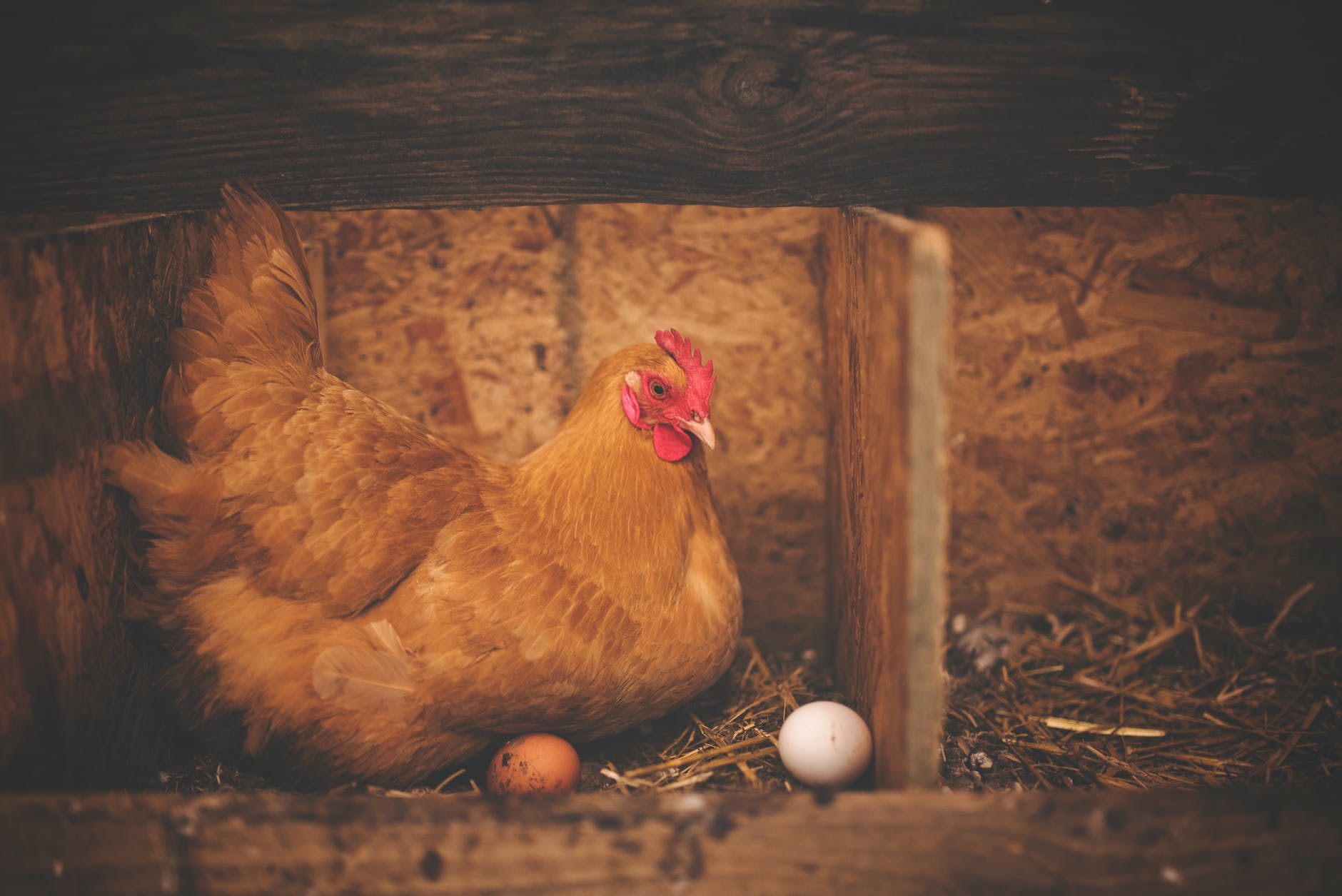
The Chicken or the Egg?

The Paradox)

We’ve all heard the classic dilemma, “which came first, the chicken or the egg?” Most people merely see this as an amusing puzzle, and quickly discard it as having no suitable answer.

But really, it is a very serious question, one that was posed by Aristotle himself over 2,400 years ago! The fact that we are still talking about it to this day, and still shrug it off without any clear explanation is a very alarming fact!

Now, to the creationist, the question really isn’t that troubling. If God created the Earth, the atmosphere, the seasons, and the universe as we know it, is it really any stretch to say that He could have architected the egg-bearing chicken also? And whether He did that with an egg or a mature fowl doesn’t really matter, He could have begun with either without any paradox.

But the materialist throws out the idea of an omnipotent creator, and puts in His place the forces of undirected, spontaneous evolution. Darwinism states that neither the chicken nor the egg came first, but a single-celled organism which, through a lengthy process of mutation and natural selection, developed into the species that we now call the chicken.

And I might concede that this would be a possibility, if we could agree that the evolution would have to have been a tool purposefully directed by the hands of an intelligent creator. But if one insists that this evolution occurred totally at random, which is the position of modern science, well that’s just plain ridiculous.

The Requirements)

Again, the proposal is that the chicken would have had to originate as some sort of single-celled organism, one which reproduced by dividing itself in half, but eventually it evolved into a creature that reproduced itself via a fertilized egg. This would mean that at some point in between there would have been a creature that still reproduced asexually, but which was also gradually developing sexual organs. Organs that eventually were able to produce and lay an egg, but initially this egg would not yet have been functional.

This means that the pre-chicken was expending energy and effort, giving up nutrients of its own body, subjecting itself to a more vulnerable state, all to produce something that was—for the time being—useless. And again, this might be acceptable if some Higher Power was requiring the life form to undergo this process, but it according to the laws of natural selection, this would mean that the species had a detrimental mutation which would have led to its extinction, not to its flourishing. This unnecessarily-handicapped pre-chicken simply would have been overrun by all the other variants that weren’t wasting energy laying undeveloped eggs.

And that’s just the matter of the chicken and the egg. But by itself, a female chicken still cannot produce a fertilized egg. Just as the species would have had to evolve from a replicating cell into a chicken that had embryonic and adult stages, it also would have had to evolve itself into male and female forms also. Thus it had go from being sexless to having sexed versions, but at least for a time those two halves would still have been reproducing asexually until they evolved into full sexual maturity. That means that there would now be two separate strands of random mutation, each evolving separately from one another, but somehow also in perfect tandem, developing in complementary ways, remaining compatible with one another once they both reached full sexual capability.

A Valid Question)

So as it turns out, the childhood question of “which came first, the chicken or the egg?” is actually a very weighty matter. It has all manner of scientific and metaphysical implications. 2,400 years later it still pokes holes in the most airtight theories of man and leaves us either with a stronger belief in our divine creator, or else a greater confusion of this inscrutable world.