A Loving Relationship with Christ- False Comforts

Twisting the Love of Christ)

There are a number of false doctrines relating to our relationship with God that are taught in the world today. There are those that say God does not exist and there is no absolute moral truth, so we may do whatever society will allow. There are those that say God does exist, and we must obsess over every shortcoming, trying to attain perfection on our own. But it is not as though unbelief is always paired with moral depravity, and belief with moral legalism. There are also those that mix the two in strange ways.

One example that I have seen repeatedly are so-called Christians who live in or support direct violations of God’s commands, and when challenged on that incongruity say something along the lines of, “Jesus loves us, no matter what we do.” Because they know Jesus loves everyone, they are sure that he accepts everyone, and to suggest otherwise is a hateful suggestion that he really doesn’t love anybody.

In short, they conflate love with acceptance and twist the gospel message. It is a difficult issue to disentangle, because they actually do have a correct understanding of the nature of Christ, but a terrible misunderstanding of what that actually means in regard to our salvation.

Roadmap)

In the course of this study, I am going to try and correct this confusion. I am going to start by acknowledging the points that the morally liberal Christian gets right but then show where they go astray. I will use scriptures to establish what the correct conception of our relationship with Christ is, and the signs by which we can gauge how aligned we are with those truths.

My purpose in doing this is not to be cruel to those who invoke the love of Christ incorrectly. To be frank, I do believe that they need to be awoken to the pain and guilt of wrong actions, but not because I desire ill for them, but because for all of us this is the first step to true healing and joy. I seek to dispel the palliative lies, only so that we can live in the healing truth.

Redeemed Through Christ- Part Two

This last Sunday I was invited to speak to my congregation, where I shared my personal experience with redemption. I posted the first half of that message yesterday, now here is the rest of it.

Part Two)

There is another pairing I saw in my journey of redemption that I would like to share as well. It is the pairing of Jeus’s unconditional love for me, and my love for him.

Just before I began my path of recovery, and wrote that letter to my wife, if you had asked me if Jesus loved me, I would have said, “of course!” But just as with my testimony of his atonement, it was only something I knew in my head. I did not feel it in my heart.

It wasn’t just ignorance, either, I was actively keeping his love away. I did not love myself, did not see how anyone could, and I certainly did not want the love of the most perfect being in the universe. I didn’t deserve it, so I couldn’t receive it. It was my therapist who started to break those paradigms. His name was Corey Holmgren. 

When I first met Corey, I was already breaking down the facade I had so carefully built up, and was now identifying with the shameful me underneath. But Corey helped me to see that underneath the shameful me there was also a wounded me, and under the wounded me, was a Son of God. And it was that Son of God, not the facade, the shame, or the wound, who was the real me. And that Son of God was lovable forever.

Where this really hit home was when Corey introduced me to a brotherhood of men also seeking recovery, and I cannot describe how paradigm-shifting of an experience it was to tell that brotherhood all of my deepest shames and regret, all the things that I thought it would kill me to tell to another person, and to have them respond by still loving me and wanting to be my friends. I didn’t know that that could happen. We were actively testing the promise in James 5:16: “Confess your faults one to another, and pray one for another, that ye may be healed,” and we found that promise to be true. And by seeing that sort of unconditional love in other men, I started to  believe that that love could be in God and Jesus as well.

In time, I came to hear these messages firsthand from my Savior. He and I had long conversations, where He took my mind back to experiences in my past, experiences that had built a wall between me and Him, and He showed me how His frame of that experience was different from my own, and that the wall was only on my side, and that I could take it down now, if I wanted, because it was keeping out the love that He had always had for me.

I became much more confident in the love of Christ, but like I said, there is a pairing here. Being loved by Jesus brought me to a certain level of redemption, but being able to sincerely love Him back was what made it complete.

I learned this on my recovery journey when I had a relapse. By that point, I genuinely felt comfortable in the love of Jesus, I still felt sure of it, but for the first time I realized that it wasn’t complete. It was a melody that needed a harmony. I prayed for God to come into my cold heart, but instead I felt the impression to start looking for a hymn to sing. Very quickly, I was led to a hymn I had never heard before, it’s not even in our own hymnal, called My Jesus, I Love Thee. I knew I had to sing it, out loud. I’ll spare you the singing, but I’d like to recite for you the first verse of that song:

My Jesus I love Thee, I know Thou art mine
For Thee all the follies of sin I resign
My gracious Redeemer, my Saviour art Thou
If ever I loved Thee my Jesus ’tis now

This song was a redeclaration of my love to Jesus, and as I sang it, I felt my heart come back to life. The tears flowed, and I learned that just as there is a Son of God inside of me that can always receive Jesus’s love, that Son of God can always love him back, even in my lowest moments.

A one-way love is charity; but reciprocated love is a relationship, and relationship is what Jesus ultimately seeks to redeem us back to. Relationship, being known and loved by Christ, and knowing and loving him back, is the literal definition of eternal life. John 17:3: “And this is life eternal, that they might know thee the only true God, and Jesus Christ, whom thou hast sent.” 

My experience of redemption is the most precious thing in my life. It is the story of me that I value the most, the one I hope to be most defined by. It isn’t just a story for me, though. It is meant to be the story of each and every one of us. And though this story can play out universally, in each instance it is totally unique. Every person’s story of redemption is their own, beautiful and different from any other. It is the most interesting story that any of us have to tell. 

For most of my life the principles of Redemption were ones that I believed in my head, but now I know in my heart that they are true. I hope that these things are true for you as well, or that they soon will be. In the name of Jesus Christ, Amen.

Redeemed Through Christ- Part One

This last Sunday I was invited to speak to my congregation, where I shared my personal experience with redemption. Preparing this message brought up some new ideas that I will explore in greater detail with upcoming posts. Other stories and ideas I have already covered in this blog. I don’t wish to bore you with redundant messages, but I did think that seeing my speech might be interesting to some of you. I’ll post the first half of it today, and the second half tomorrow.

Part One)

Stories of redemption, where people fall, and are then raised even higher, are woven all throughout our scriptures, our myths and legends, our history, even our books and movies. But of all the many stories of redemption, today I would like to focus on the one that I know best: my own. And I want to talk about it in terms of the pairings that it was made up of. The first of these pairings was the reality of damnation and then the reality of being saved.

My great demise came in the form of addiction to pornography. The whole thing started when I was about seven years old and progressed through various stages over the next twenty years. 

Now, from the very beginning I felt guilty about what I was doing, I knew it was wrong, I knew I had to repent of it. But I didn’t necessarily feel damned, because the whole time I insisted it was in my power to fix this on my own. So I tried, over and over, to just make myself be better. I kept telling myself that this next time would be the last time. I repeatedly prayed that God would just give me the determination to do things right.

And even though this approach never worked for me, I clung to it, because the only alternative would be to admit that I had become so lost that I could never find my way back again. And if you had asked me if I believed the atonement of Jesus Christ could rescue me, I would have said “yes,” but, looking back, I really only believed that in my head. I didn’t feel it in my heart. So, accepting that I was lost would include not having any confidence that anyone would ever come and find me.

Rather than accept that, I kept my addiction secret from everyone, even my wife, and pretended like I wasn’t damned. But no matter how I tried to hide it, there was a genuine darkness inside of me, and its nature was to damage me, and those closest to me. Thus, even as I was trying to preserve my life and my relationships, I was actively destroying them instead. When I finally saw this pattern, when it clicked for me, I finally decided I would rather be honestly damned than falsely holy.

So, one day, when I was alone in the house, I wrote a letter to my wife. In it, I shattered the facade I had been living behind and explained what was really going on. I left the letter just inside the entrance to the house, got in my car, and drove as far away as quickly as possible. I knew that I had to get far enough that she would make it back to the house before I could, because then I knew it was done. I couldn’t take it back, even if I wanted.

This is how I came to embrace the reality of my own damnation. At this point, for the first time in my life, I truly accepted that I was on track for hell and all that came with it. This was an absolutely necessary chapter in my personal story of redemption. I was never going to get any further without first taking this leap into the void.

What came next was a whirlwind of confession, surrender, and connection. My wife scheduled a meeting with our Bishop that very night, our Bishop recommended us to LifeStar, which does therapy for sex addicts and their couples, and my LifeStar therapist encouraged me to join a group of other men in recovery. Put simply, there was a long and difficult path of repentance and recovery set before me, one that I am still taking steps on to this day.

But while the journey has been long, redemption, much to my surprise, began immediately! Right from the day that I wrote the letter, I started to feel like my real self again. I felt like I had a soul! This was something I didn’t even know I was missing; it had been so long since I had felt it.

That rediscovery of the soul in addiction is not unusual, but what you might find unusual is that many of us addicts actually express gratitude for our addiction, even though we are in recovery from it, and we certainly don’t endorse it! See, from our perspective, if we hadn’t had something truly break us, we never would have sought out a real connection with God and the soul. And once we have found that connection, the journey that led us there, no matter how painful, is worth it, and we wouldn’t trade it for anything.

I like the way a good friend of mine put it: “if your sin isn’t real, your salvation isn’t real.” I would also say, “if you haven’t been truly broken, you don’t really know what it is to be restored.” Or as Eve, herself, put it in Moses 5:11: “Were it not for our transgression we never should have known good and evil, and the joy of our redemption.”

Now, this isn’t meant to say that we all need to get enslaved to an addiction, but I would say that we all need to exercise our awareness of the hopeless state that we would be in if not for Christ. Sooner or later, each one of us commits a sin that is a deliberate and willful violation of our own conscience. At a certain point, each one of us sacrifices something that we know is good, for something that we know is wrong. This is a fundamental betrayal, and when it happens, something inside of us breaks, and we can either run from that, or hide it, or we can go into that broken place, accept the reality of damnation, and there meet Jesus.

To be continued…
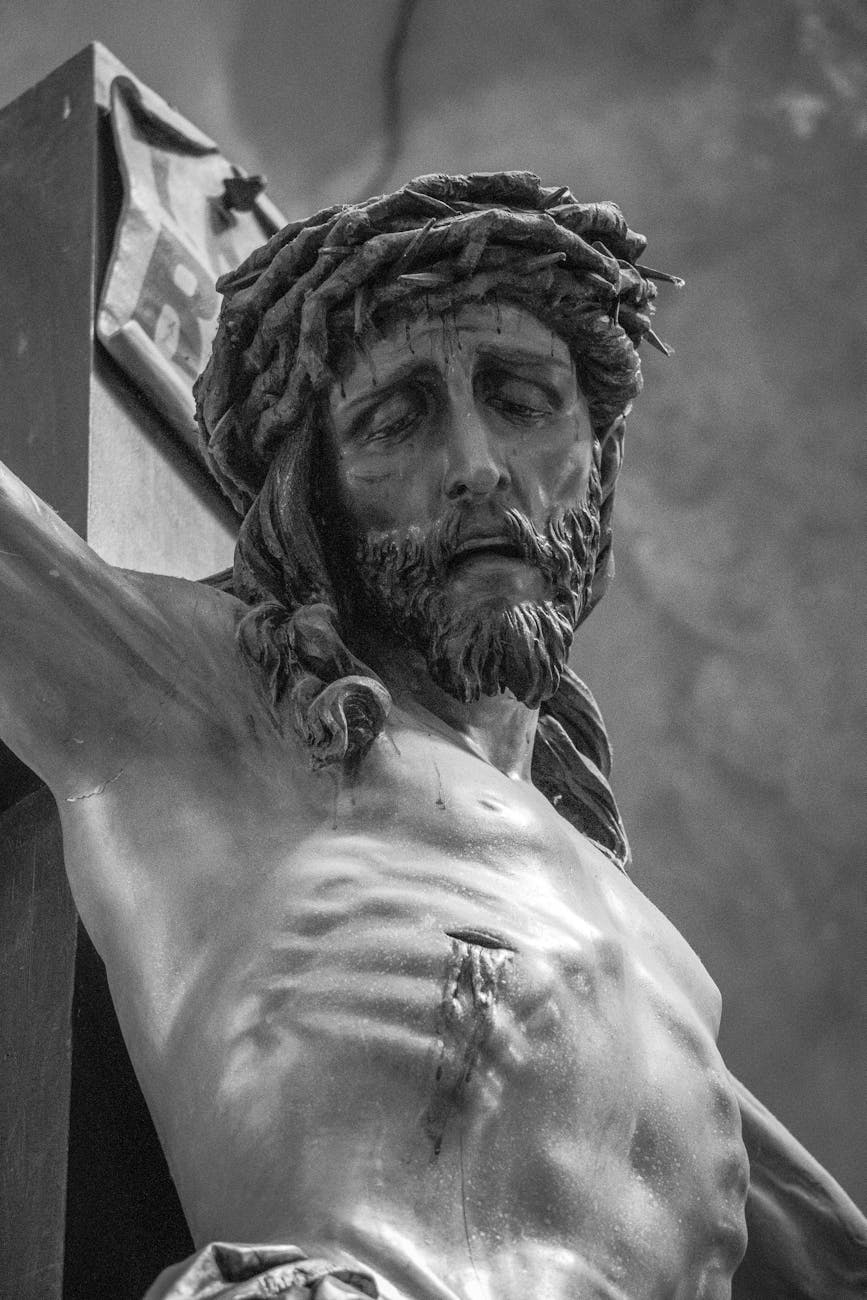
Grit vs Surrender- Autonomous or Not?

The Mixed Man)

Yesterday I shared about my personal struggle with addiction, and how I only found liberation as I surrendered my will to God, taking the steps that He set before me and not my own. Then, true healing and freedom blessed my life, but I want to be very clear that it did not, and never could have, come about in the way that I wanted it to. I had to do things that I didn’t want to do, but that God chose for me.

This points to an interesting paradox in the gospel. Autonomy is essential to God’s plans for us. Right from the beginning, God created a man and a woman who were designed with the capacity to make their own choices, and He even gave them a tree to exercise their choice one way or the other.

“But of the tree of the knowledge of good and evil, thou shalt not eat of it, nevertheless, thou mayest choose for thyself, for it is given unto thee,” (Moses 3:17).

If God did not mean for man to make his own choices, God never would have set things up this way.

But also, part of God’s plan is that man should surrender his will. Thus, we are all meant to have the ability to choose our own path, but to then give it up to the Father.

“Submit yourselves therefore to God,” (James 4:7).

“I beseech you therefore, brethren, by the mercies of God, that ye present your bodies a living sacrifice, holy, acceptable unto God, which is your reasonable service,” (Romans 12:1).

The Ultimate Example)

Notice how Jesus followed this pattern perfectly. His autonomy was supreme and no one else had any power over him:

“I lay down my life. No man taketh it from me, but I lay it down of myself. I have power to lay it down, and I have power to take it again,” (John 10:18).

Of course, when it actually came time to lay down his life, Jesus’s own will, his autonomy, pulled him from it. It was his desire that “this cup would pass from him.” Even so, he surrendered that autonomy, declaring to his Father, “not as I will, but as thou wilt,” (Matthew 26:39).

Tomorrow let us think some more about what this means for us personally. We will consider questions such as, how do so many of us, even Christians who fully believe the message of the Bible, fall into this false belief that we can satisfy God while holding onto our autonomy? And what does it look like to truly surrender to the will of the Lord?

Grit vs Surrender- The Common Struggle

Moral Grit)

It is the common struggle of man to strive to be better, and to fall short more often than not. We have certain aspirations of personal character, some of them come from our religious upbringing, some from societal norms, and some that we have chosen just for ourselves. And though we might be truly convinced of the merit of these goals, our convictions still run into opposition in the form of laziness and sensuous pleasure.

There are those that see these struggles and wonder why anyone should even bother. They are disciples of hedonism and self-idolatry, who feel that the only reason needed to not change a behavior is to find personal pleasure in it. If it feels “good” then it is good, and any attempt to cease it is oppressive and restricting.

There are also those of a spiritual frame of mind who approach their moral struggles with a surprisingly similar view. Their main distinction is that they say keeping the commandments is worth it, that the rewards are greater than the personal pleasure surrendered, but they still see the entire enterprise as an exercise in self-oppression. They believe that they must flagellate themselves into obedience, psychologically if not physically.

Thus, there are many atheists and theists alike who see the developing of moral character as taking real grit and determination, forcing oneself to be better in spite of all contrary desires and temptations.

Another Way)

I would like to suggest that this isn’t the correct way for moral change to occur. It isn’t the way that God ever had in mind for us. I believe that Jesus was sincere when he said, “Come unto me, all ye that labour and are heavy laden, and I will give you rest. For my yoke is easy, and my burden is light” (Matthew 11:28, 30). Jesus isn’t saying his way is easy because we won’t require change, as the hedonist would have, but neither is he saying that that change will come through struggle and punishment, as the ascetic would have. Counter-intuitive as it sounds, Jesus is promising a life of absolutely radical transformation, and that it will occur easily and lightly.

Well, eventually easily and lightly. As we will discuss in this study, there is an initial moment that is, in fact, very hard. Following Jesus begins with a little death, a moment of deep, difficult, surrender. For both the hedonist and the ascetic, the reason that they have not found the easiness of Jesus’s path is that they have not gone through that surrender. Whether because they are an outsider who rejects the Lord outright, or because they are an insider who is still trying to achieve sainthood with pride intact. Either way, they haven’t gone through that little death and so change still looks hard and oppressive.

Thy Sins Are Forgiven

One of the most common phrases of Jesus’s ministry was “thy sins are forgiven thee.” When the paralytic man was lowered to him through the roof, Jesus first forgave the man’s sins, then healed his body. When the woman of many sins wept on his feet and anointed them with ointment, he also told her that her many sins were forgiven. The woman taken in adultery he did not directly forgive, but he did provide her a stay of execution and implored her to sin no more, implying that he was giving her time to seek the same forgiveness that the others had received.

Even as he was dying on the cross, Jesus had two famous moments of forgiveness. He interceded for the Romans who were carrying out his execution, observing that they were acting without understanding. He also promised the repentant thief that the two of them would see each other in paradise, implicitly forgiving him of the very sins that the man was being put to death for.

These are nice moments to think on, times where Jesus gave the greatest gift that we can experience in this life. I can’t imagine reading these stories and not being moved with happiness and hope.

But I think it also worth noting the deep gravity behind them also. I think we should always remember that when Jesus said, “thy sins are forgiven thee,” that forgiveness did not pop out of nowhere. Yes, it was given freely, but it was not acquired freely. Every time Jesus uttered those words an implication followed, “thy sins are forgiven thee, because I will die for them.”

In Hebrews it states:

For where a testament is, there must also of necessity be the death of the testator.
For a testament is of force after men are dead: otherwise it is of no strength at all while the testator liveth.
Hebrews 9:16-17

Surely, part of the reason why the death of the testator, Jesus, was necessary, was because his New Testament would take the place of the death penalties in the Old Testament. Thus, when Jesus let the woman taken in adultery go free…it was only because he was going to be killed in her place. And in all the other cases where Jesus pronounced “thy sins are forgiven thee,” those were only words until he paid the price that would give them actual force. The wages of sin are death, and so forgiveness of sin could only be real after his death for them.

We rejoice whenever Jesus’s words of forgiveness, mercy, and healing come upon us, and well we should. We marvel at how freely we receive them, how they seem to come from out of nowhere. But in the midst of our joy, we should remember that the freeness of them is only an illusion from our perspective. In reality, with every word of forgiveness Jesus gives to us, he is agreeing to die for them also.

False Moral Dilemmas- Moral Inaction

Jesus’ Silence)

In my previous post I discussed how Jesus managed moral quandaries and snares that his enemies tried to set for him. Another example that I did not mention was how he would employ silence, rather than engaging in the problem at all. We see this in his trials before the Sanhedrin, Herod, and Pilate. With the Sanhedrin and Pilate, he did not speak until the time was right, or to correct their faulty framing. To Herod, a most wicked man, and the murderer of his cousin John, he never said any word at all.

From Jesus’s example, we see that sometimes the outside-the-box moral solution to a moral dilemma is to just not engage with it at all. When the entire framework of the problem is flawed, when the premise of the whole thing is set to entrap us, there always remains the option of moral non-engagement.

Unforced Errors)

I previously gave silent non-engagement as a solution to the supposed moral dilemma of Nazis at the door asking where the Jews are hiding. Once again, if there are no good options to engage in, you can just not engage. Sometimes inaction is the most moral choice that there is.

This is a critical thing to understand, as it breaks the last parts of the illusion that sometimes we must choose one evil or another. If there are truly no good options, just choose none of them at all. No situation or contrivance can ever force us to do anything. They cannot make us break conscience. We only ever do what we allow ourselves to do.

Of course, all of us will compromise ourselves at some point. We will all break conscience. But it is important to understand in those moments that we didn’t have to do that, we chose to. That’s something I’ll explore more with my next post.

False Moral Dilemmas- The Third Choice

The Need for Miracles)

In the last post we discussed so-called moral dilemmas present us with only bad choices, each a compromise of conscience, but if we are willing and creative enough to find it, there is typically another option that sidesteps the dilemma and allows us to keep on the straight and narrow. First, we have to move outside of the manufactured box that our tester has put us in, then see the full range of possible choices, and finally be willing to accept the consequences for sticking to what is right.

Indeed, a common theme all throughout the Bible is people who are faced with exactly these sorts of situations, who then have to step outside the bounds of their initial perception and rely on a miracle to accomplish good and retain their souls. Think of Lot, who saw his only choices as letting the wicked men of the city either rape his guests or his daughters, but who was then saved by angels. Think of Joseph who could either put Mary away in secret or have her stoned for adultery, but who then received a heavenly message to show him that she truly bore the son of God. Think of Solomon who had two women claiming to be the mother of the same child, with nothing in their testimony to show him whom to believe, but who was blessed with wisdom to find out the truth.

Moral dilemmas, and their outside-the-box solutions, are a key theme in the scriptures. When the righteous are faced with no-win scenarios, that’s when the hand of God becomes manifest to show them another way. Indeed, the entire point of the gospel is that it provides a surprise solution to a damned situation. Many of us will sin and earn the suffering of hell, while those that die in their innocence are still swallowed in the grave. No matter which path we take through this life, we’re damned, at least we were until a Savior presented us a miraculous alternative.

The Master of Third Options)

It comes as no surprise that Jesus, himself, was a master of resolving seeming no-win, moral dilemmas. I think more than any other figure in the Bible he was put to the test with contrived situations that tried to get him to compromise himself one way or another.

Think of when the Pharisees brought him the woman taken in adultery, and asked if he would uphold Moses’s law, which required the stoning of the woman. Would he deny the law? That would be heretical. Would he condemn her to death? That would go against his mission to forgive and to save. Jesus stepped outside of their trap, though, and said, “He that is without sin among you, let him first cast a stone at her.” In so doing, he touched their guilt and got them to slink away in shame.

But it’s not as though he was denying the justice of the law. Jesus was still worthy to stone her, but also, he was able to forgive her because he would take her stoning upon himself when he laid his life down as a ransom for the world. Thus, Jesus did not transgress justice, nor embrace condemnation. He found a third way to satisfy justice and make space for mercy.

Think also of when he was asked whether the people should pay taxes to their oppressor Caesar. On the one hand, he could say that yes, they were required to pay their taxes, which would offend the people. Or he could say no, that they should defy Caesar, which would make him an enemy of the state. Jesus, however, chose a third option. He showed the people that their entire framing was wrong. They were putting too much value in worldly currency, thinking that it amounted to anything of moral weight in the eyes of the Lord. He reminded them that worldly treasure and spiritual sacrifice were two separate things, one properly pertaining to the world and one to God. By helping to disentangle the two, and setting the spiritual as superior to the temporal, Jesus found a third path that both approved the paying of taxes while also diminishing its importance in the broader scheme of things.

The stories of Jesus and others in the Bible shows us that we may be given traps where it appears that there are no good solutions, but that if we have some ingenuity, or even some divine intervention, the moral way is still there for us. As Paul told the Corinthians, “With the temptation,” God will “also make a way to escape” (1 Corinthians 10:13).

Why Did Peter Deny Jesus?

This Easter season I’ve been thinking about Jesus’s final week, culminating in his crucifixion and resurrection. One point that has stood out to me is Peter’s behavior on the night of Jesus’s arrest. Let us look at two moments from that evening:

  1. When Jesus’s captors arrive in the Garden of Gethsemane, Peter boldly leaps forward and cuts the ear off of one of them. He does this, even though Jesus and the disciples were almost certainly outnumbered and under-armed. It seems that if Jesus had not intervened, Peter’s actions would likely have gotten himself killed.
  2. After Jesus diffused the situation and surrendered to his arrest, Peter followed, waiting in the courtyard of where Jesus was being held. There he was recognized three times as one of Jesus’s followers, and each time denied it. It seems that he did this to preserve his life, to not get himself killed.

So why would Peter shrink from death in the latter case, but charge headlong toward it in the first?

I’ve always assumed that it was because Peter was acting in the heat of the moment in the first case. It may not have even crossed his mind that this could get him killed, he was just overcome with passion and acted without thinking. But during the arrest and the interrogation of Jesus, Peter had time for reality to set in, allowing him to truly feel the weight of the danger he was in, and his growing fear led him to lie.

That could certainly be the case, but as I’ve thought about it, I’ve realized that there could also be another explanation for his differing behaviors.

Another Theory)

Going back to the arrest at the Mount of Olives, what if Peter was actually fully aware that he was putting his life in jeopardy, and he was doing it deliberately? What if he was willing to sacrifice himself to give Jesus and the other disciples a chance to escape? If that were the case, then it must have been a great shock when Jesus instead rebuked him and peacefully submitted to the arrest. Jesus would have crushed the sacrifice he had been trying to make.

Now consider the second instance, where Peter lingered in the courtyard outside of Jesus’s interrogation and denied that he knew Jesus. In this case, there was no heroic rescue to be achieved by telling the truth. The only reason to admit that he was a follower of Jesus would be for the principle of the matter, to show that he would rather die than deny his master. Just because Peter might have been willing to die for some things, but not for others.

If this is the case, then Peter both proved great depth in his commitment, but also discovered even deeper depths that he was not yet ready for. He may have learned that his cause was not actually the same as Jesus’s, and that while he was prepared to die for his cause, he was not yet prepared to die for Jesus’s. He may have learned that it isn’t enough to be willing to give some sacrifice to the Lord, he needed to be willing to give the right sacrifice.

In either case, whether Peter’s initial fire cooled, or whether he was only willing to die for Jesus under certain circumstances, the tradition states that he did grow beyond his failing, that he did eventually die a martyr’s death, not on his own terms, but on the terms that were given him.

Is it Weak to be Meek?

“Blessed are the meek,” Jesus taught, “for they shall inherit the earth.” I have heard several Christians discuss this passage, and they often take time to explain that meekness should not be associated with weakness, as the two mean different things.

It is true that the words have different meanings and shouldn’t be used as synonyms, but obviously there is a reason why the two are often associated with one another. Meekness, as well as other submissive qualities like humility and obedience, are indeed traits that are often found among the weak. Young children come to mind in particular. They are small and lacking in power, so they are required to be meek and submissive, because the will of the adults is imposed on them whether they want it or not.

Then, as they grow, children gain their own power. Resisting the will of others, and even of imposing their own, become viable options. Having gained this power, most people never want to go back to that state of being beholden to others.

However, just because we have enough power to make our own rules for ourselves, doesn’t mean that we should. Jesus called on us “to become as little children,” and showed an example of giving up his will for that of the Father. Jesus wasn’t calling on us to become weak again, though. It was a call to become submissive even though we have our own strength. Unlike a child, meekness, humility, obedience, and submission become a choice for us now, rather than the default way of being. We are not weak, but we place our strength upon the altar and become as though we were weak, complying with the Lord’s will even when it differs from our own.

Now I have been saying that when we become adults, we finally possess our own power, but that’s only relatively speaking. When we get to the other side, I’m sure we will recognize how truly insignificant and powerless we were even as adults in the broader scheme of things. God gives us the illusion of control now so that the quality of our character can be tested before we would be conferred with any real power in the hereafter. Meekness, even in strength, is essential to using our strength correctly.