The best lessons in life must be painful, because the best lessons require us to change. If they didn’t require us to change, they couldn’t be as meaningful as those that did. And to change means, to some degree, breaking and rebuilding. And breaking and rebuilding is painful.
So, if we are going through lessons that are painful, but which are causing us to change, it’s not that we are doing something wrong, we’re actually doing it exactly right. It’s just that growth is hard. That change is painful. It always has been this way, and it always will be.
I have already discussed how Christians that defend sinful habits by an appeal to the love of Jesus Christ are incorrectly conflating being loved with being saved. But actually, I think there is an even more fundamental confusion than that. When they say, “well Jesus loves me anyway,” I suspect that most of them don’t actually believe that.
My reason for this is personal experience. For much of my life I was a slave to a sinful addiction, and through it all I would have adamantly insisted that Jesus loved me. But it was not an excess of Jesus’s love that gave me license to do evil, it was a dearth of it. For while I truly believed in Jesus’s love in my head, I did not feel it whatsoever in my heart.
Indeed, it was as I managed to break down my walls and actually start feeling his love that my behavior became more holy also. I could never feel the beautiful reality of his love and continue living in sin. That’s not say that I’m perfect, to say that I don’t still do wrong things from time to time, but I can say that I don’t live in sin like how I used to. What was once a way of life are now only slips were, and it was his love was what made that change possible.
A Recurring Pattern)
And I’ve been to enough 12-step meetings to know that this isn’t only true for me. One of the most common refrains I’ve heard in these stories is a severing of the connection to the love of Christ, and the resultant increase in sin. I’ve heard many of these men say something like, “I knew that Jesus loved everybody in the world…just maybe not me.”
For many people, sin is used as a drug to try and dull the sense of being fundamentally unlovable. They do what they do from a starvation of love, not an excess of it. Those that are truly secure in Christ’s love are freed from the spiritual pain that leads to wrongdoing. Those that are truly secure in Christ’s love, and know that he died for their sins, feel less compulsion to hurt him, not more.
I understand why people who are not ready to let go of their sins would look for a divine excuse to not change their ways. I think invoking the love of Christ is not only inaccurate, though, I think it is tragic, because admitting that they don’t feel any love is one and the same as hard as admitting that they’re not doing okay. They have my sympathy, not by disdain, but sometimes the kindest thing is to speak the hard truths that sting…and then heal.
After his baptism, Jesus was led into the wilderness, where he fasted for forty days and nights in preparation for his earthly ministry. It was in that vulnerable state that Satan met him and presented to Jesus a series of three temptations. First, Satan suggested that Jesus should turn rocks into bread to satiate his hunger, then to prove his divine sonship by leaping off a building so that angels might catch him, and finally to receive all the kingdoms of the world as a reward if he would worship Satan.
We say that these were the temptations of Jesus, but it isn’t specified whether he was actually tempted by any of them. In the records that we have, Jesus seems to dismiss each offer without any trouble.
At their core, each of these temptations has to do with worldly pleasure and glory. The pleasure of satiating one’s appetites, the glory of receiving the honor of others, the glory of dominating the world. Jesus was given temptations of glory, but these might have had little sway on him.
But temptations of glory are not the only foe that must be overcome. Satan also influences mankind by our fear of pain. Fear of being an outcast, of being punished, of even being killed. Jesus was subjected to these also when he bore the sins and pains of the world, was betrayed by his own people, and condemned to a torturous death. Here, Jesus actually did seem to have been tempted to turn from his calling.
At the point of embarking on that great sacrificial journey he prayed, “Father, if thou be willing, remove this cup from me” (Luke 22:42). Not only this, but near the end of his suffering he exclaimed, “My God, my God, why hast thou forsaken me?” (Matthew 27:46). Jesus had been impervious to glory, but clearly not to despair. This does not surprise me. I believe that fear has more power over all of us than offers of glory.
Of course, it is important to note that feelings of fear and despondency do not, in and of themselves, constitute a sin, though they can ruin us depending on our reaction to them. In both cases, we must note that Jesus prevailed. In the first, he followed his desire for the cup to be removed with, “nevertheless not my will, but thine, be done.” In the latter, even though he felt abandoned by his Father, still he showed continuing trust in Him with his final words: “Father, into thy hands I commend my spirit” (Luke 23:46). Perhaps Jesus feared, but ultimately, he remained faithful.
Each of us will face both of these challenges in life, and at one point or another succumb to them. We will compromise ourselves for the glory of others, or we will shrink from our responsibility because we are crippled by fear. Knowing that these are the strategies of Satan, we can prepare ourselves to weather them as best we can, and when at times we inevitably fail, we can turn for help to the one that never did.
Great forgiveness is not passively forgetting your pain over the passage of time, but actively surrendering it while it still burns bright. Obviously, forgiving over time after the pain has died down is better than not forgiving at all, but it is only a step towards greater, more active forgiveness.
Jesus gave an incredible standard for forgiveness when he declared, “Father, forgive them, for they know not what they do.” He was not only forgiving those who tortured and killed him, but he was doing it in the very moment that they were carrying out that torture and execution, not after he was resurrected and impervious to their pain. Perhaps we will never get all the way to being able to match such great forgiveness as that, but that is the ideal that we are meant to move in the direction of.
Recovery is a multi-stage journey. I, and many of the other addicts that I have known, experienced an initial battle with temptation and eventually a victory over it, only to feel new battles springing up around us some time later. After the initial success, we tend to experience setbacks, or new addictions forming off to the side, and it makes us doubt the control we thought we had gained. Most great battles in recovery seem to be followed by a sequel.
As I have reflected on this phenomenon, the thought has occurred to me that the more you press against your foe, delving further into the heart of enemy territory, the more unpredictable and treacherous the terrain becomes. The initial push and triumph in recovery feels fantastic, but that is nothing more than breaking through the front lines. Yes, it is a victory, but you have yet to capture the capitol. Or, to shift metaphors, perhaps you have chased the bear from your home, but in so doing you have followed it into its lair where greater challenges await.
Virtually every addict finds that his bad behavior comes about by the following sequence:
He has many hurts and frustrations in his life
Those hurts and frustrations put him into a perpetually dejection and faithless state
While depressed and faithless, temptation easily has its way with him
The first fight for recovery has to do with short-circuiting this pattern. The addict learns how to manage or mitigate his pain, removing unnecessary afflictions, ending negative relationships, and stopping behaviors that add stress. Less frustration means less dejection, and less dejection makes him stronger against temptation.
And this is all well and good, but the solution will last only as long as his management and mitigation efforts are effective. Sooner or later life will throw something new and unexpected, as it always does, and all his perceived progress will be undone. He will find out that his sobriety is dependent on life being easy, and no one’s life is always easy.
So the addict must go further into enemy territory, deeper into the heart of the problem. Sooner or later he has to learn to break the connection between the pain of life and becoming dejected. He has to learn how to be peaceful and content, no matter the simultaneous pain. This is a very difficult thing to do, of course, but if he can succeed in this critical battle, then the world will no longer have any power over him. He will have captured the heart of the enemy’s power, and the war will be over.
I’ve spent several weeks discussing different aspects of addiction and its effects on a relationship. I’ve talked about the journeys of both the perpetrator and victim of abuse, and the anger in the spouse after she learns how the addict has been secretly acting out behind her back. Today I will continue with these themes and analyze one other aspect of addiction and relationship, that of rebuilding a marriage after the initial trauma of disclosure.
It is essential for every addict to make a full and complete disclosure to his wife. Given that he may have decades of shameful behavior hidden away, it may not be possible or prudent to list every offensive action he has done, but he should be willing to go into as thorough detail as his wife asks of him. She has the right to know all the things that he should have been telling her over all the years. At the same time, the addict must understand that this disclosure is going to cause significant trauma. She deserves to hear the truth, but it’s likely to rock her to her very core.
After such a disclosure, it is entirely possible for the wife to question whether the marriage can continue at all. Even if the husband is sincere about his desire to recover, she may feel that irreparable damage has been done. One of the most common feelings a wife will describe is that all of their marriage had been built upon a lie. Every tender and sacred moment she thought she had with her husband is now marred by the fact that he was lying through his teeth all along. It is as if the man she thought she loved in all of these memories has suddenly been replaced with a monster she never knew. Where once thinking of these times gave her joy, now they only bring sadness.
Different Views)
As for the husband, his view is totally different. Yes, he knows he lied, and probably some of the memories with his wife are also marred by the shame of living a double life, but also he knows that some of those moments were truly genuine. He didn’t fake everything. His love for his wife was real, and many of his acts of kindness to her really came from an authentic place. Indeed, it might be that genuine love for his wife is a key reason for why he is fighting this addiction now. Recovery work takes one to some very scary and painful places, but he’s willing to go there in order to save the best part of his life, including his relationship to his wife.
And the fact is, neither the husband nor the wife is wrong in their perspective. Neither one of them should feel that their view of reality is invalid because it isn’t shared by the other. The wife really has had her whole life thrown into disarray. Even if her husband says certain moments of their past were real to him, that doesn’t mean they have to be real to her still. Similarly, the husband should not be required to deny the real moments of poignancy from his past. Just because the whole marriage has been painted black in his wife’s eyes doesn’t mean that he cannot have a more nuanced view of it.
Often the result of these disparate perspectives is that the husband and the wife struggle to know how to continue building their marriage. The foundation of their love is divided and eroded, and it feels like every good thing they try to add just breaks it apart even more. For example, a kind gesture from the husband might actually be hurtful because it causes his wife to remember how kind gestures in the past were part of his manipulation. Similarly, anniversaries and milestones might feel like phony celebrations of a sham relationship, undermining the sense of accomplishment rather than building it up.
Thus, it can become very hard to sort out the real from the fake and come to a shared vision of the past. Indeed, in many cases, the couple will find that it is impossible to resolve their different perspectives. Ironically, it is by coming to accept that the marriage is broken and cannot be repaired that a couple can finally save it. I realize that might sound paradoxical, but come back tomorrow as I will explain what I mean.
I attended an addiction recovery clinic when I decided I really wanted to be done with lust and pornography. One of the things that was so helpful about that clinic was that they did two treatments at the same time, one for the addict, and one for the spouse or partner of the addict. Given the demographics of pornography addiction, the addicts were predominantly men, and thus the partners were their girlfriends and wives.
The partners, of course, were deeply hurt by our addiction, and this is true for most other types of addiction as well. Being so closely involved to a person with any sort of compulsive, destructive behavior will always result in extensive wounding. Thus, every addict is going to have to deal with this most intimate relationship at some point of his or her recovery journey. They are going to have to take ownership of their mistakes, empathize with their spouse’s pain, make amends however they can, and accept the consequences that follow their behaviors.
The spouse also has her own issues to come to terms with. Given the secretive nature of an addiction, most likely she is only learning about this whole secret life that was going on behind her back for the first time. She has to process the betrayal, the lies, the manipulation, and has to decide between rebuilding the relationship or moving on. What’s more, the spouse has to negotiate all these matters while being flooded by intense, negative emotions. Very often this makes for periods of deep depression and angry outbursts, both of which are difficult for the recovering addict to know how to deal with.
A Strange Disconnect)
If the addict is sincere in his recovery, then these first months of sobriety probably give him a confusing, dual perspective of himself. On the one hand, this is the most honest he has ever been in his life. This is the first time ever that he can sincerely say that he is giving it his all. He is heroically facing his inner demons and doing something he is genuinely proud of. His recovery group members are recognizing his sincerity and acknowledging his bravery. They are encouraging him by pointing out that he is one of the very few in life who has found the “straight and narrow path” and committed to following it.
But then, on the other hand, the addict feels that he is an absolute dirtbag. For the first time he is really acknowledging the harm he has caused. He has shameful memories that he has avoided his whole life, but now he must face them head-on. He has natural responses of self-disgust and revulsion. The voices inside tell him that he has done too much wrong, he is irredeemable, and that he doesn’t deserve to be loved. And in many cases, that very message is being echoed by the person that used to love him best.
It is only natural that the wife whose whole conception of life has been shattered would have anger bursting out at every turn. Many addicts discover a side of their spouse that they never knew before, full of shouting, insulting, and profanity. Some spouses start throwing objects and breaking things. Some start looking for ways to hurt their husband back, physically or otherwise. The addict is trying to manage his emotions and choose sobriety over quick relief, all while enduring a constant and passionate reminder of what terrible damage he has done.
In fact, since the addict knows that he really is guilty of this terrible damage, he might feel that he has no right to question his spouse’s behavior. He has given his spouse the ultimate trump card in any argument. Any frustration or disagreement that he might express towards his spouse is immediately overcome with “well at least I didn’t do what you did!”
It is easy for a couple in this situation to subconsciously assume a new rule in life. Anything that goes wrong for the wife, no matter how unrelated it is to his past wrongs, is still the fault of the addict. Even if his acting out didn’t directly cause the new trouble, the new trouble is more painful because it has landed on a heart that was already beaten and tender. The addiction didn’t make the spouse’s uncle die, for example, but it has deprived her of the trusted shoulder to cry on now when she needs it.
Moving Forward)
So, which is it to be? Must the addict accept that he is a terrible monster and always will be? That no matter of future sobriety can make up for the wrongs already committed? That he will be an addict, and he must daily self-flagellate because of that? Or is the wife supposed to just shut up about her pain? Does her anguish just not matter because the addict is suddenly a “new man?” Does the past not even matter?
Which of these two extremes is the right way forward? Well, of course, neither.
If the right way were so simplistic it would hardly require a blog series to unpack it. The real way forward is far more nuanced and intricate, and it absolutely requires full respect to be afforded to both sides of the matter. Throughout the next several days we will examine this issue from multiple angles, hopefully coming to a conclusion that resonates with all.
NOTE: Throughout this series I refer to the addict as “he” and the injured partner as his “wife.” This is merely a convenience for maintaining consistency. It is entirely possible for the addict to be a woman and the injured partner to be her husband. It is also entirely possible for the strained relationship to be between non-romantic partners, such as with a parent and a child.
Some justify their addiction by saying that their behavior is a victimless crime, but nothing could be further from the truth. An addiction always has a victim. Obviously, there are those that we use or betray, either directly or indirectly; then there are those who are being deprived of having our full presence and care, even if they do not know it; and finally, even if it were possible to live an addiction without either of those first two categories of victims, there is always the victim of our very own self.
For the addict to turn his attention to his victims is a very hard thing to do. It anguishes his very soul. And, frankly, it should anguish his soul. That is the right and proper consequence for one who has caused harm, and it is necessary for the addict to endure this if he is ever going to have a real change.
But this journey into the dark is not only for the addict. There is a parallel journey that the victim must pass through as well, one which involves coming to terms with his own brokenness and surrendering it. Throughout this study we will take a deep dive on the addict, his victim, and the journey of recovery that they both must follow. Let us start today by taking a closer look at the three categories of victims that I mentioned above.
Immediate Victims)
This is the category that most commonly comes to mind when we think of the word “victim.” If one is a lust addict it might a person they molest, if one is an anger addict it might be a person they strike, if one is a drug addict it might be a parent they steal money from. In short, it is anyone who is harmed as a way for us to get the twisted pleasure or satisfaction that our addiction demands.
Also, there are the victims who were not harmed by the acting out of the addiction, but by its aftermath. These include the nieces and nephews who wonder why we aren’t allowed to play with them anymore, the ex-spouse who can’t get a loan because we ruined their credit score, and the new employee who is never fully trusted because of the cynicism we inspired in our former boss.
There are also victims that do not know they are victims, such as the girls we leered down the shirt of. There are also the victims that we never directly interacted with, such as the kids who started doing drugs because they wanted to be like us. I would even make the case that there are victims who were distressed by the invisible, evil spirit that we brought in our wake.
If we’re honest with ourselves, I’m sure we’ll all be able to identify many, immediate victims of our addiction. We’ll even come to accept that there are undoubtedly many more that we have forgotten or never knew of.
Indirect Victims)
Even after all the types of victims mentioned already, there are still others. These are the victims who suffer from not getting to have our full presence in their lives. Most of the time, these people don’t even know that they’re getting a substandard version of us, and we might not even know it either. Most likely we’ve been emotionally handicapped for so long that we don’t know that it is a handicap anymore. Our loved ones say that we’re just “aloof” or “distracted,” never considering that in reality we are half brain-dead because of our addiction.
Our spouse doesn’t get the partner that they thought we were, our children don’t get the attentive parent that they deserve, and our employers don’t get the employee that they thought they hired. And as I’ve said, we don’t even realize just how much of our real self we are holding back until after we have been in recovery long enough to discover who that real self is. It is only in hindsight that we understand just how much our loved ones put up with that they shouldn’t have had to.
Cheating the world of our best self puts an undue burden on everyone else. It creates a perpetual sense of longing and dissatisfaction in others that they may never understand the source of. They don’t know how to vocalize the ways that we weren’t there for them, just the sense that we weren’t. They only ever got the shadow of us, when what they wanted was the real thing.
Victim of Self)
And, finally, there is the very first victim of them all. The one that suffers more than any other victim in almost every case. Every time we hurt another person, we also hurt ourselves. And even when we don’t hurt another person, we still also hurt ourselves.
We break our own heart, destroy our own innocence, and subject our own selves to misery. Every negative action we project outward also has a negative reaction directed inward. An addict who burns a hundred bridges deprives each of these people of only one relationship, but of himself he deprives them all. Everyone else gets a portion of the pain of our addiction, but we get all of it combined in one.
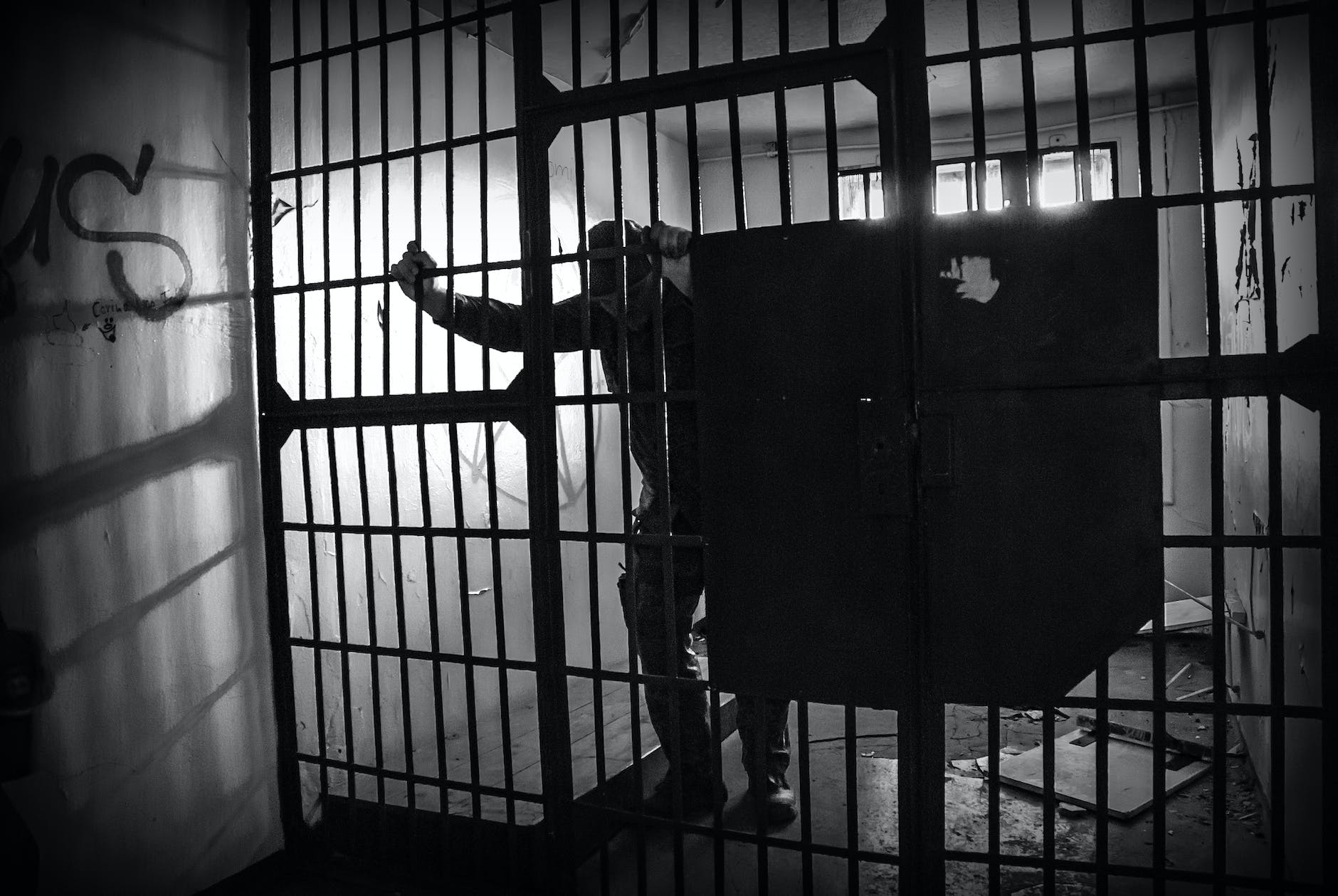
We lose our self-respect, our health, our optimism, our faith, our friendships, and our freedom. We subject ourselves to punishments that we would never accept at the hands of another person. There are plenty of addicts who may not break a single law, but whose behavior to their own self would be considered criminal if it had been done to another person. And while that addict may never end up behind real bars, inside he is prosecuted, convicted, and incarcerated still the same.
Facing the Victims)
So, as I said at the start, addiction always has a victim. It must have at least one, and frankly I have never met an addict that didn’t have hundreds. It’s a grim reality that most of us go to incredible lengths to avoid facing. But denying the existence of a reality means trying to live apart from the truth, and that only tears us apart. Sooner or later, if we ever wish to be whole, the truth has got to be faced. The victims have to be considered and the remorse has to be felt. A little bit later, confession and amends will also be necessary, but first and foremost, one has got to look at their damage unflinching.
One would hope that a man and woman wouldn’t have any secrets from one another by the time they decide to get married, but this is far from guaranteed. Certainly I was guilty of keeping my wife in the dark from all the deepest parts of me. Previously I mentioned that I kept my addiction to lust concealed from her, but that wasn’t all, I was also hiding my wounds.
It may seem a strange thing, but I was able to tell my wife about my problems with pornography before I could tell her how I got hit as a child, and how I felt ashamed for wincing before each blow. Obviously the addiction was the part of my life that made her more upset, the one that directly hurt her, but it still was the easier thing for me to confess to. I never thought that she would despise me for having suffered abuse, but talking about it brought up areas that were still raw and tender. I couldn’t go there without bringing up all of the attached horrible feelings, so I had always stayed away.
My heart is broken within me; all my bones shake - Jeremiah 23:9

Unto the woman he said, I will greatly multiply thy sorrow and thy conception; in sorrow thou shalt bring forth children;
And unto Adam he said, cursed is the ground for thy sake; in sorrow shalt thou eat of it all the days of thy life; - Genesis 3:16-17
All of us have these deep, soul-shaking wounds. As Brené Brown has said, “Every single person has a story that will break your heart. Nobody rides for free.”
If you listen to the stories of two different people, one might have endured a more horrifying pain for a more extended period of time, but both lives will still hold significant trauma. The hardest thing you have ever had to go through, no matter how small it might seem compared to others, is still the hardest thing you have ever had to go through. Simply by virtue of being your greatest pain, it will warp your psyche and become your personal definition of suffering.
Coming to terms with that pain, and developing our relationship with it, is one of the most difficult things we will ever do in life. Virtually all of us will make mistakes in this arena, and we will come up with flawed reactions that end up causing even more pain further down the road.
The Spirit of the Lord is upon me; he hath sent me to heal the brokenhearted, to preach deliverance to the captives - Luke 4:18

And the Lord said unto Moses, Make thee a fiery serpent, and set it upon a pole: and it shall come to pass, that every one that is bitten, when he looketh upon it, shall live. - Numbers 21:8
Jesus teaches us that it is good for us to mourn our sorrows, and reassures us with the knowledge that we can be comforted (Matthew 5:4). But there is a clear line between mourning our sorrows and wallowing in them. It is one thing to recognize that you have been a victim, and another to make victimhood your key defining feature.
Over-identifying with our pains and obsessing on what happened to us can lead us to reject the deliverance that is offered, because we start thinking that healing means saying our wounds didn’t matter. Even more perversely, holding on to our damage can be used as a way to justify our own misbehavior afterward. Thus, God is offering us to look to him and live, but we first have to choose to stop remaining a prisoner.
And if men come unto me I will show unto them their weakness. I give unto men weakness that they may be humble; and my grace is sufficient for all men that humble themselves before me; for if they humble themselves before me, and have faith in me, then will I make weak things become strong unto them. - Ether 12:27

Thus says the LORD: "Cursed is the man who trusts in man and makes flesh his strength" - Jeremiah 17:5
The intended effect of our wounds is that in our weakness we might turn to God, who will heal and make us strong. But that requires stepping fully into our hurt, letting it wash over us, and asking for God to meet us in the middle of all that pain. But what if He doesn’t show up? What if we are consumed?
It is natural to have a fear of facing the pain, and thus many of us will never even try to take that step. We instead try to bury our wound. We act tough, we say “yeah, it happened, but so what?” We claim that our wounds made us stronger, that they made us grow a thicker skin. Or maybe we try to deny that they ever happened, changing the subject anytime someone brings the matter up. In either case, we put on a show that the wounds are unimportant and don’t need to be examined, and that we are well and past them, but nothing could be further from the truth. If we really were past them, there would be no fear of bringing them into the light. A tough wall around the wound only reveals how upset we still are about it.
Surely he hath borne our griefs, and carried our sorrows - Isaiah 53:4

Behold, I stand at the door, and knock: if any man hear my voice, and open the door, I will come in to him, and will sup with him, and he with me. - Revelations 3:20
One way or another, wound tends to lead to building up walls. Sometimes walls are a good thing, a necessary survival mechanism for keeping our oppressor out. Our natural instinct with physical wounds is also to cover them up, to shield them from any outside aggravation. But walls tend not to discriminate. Often they keep everything out, not only the source of the pain. Obviously this becomes a problem if we now stand before the physician and we still can’t expose our wound for healing. We need to let the physician in, even if it will initially cause even more pain, so that we can start becoming better.
Jesus stands at the door and knocks. He is reverential and respectful of our pain, so he does not force his way into our wounds. If we absolutely refuse his healing he will wait. If we never accept his help he will never force it upon us. But he really can help us if we will let him. He has felt it, he has borne it, he has descended into it and risen above it.
If we will not let Christ in, then the wound will fester. It will grow and it will infect. Most addicts don’t initially recognize the connection between their shameful behavior and the unhealed pains for their youth, but through time and exploration the links become clear. One of the greatest sources of trouble in our lives is things that we should have cried about but never did.
***
At the start of this post I mentioned being struck as a child. This pain was most typically the result of not being able to play quietly enough. I was expected to keep entertained by myself, in a way that was contained and non-intrusive. I would try to do that, really I would, but I was a boisterous boy, and I would raise my volume without realizing it, and then I would be hit. A few days ago I mentioned that a key part of my façade is that I try to be a people pleaser, never a bother to anyone. Can you see the connection to that from this wound?
There was also a wound of isolation. I was homeschooled, and any would-be friends were told over-and-over that I wasn’t able to play with them until they stopped asking altogether. As I came into my adolescence I wanted to have meaningful relationships with girls, but I was such an outsider to every social norm that I could never relate to them. Can you see how this wound connects to my addiction for pretend-love-on-demand?
And there were also wounds for being unintelligent. I was pushed to get into college as early as possible, being punished when I did poorly on the admission tests, and being treated as the stupid child for not making it in until I was sixteen. Can you see why I cheated for better grades and made up a façade of being ultra-intelligent?
Our shame is nothing more than a misguided way to cope with our wounds. It tries to alleviate painful shortcomings, but tragically it often does so in a way that only reinforces them. Relying on cheating and lust gave me artificial grades and relationships in the short term, but they further confirmed to me that I wasn’t intelligent or social enough for the real thing.
Our façade is nothing more than an over-compensation for the wound, where we pretend to be all the things that our wounds have told us we are not. In our childhood mind it seemed that we were denied connection and love because of these shortcomings, and so we end up with the false belief that we must project strengths in these areas to be worthy of that connection love.
And so, the wound is a layer deeper than either the shame or the façade, but it is not the true core of who we are either. Defining ourselves based on our wound prevents us from living with truth and joy, same as identifying at the other two levels. There still remains a deeper layer to uncover.
In fact, the reason the wound hurts us so much, is because it is a direct assault at that deeper core. Our wounds put us on such a long and misguided path because they make us forget who we really are. They make us forget our own divine self.








 Spiritual Wanderings