Scriptural Analysis- Leviticus 17:1-7

1 And the Lord spake unto Moses, saying, 

2 Speak unto Aaron, and unto his sons, and unto all the children of Israel, and say unto them; This is the thing which the Lord hath commanded, saying,

3 What man soever there be of the house of Israel, that killeth an ox, or lamb, or goat, in the camp, or that killeth it out of the camp,

4 And bringeth it not unto the door of the tabernacle of the congregation, to offer an offering unto the Lord before the tabernacle of the Lord; blood shall be imputed unto that man; he hath shed blood; and that man shall be cut off from among his people:

5 To the end that the children of Israel may bring their sacrifices, which they offer in the open field, even that they may bring them unto the Lord, unto the door of the tabernacle of the congregation, unto the priest, and offer them for peace offerings unto the Lord.

6 And the priest shall sprinkle the blood upon the altar of the Lord at the door of the tabernacle of the congregation, and burn the fat for a sweet savour unto the Lord.

7 And they shall no more offer their sacrifices unto devils, after whom they have gone a whoring. This shall be a statute for ever unto them throughout their generations.

The first few verses might seem a little strange. What does God mean that a man must not kill any of his livestock? Wasn’t one of the purposes of these animals for eating? As we get to verse 5 it starts to become clear. God is not forbidding the slaying of these animals in general, but specifically the sacrificing of them in any other place than the tabernacle and to any other subject than Him.

God is specifically calling out patterns of decentralized idolatry. Decentralized, because He is describing the people killing their sacrifices individually, and out “in the open field.” Centralized idolatry would be more like what we hear in the time of Ahab and Jezebel, where specially ordained priests of Baal would perform offerings unto the false state religion. Centralized idolatry was also abominable, of course, but it seems that at this point in time what the Israelites struggled with more was individuals trying to make bargains with idols on their own.

This feels particularly relevant to our society today, where faith has again become decentralized. People constantly speak of being “spiritual, not religious,” making up their own personal doctrines, and remaking God in their own image. People today believe in a false dichotomy. They are correct that part of our walk with God will always be individual, that our discipleship will be our own, but none of that is incompatible with also submitting to God’s centralized church authority. Belonging to a church, recognizing authority, participating in orthodoxy, and then also acting as an individual from our own conscience is the balance that God has always expected His people keep.
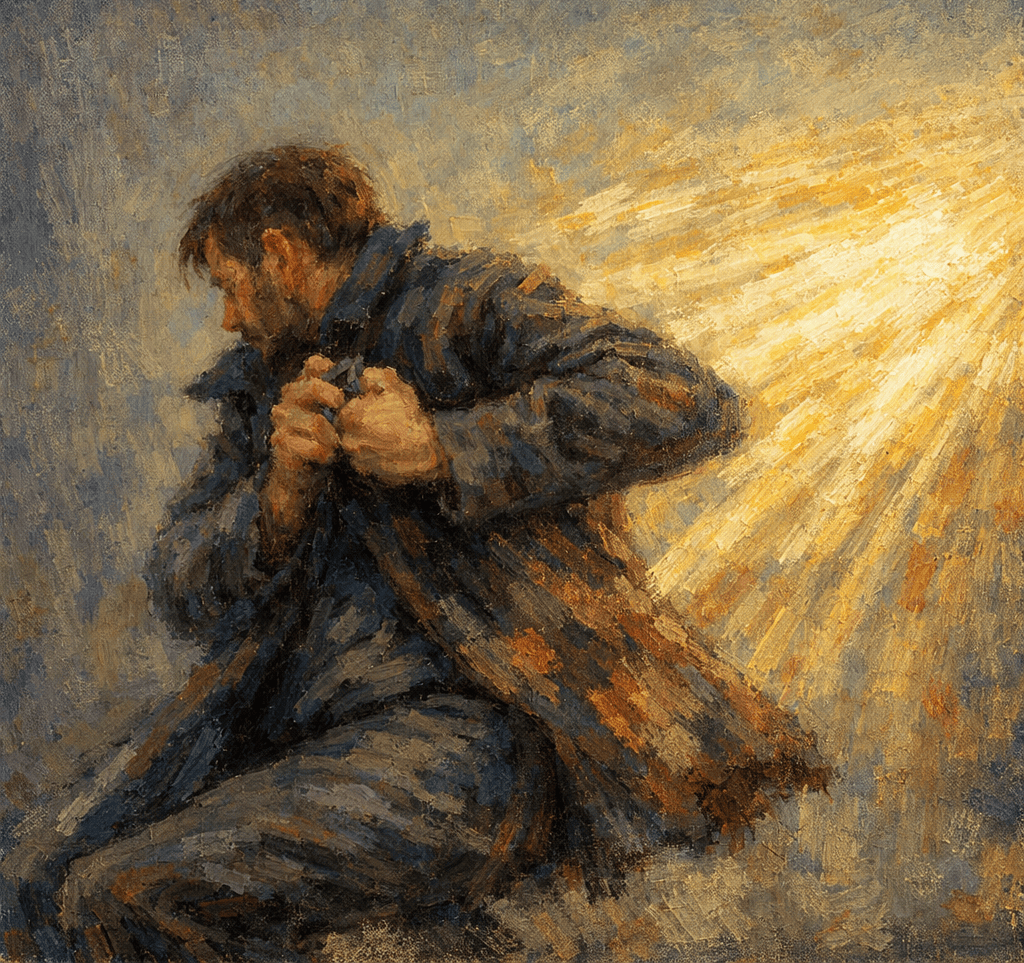

The One Thing You Hold Back

The one thing that you would hold back from God,
Is the one thing you must become willing to place upon the altar.

Scriptural Analysis- Leviticus 16:23-24

23 And Aaron shall come into the tabernacle of the congregation, and shall put off the linen garments, which he put on when he went into the holy place, and shall leave them there: 

24 And he shall wash his flesh with water in the holy place, and put on his garments, and come forth, and offer his burnt offering, and the burnt offering of the people, and make an atonement for himself, and for the people.

We had a great deal of detail for how the sin offerings were to be performed, but now just two verses describing how Aaron would then wash, change clothes, and perform the burnt offerings for both himself and the congregation, presumably just following the usual routine for that ritual.

This completes the tasks that the High Priest must perform on the Day of Atonement and provides us an excellent opportunity to look back at some of the more unique aspects in the earlier verses and what they likely represent.

The most unique part of the ritual was, of course, the selection of two goats, one to be chosen at random for the sacrifice, and one to be released as the scapegoat in the wild. This immediately brings to mind comparisons to Jesus and Barabbas, Jesus being the offering slain at the altar, Barabbas being the scapegoat set free into the wild. We are all of us that scapegoat, sinners set free because the Son of God was sacrificed instead. Even to the Ancient Israelite this symbolism applies: offerings were slain for their sins while they, themselves, were freed from condemnation.

So why, then, was the scapegoat released into the wild, and with the burden of Israel’s sins upon its head? For this we must recognize that simultaneous to the above-mentioned symbolism, the two goats also represent different aspects of the same ultimate sacrifice. Jesus is both the goat slain and the goat cast into exile. He was cast into exile when he left heaven to enter the mortal world and wear our sins on his head. He was slain for our sins upon the cross. To the Ancient Israelite, their sins were paid for by the slaughtered goat, and their evil predispositions carried away by the second goat so that they could live better.

These two goats can be seen as a symbol for the human condition. We are born as a wild goat astray in the fallen world, weighed down by our sin and shame, and it is our great mission in life to come back to the altar and let our old self be slain that we may be reborn as something new.

Here are three interpretations, I am sure that there are more. This is a very thought-provoking ritual, one that seems to be rich in meaning.

Scriptural Analysis- Leviticus 16:5, 7-9, 15-19, 25, 27-28

5 And he shall take of the congregation of the children of Israel two kids of the goats for a sin offering, and one ram for a burnt offering. 

7 And he shall take the two goats, and present them before the Lord at the door of the tabernacle of the congregation.

8 And Aaron shall cast lots upon the two goats; one lot for the Lord, and the other lot for the scapegoat.

9 And Aaron shall bring the goat upon which the Lord’s lot fell, and offer him for a sin offering.

15 Then shall he kill the goat of the sin offering, that is for the people, and bring his blood within the veil, and do with that blood as he did with the blood of the bullock, and sprinkle it upon the mercy seat, and before the mercy seat:

16 And he shall make an atonement for the holy place, because of the uncleanness of the children of Israel, and because of their transgressions in all their sins: and so shall he do for the tabernacle of the congregation, that remaineth among them in the midst of their uncleanness.

17 And there shall be no man in the tabernacle of the congregation when he goeth in to make an atonement in the holy place, until he come out, and have made an atonement for himself, and for his household, and for all the congregation of Israel.

18 And he shall go out unto the altar that is before the Lord, and make an atonement for it; and shall take of the blood of the bullock, and of the blood of the goat, and put it upon the horns of the altar round about.

19 And he shall sprinkle of the blood upon it with his finger seven times, and cleanse it, and hallow it from the uncleanness of the children of Israel.

25 And the fat of the sin offering shall he burn upon the altar.

27 And the bullock for the sin offering, and the goat for the sin offering, whose blood was brought in to make atonement in the holy place, shall one carry forth without the camp; and they shall burn in the fire their skins, and their flesh, and their dung.

28 And he that burneth them shall wash his clothes, and bathe his flesh in water, and afterward he shall come into the camp.

Yesterday we heard how Aaron would give a sin offering for himself, and sprinkle its blood upon the mercy seat, making atonement for himself, and now we hear how he would then do the same for the congregration. However, there was a most interesting wrinkle to this particular sacrifice. Instead of bringing one goat for the sin offering, two were presented. One of them was to be slain and used for the sacrifice, the other was to be set free, though banished from the community. Which goat would serve in which function came down to a game of chance, “casting lots,” leaving the outcome in the hands of God.

For the goat that was selected to be the sacrifice, Aaron followed the same procedure for his personal sin offering, killing the goat and using its blood to sprinkle the mercy seat in the most holy place of the tabernacle. We can presume that he had to enter the holy place under the same cover of incense smoke that we heard of for his personal sin offering. After the blood of both sin offerings had been sprinkled around the mercy seat, then he would use more of their blood upon the sacrificial altar.

Then the fat of the sin offerings was burned upon the altar. It does not say that the kidneys were also burned, but likely they were, consistent with the usual procedure for sin offerings. Also consistent with the usual sin offering procedure was that the rest of the animals’ remains were carried out of the camp and burned.

Aaron had now atoned for the sins of himself and all the people, but what about that goat who was to be released into the wild? We will hear about that tomorrow.

Scriptural Analysis- Leviticus 16:3-4, 6, 11-14

3 Thus shall Aaron come into the holy place: with a young bullock for a sin offering, and a ram for a burnt offering. 

4 He shall put on the holy linen coat, and he shall have the linen breeches upon his flesh, and shall be girded with a linen girdle, and with the linen mitre shall he be attired: these are holy garments; therefore shall he wash his flesh in water, and so put them on.

6 And Aaron shall offer his bullock of the sin offering, which is for himself, and make an atonement for himself, and for his house.

11 And Aaron shall bring the bullock of the sin offering, which is for himself, and shall make an atonement for himself, and for his house, and shall kill the bullock of the sin offering which is for himself:

12 And he shall take a censer full of burning coals of fire from off the altar before the Lord, and his hands full of sweet incense beaten small, and bring it within the veil:

13 And he shall put the incense upon the fire before the Lord, that the cloud of the incense may cover the mercy seat that is upon the testimony, that he die not:

14 And he shall take of the blood of the bullock, and sprinkle it with his finger upon the mercy seat eastward; and before the mercy seat shall he sprinkle of the blood with his finger seven times.

We here continue the ritual by which Aaron would enter into the most holy place of the tabernacle once every year. Personally, I find the layout of the chapter confusing, as there are two groups of sacrifices going on, Aaron making a sin and burnt offering for himself, and Aaron making a sin and burnt offering for the congregation. The verses weave back and forth between the two, and I have decided to instead reorganize the verses according to their subject. Thus, today I will cover all the verses specifically about Aaron’s sin offering, then over the next two days all of the verses about the congregation’s sin offering, and then the next day all the verses for both burnt offerings. Also, I will review the basic facts first, then consider the symbolic meanings more in depth at the end of the chapter. Hopefully I won’t just make things more confusing than they already were!

One thing that stands out immediately about this chapter is that it is describing a supremely sacred event, which required specialized ritual aspects seen nowhere else in God’s law, starting with the dual sacrifices, one set being for Aaron and the other for the congregation. Also unique is that Aaron is purifying himself in preparation for an annual visit with the Lord. Also, that a blanket atonement is being performed over the entire congregation for any sins that had been committed throughout the year. The purpose of this special event was to bring God, Aaron, and the people all into simultaneous alignment. It was the Day of Atonement.

And so, we first hear of Aaron’s sin offering, which starts off normally enough, but then in verse 14 it goes into specialized territory when Aaron uses the blood of the offering to sprinkle the mercy seat seven times. The mercy seat is, of course, the lid of the Ark of the Covenant, within the most holy place of the tabernacle. The place that was forbidden for anyone to enter except at this one time. We have heard of blood being sprinkled around the sacrificial altar for burnt and trespass offerings, and blood sprinkled on a person for the consecration offerings, but this is the first time we hear of an offering’s blood being used on the mercy seat.

But Aaron could not just enter into the most holy place. Verses 12-13 explain to us that in order to preserve his life in such a holy place, Aaron must first use coals from the altar of sacrifice to burn incense, enough to produce a cloud that would cover the mercy seat, creating a barrier between him and the direct dwelling place of the Lord. It does not explain this process entirely, but perhaps Aaron would hold the curtain open to let the incense cloud travel in first, and then proceed only when it was safe to do so.

Transcended Life

One of the great quests of this life,
Is to find something that matters more to you than life,
Something for which you would give up your life.
For if you do not,
Then you haven’t transcended life.

What Really Matters

Often, that which we value most is not what we assume. The only way to know our true priorities is to observe what we compromise at the expense of what else.

Do we keep our belief in God’s commandments quiet when those around us oppose them? Then we value society more than God.

Do we pursue early sexual gratification, even though we know it will make us unattractive to a potential spouse? Then we value pleasure more than family.

Do we ignore our neighbor asking for help loading their truck so that we can have a nice evening to ourselves? Then we value self more than community.

And through it all, we may tell ourselves that God, family, and community matter to us most, but our actions reveal the truth of the matter. They do not. Social acceptance, pleasure, and self are our true priorities. But the good news is, our priorities can be altered, we just have to make sacrifices. Choose the commandments, the abstinence, the community service, even when we do not want them. In time, the heart will change so that we do.

Scriptural Analysis- Leviticus 10:12-15

12 And Moses spake unto Aaron, and unto Eleazar and unto Ithamar, his sons that were left, Take the meat offering that remaineth of the offerings of the Lord made by fire, and eat it without leaven beside the altar: for it is most holy:

13 And ye shall eat it in the holy place, because it is thy due, and thy sons’ due, of the sacrifices of the Lord made by fire: for so I am commanded.

14 And the wave breast and heave shoulder shall ye eat in a clean place; thou, and thy sons, and thy daughters with thee: for they be thy due, and thy sons’ due, which are given out of the sacrifices of peace offerings of the children of Israel.

15 The heave shoulder and the wave breast shall they bring with the offerings made by fire of the fat, to wave it for a wave offering before the Lord; and it shall be thine, and thy sons’ with thee, by a statute for ever; as the Lord hath commanded.

Moses gave Aaron and his sons some instructions on eating their portion of the sacrifices. Some of this information we already knew, and some of it is new. First, they were told that the portion of the meat offering that fell to them was required to be eaten in the tabernacle courtyard, beside the altar. As we have already seen, the priests eating their portion was not only a privilege, but an obligation, a part of the ritual itself, and with strict guidelines as to how it could be performed.

Their portion for the wave breast and heave shoulder had a different set of instructions, though. As a reminder, the wave and heave offerings were separate from the meat offerings, first introduced to us in connection with the peace offering. The most distinctive quality we learned earlier about the wave and heave offerings were that the offeror would also eat a portion of. It thus became a shared meal between God and offeror, a symbol of unity and peace.

But that was for the common Israelite. Today’s verses seem to be continuing the initial rituals that Aaron and his sons performed for themselves. They are not offering a wave and a heave offering for another Israelite, but on their own behalf. And this was not required to be eaten within the tabernacle courtyard beside the altar, it just needed to be eaten in a clean place. And the priests did not have to eat it alone, their families, sons and daughters, could partake of it as well. This makes it even more clear that the wave and the heave offerings were a blessing in the lives of those who made it. Other offerings may have been focused on atonement or glorification of God, but this one was about being one with God and rejoicing in that, and one’s own household could take part in that same joy.

Scriptural Analysis- Leviticus 3:12-16

12 And if his offering be a goat, then he shall offer it before the Lord.

13 And he shall lay his hand upon the head of it, and kill it before the tabernacle of the congregation: and the sons of Aaron shall sprinkle the blood thereof upon the altar round about.

14 And he shall offer thereof his offering, even an offering made by fire unto the Lord; the fat that covereth the inwards, and all the fat that is upon the inwards,

15 And the two kidneys, and the fat that is upon them, which is by the flanks, and the caul above the liver, with the kidneys, it shall he take away.

16 And the priest shall burn them upon the altar: it is the food of the offering made by fire for a sweet savour: all the fat is the Lord’s.

We heard the process of offering cattle, and sheep, and now a goat. And the instructions for doing so have been essentially identical all the way through.

This sort of repetition and redundancy in the Bible is well-known and has even been the target of mockery. Why doesn’t the record just give the instructions once, and then say that it applies to all three animal types?

Perhaps it is because the sacrifices were individual, so the descriptions for them were also. There are many things that we do in life that are repetitive, yet we describe them in detail because they are also individual. When a child is born, we don’t just say, “yeah, the birth went like all the other birth stories you’ve ever heard.” No, we still share about the contractions, and the water breaking, and the drive to the hospital, and the delivery, because these moments, though common to many people, still occur to us on an individual level. And this child’s birth is not the same thing as that child’s birth. So, too, every animal that was slain at the altar was an individual process. Every time that a person has made an offering of their heart to the Lord, it is not the same thing as another person’s offering of the heart. Each of us walk a path that sounds like many others, but it is also a path that no one else has ever walked before.

SacrificeEligible oblationStepsExplanation
Peace OfferingCattle, Lamb, GoatGratitude for reconciliation
Animal is slainGiving up old life for one of unity with another
Fat burned on altarGiving up old plans, passions, and drives

Full table.