Living according to how we think God ought to have designed us
Is to live in perpetual frustration and impotence
A Foundation Built on God- Life Defined by Faith
Jesus foretold that, “Many will say to me in that day, Lord, Lord, have we not prophesied in thy name? and in thy name have cast out devils? and in thy name done many wonderful works? And then will I profess unto them, I never knew you: depart from me, ye that work iniquity,” (Matthew 7:23). This is a sobering warning to Christians everywhere that many who think they are in alignment with the Lord are actually offensive to Him.
There are multiple conceivable ways that Christians would find themselves on the left hand of the Lord. Perhaps they are hypocrites, professing Christ’s name but still harboring secret sin. Perhaps they treat Christianity as a political cudgel, using it to condemn those that they have no right to. Perhaps they are social Christians only, going to church and saying prayers, but more dedicated to the false churches of social trends.
I believe there are many in that last category. People that treat Christianity as a garnishment to the rest of their life, not the foundation and basis of the entire thing. It is, frankly, a way of being that I continually struggle with also. Most especially I lapse in my prayers because I am just too preoccupied with the distractions of the world, too concerned what I might miss out on if I make time “just” for connecting to God.
Obviously, I do perform a scriptural/spiritual study each weekday, and I do believe that that has helped a good deal in keeping God elevated in my mind, but I do crave more. With this short study I am going to try and identify for myself how I might do better in this aspect of daily prayer.
The Mote in the Other Eye- Surrendering the Outcome
Distrust of Others)
In my previous post I talked about the popular trend of pinning all of the world’s problems on someone else and never taking accountability for one’s own side. I also admitted how I, too, have fallen into that trend many times, and how my conscience and Jesus’s words have always been there to convict me it is wrong to stay there.
At the end of the last post, I mentioned that when I recognize my folly and tell myself to focus on the beam in my own eye, there is a part of me that is worried about what might happen if I do so. That fear is based on a profound distrust of the “other side.” If I’m not there to keep them in check, who will be?
This is because our culture’s “us vs them” mentality leads us to shore up our own side even as we’re tearing down the other. In order to strengthen our arguments, we make ourselves blind to our own failings, excusing them as inaccurate or unimportant. So, now if I focus my energies on correcting myself instead, then that’s one less voice keeping the other side honest. Imagine if everyone on my side turned to self-introspection. We might take care of all the problems over here, but the other side’s problems will abound unfettered.
The Need for Surrender)
Well…yes, there is that potential outcome. There are other, more optimistic outcomes, but there is no guarantee of them. I do trust that good will ultimately prevail, but there is the possibility that if I focus on improving myself, the other side will run rampant in the meantime, and things will get worse for a while.
What this means, then, is that focusing on the beam in my own eye is not only an exercise in humility, but also a leap of faith. It means doing what is right in my own sphere with the hope, not the guarantee, that things will work out for the best because of it.
For this reason, I think an excellent companion to Jesus’s words on removing the beam from our own eyes is his later injunction that “if anyone would come after me, let him deny himself and take up his cross and follow me,” Matthew 16:24. Once again, he’s talking about picking up our own cross, denying our own self. And his use of the word “cross” makes clear that this is something hard, painful, and even dangerous.
Let’s take a moment to take these abstract concepts and personalize them. Just what would you call “your side,” and what would you call the “other side?” Conservatives? Liberals? The Patriarchy? Feminists? White supremacists? DEI peddlers? Colonizers? Immigrants? Whichever tribe you belong to, I’m sure that if you were honest there’s some house cleaning that is needed over there. Would you be willing to take up your cross and focus on the beam in your own eye? Would you be willing to stop hammering the other side as you set your gaze inward? It’s a lot to ask…but it is what is asked.
The Mote in the Other Eye- The Problem of Others
Who’s to Blame)
Everyone knows someone who is making the world worse. Everyone can identify popular ideals and propaganda that are harming society. Everyone knows who is to blame for things being the way that they are right now. Everyone knows how they’d like to change the world if they could. And people certainly make their opinions known. My news feeds and social media threads are constantly inundated with criticisms and accusations of “them.”
And I cannot claim to have never taken part in this pastime either. I could speak at great length about who I see as responsible for the greatest problems in the world today, and the deep resentment that I’ve harbored towards them.
But part of me has always felt guilty when my mind goes to that place. Part of me knows that at some point I crossed the line from “judging righteous judgment” to full-on condemning. Part of me knows that my desire to make everyone do what is right is not actually from God. It’s a sneaky misstep, because it’s oriented towards trying to establish ‘right,’ but its method of control is evil.
Focus Inward)
When I consider all of this, I am reminded of the words of Jesus: “How wilt thou say to thy brother, Let me pull out the mote out of thine eye; and, behold, a beam is in thine own eye?” Matthew 7:4. When I hear this, I realize that I’m not just wrong for letting my heart be filled with condemnation for another, but also because it has distracted me from focusing on the problems of my own side.
Of course, Jesus also suggested that after one had cleaned his own eye then he would see clearly enough to clean another’s. Honestly, I can’t speak to that, because I genuinely don’t feel that I am there yet. I suspect there are few who are. My focus for now is still on the first half of Jesus’s words.
The Reason for Reluctance)
I also want to make clear nowhere in Jesus’s injunction to focus on our own eye does he suggest that the other side doesn’t have problems. Even with my flawed judgment, I probably have identified some truly valid issues over on the other side. The idea that “they” need to change isn’t wrong, then, what’s wrong is thinking that I’m going to be the one to make them do it. I don’t have to stop my natural recognition of evil in the world, or condone any of it, but Christ is pointing out that everything would go much smoother if I acknowledged my own failings and worked on changing me, while “they” worked on changing “them.”
But what if I do work on me, and “they” don’t work on “them.” There is a real anxiety in this that manifests each time I try to pull myself back from policing the entire world. Tomorrow I will speak more at length on this fear, and how it can be remedied.
Remembering Our Own Goodness
Sometimes we pine in the wilderness of our sin and shame, crying for some act of God to show us that we are still loved, even in spite of our wickedness. And, in some cases, maybe that really is what we need. But sometimes, in those situations, what we really need is to know that we can still love, even in spite of our wickedness.
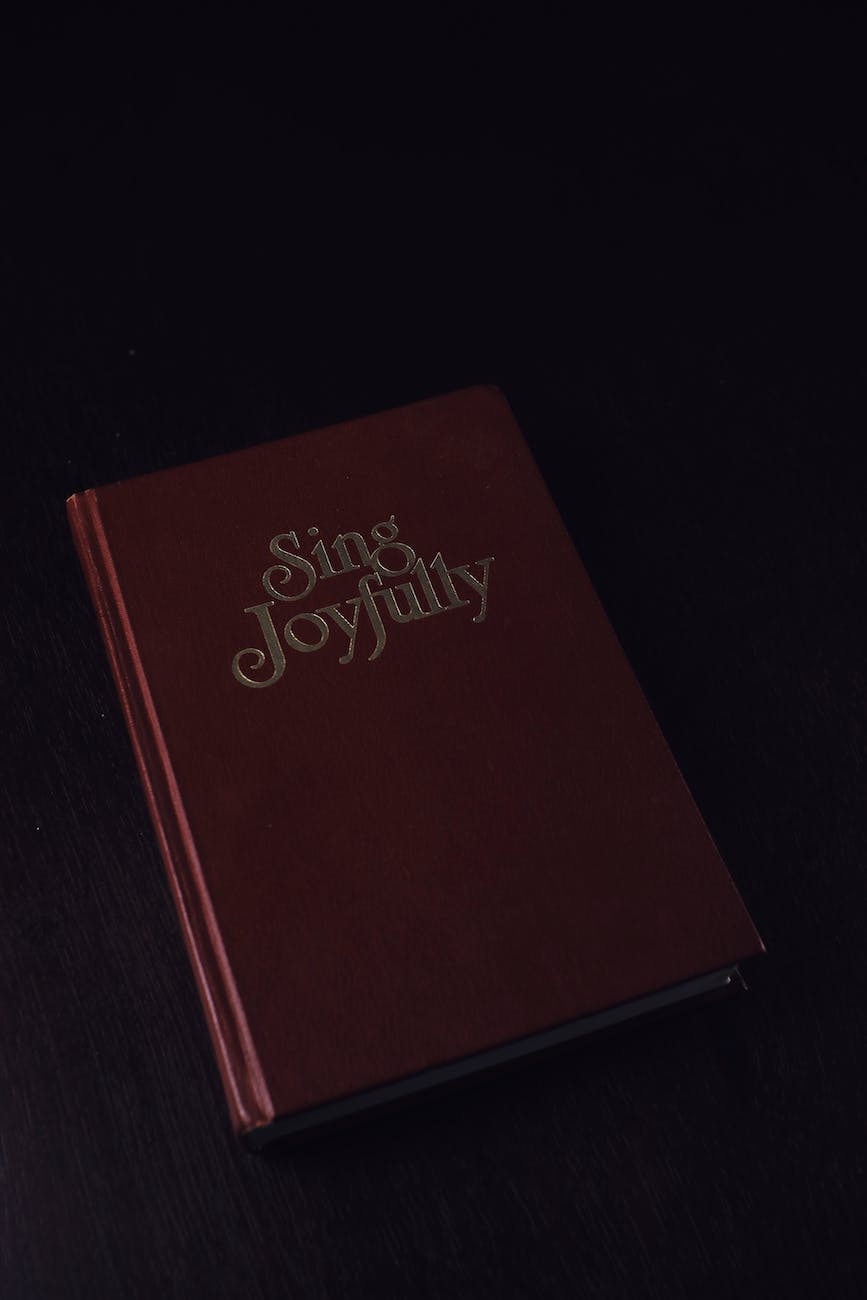
I discovered this for myself recently, when I felt shut in a small room where I could not feel God’s light, even though all my past experiences told me that He still cared for and wanted me. As I prayed for Him to come and find me, I felt instead the urge to start singing. I was guided to a hymn I had never heard before, My Jesus, I Love Thee, and as I sang my redeclaration of love to my savior I felt my cold heart come back to life.
Knowing that God loves us is good, and is the first great testimony that we all require. But after that, the next great testimony is to know that there is an eternal goodness within us that we cannot kill. We need to remember our own spark of divinity, and have faith in ourselves to be better again. We need to learn, as I did that dark day turned bright, that even in the depths of our greatest shame we still have the ability to exclaim, “if ever I loved thee, my Jesus, ’tis now.”
Called to Wait

I have been guilty of being frustrated when God does not immediately answer the good desires of my heart. If I come to Him in faith, surrender my situation to His care, and believe in His power to do what is right, then why do I not receive the desired results?
And to be clear, I don’t mean going to God and asking Him to give me fame or fortune. I mean asking Him to change my heart, to cure my selfishness and addiction, to mend my brokenness so that I can be a better person. These are clearly good things, ones that I genuinely feel are in alignment with God’s will for me, so why wouldn’t the desire to change be answered with transformation?
Recently, though, I felt this impatience rebuked as I considered the precedent that is set for us in the word of God. I do not feel the scriptures justifies my opinion that God would immediately deliver every good thing that is sought for. Rather, the Bible is full of examples of waiting, sometimes for very long periods of time, before the realization of promised blessings are fulfilled.
Think of Abraham being promised that he would be the father of a great nation, but that not coming to pass for hundreds of years. Think of Jacob having to toil for seven years to marry the woman of his dreams, only to be deceived and committing to serving another seven years for her. Think of Joseph waiting long periods as a slave in Potiphar’s house and then in prison, even though he had done no wrong. Think of Moses trying to help the Israelites, failing, and then living decades in Midian before being called to try again. Think of the Israelites, freed from Egypt, but waiting in the wilderness 40 years before they would receive the Promised Land. Think of Job being left to wallow in his afflictions for a full measure before he was restored. Finally, think of those that Christ healed, and how many of them had been held by their afflictions for years before their deliverance. For the woman with the issue of blood it was twelve years, for the man at the pool of Bethesda it was thirty-eight!
In some of these examples there was a period of waiting because the people were not ready, such as the Israelites wandering in the wilderness. In others, however, there was no personal fault, such as with Joseph, it was simply not yet the right time for his deliverance. So why could not either of these cases be the same with me? Maybe I’m not ready for my deliverance, but if I trust the Lord to prepare me eventually I will be. Or maybe I am ready, but it is not the right time according to the Lord’s wisdom, so I should rest in Him and let the better things come when they may. In either case, the fact that I have not yet been healed is not, in-and-of-itself evidence that something is going wrong. It may still be going exactly right. I might be rightly waiting in the wilderness, just where I’m supposed to be.
Scriptural Analysis- Exodus 17:8-9
8 Then came Amalek, and fought with Israel in Rephidim.

9 And Moses said unto Joshua, Choose us out men, and go out, fight with Amalek: to morrow I will stand on the top of the hill with the rod of God in mine hand.
The account makes a sudden and dramatic shift, telling us now of an army of Amalekites that came to fight with Israel, even while they were still in the wilderness. As we have already seen, Israel’s sojourn in the wilderness was a time for them to prepare for life in the Promised Land. They had already had several lessons on how to rely upon the Lord and obey His word exactly, and now they were rehearsing the art of war, something that they would become very familiar with when they strove against the Lord’s enemies in the land of Canaan, including the Amalekites.
This is not the first that we have heard of the Amalekites, either. We heard of their forebearer back in Genesis 36:16, Amalek, who was the grandson of Esau, who was the brother of Jacob, who was himself the forebearer of the Israelites. As noted at the time, many of the nations that Israel fought in Canaan were people that branched off from the covenant bloodline. These fallen-away nations were a perfect foil to the Israelites, because they were similar, with a shared root, but had been twisted in pagan ways. They represent the beast that is too familiar, the evil that is too close for comfort, the worst version of our own selves.
The coming fight with the Amalekites also foreshadows Israel’s future in another way. Moses chose Joshua to lead God’s people in this battle, just as he would be chosen to preside over all of Israel after Moses’s death. Moses explains that he will help Israel in their fight, but from afar, while Joshua would be down in the ranks with them. So, too, Moses’s law would continue to aid and guide Israel after his passing, while Joshua would continue in the ranks.
Appreciating the Worst Self

It is common to despise our “worst self.” This is the self that is lazy, selfish, overly-indulgent, and perverse. That self always gets us into the worst trouble, imitates the behaviors we most resent in others, and frustrates all of our plans for self-improvement. I have listened to many addicts share their hatred for their “worst self,” going so far as to wishing that they could kill him!
But the thought has occurred to me that my “worst self” has also done the bravest and noblest things that I have ever done. It was while I was firmly in the gutter of shame and depression that I decided to ask for help from my addictions. It was while I was a sinner that I made the decision to repent. It was while God seemed farthest from me that I tried to follow Him most.
The “worst self” has its downsides, but when transformation does occur, it is necessarily that self who decides to make it happen. The “worst self” chooses to let itself die so that the “whole self” may emerge, and we owe it a great debt of gratitude for repeatedly making that sacrifice.
Cyclical Prejudice
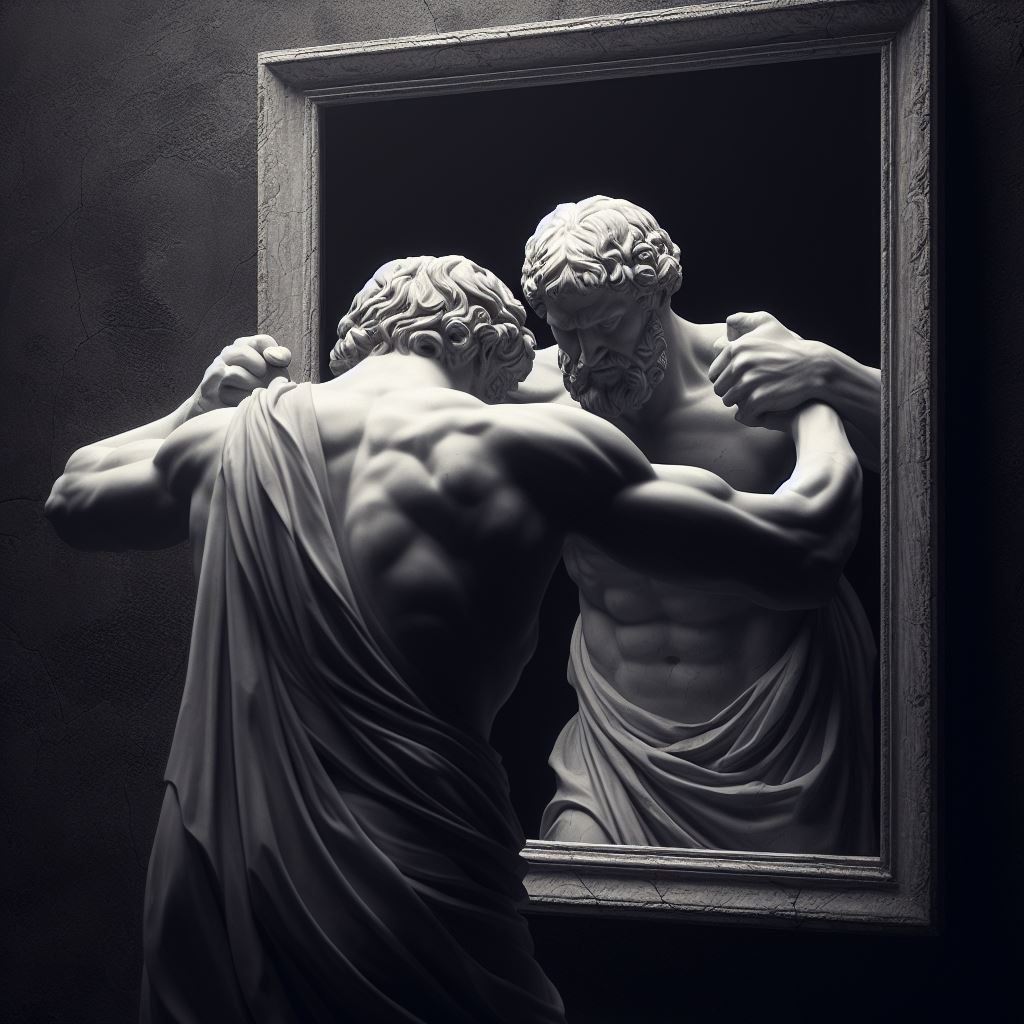
Pray that no one else gets hold of your prejudices.
They might wield them against you.
Reasons for Disbelief- A Confused Hierarchy
Different Hierarchies)
I was debating with another person about a social issue, and what the correct, moral stance on it should be. As we explained our disagreements I started to recognize that it wasn’t that we had different morals in general, but that we held them in a different hierarchy. I told the other person, “The difference between you and me is that I believe that the truth matters more than other peoples’ feelings, and you believe that peoples’ feelings matter more than the truth.” And the person agreed.
Which raises the question, “is there a correct hierarchy?” Is it appropriate to set some principles as superior to others, or should they all be equal to one another? Or, if I choose one principle over another and you invert the order are both perspectives equally right?
The answer is no. There really is a correct hierarchy and it really does matter. Remember how the Pharisees tried to trip up Jesus on this very point? “Master, which is the great commandment in the law?” they asked, and he had a clear and definitive response for them: “Thou shalt love the Lord thy God with all thy heart, and with all thy soul, and with all thy mind. This is the first and great commandment. And the second is like unto it, Thou shalt love thy neighbour as thyself.” (Matthew 22:36-39).
When it comes to moral questions, Jesus doesn’t leave us any doubt. Loving God comes first—and surely that includes loving his laws—and then comes loving our neighbors. We may do everything to support and please our neighbor up to the point of offending God, but then our loyalty to Him must surpass our loyalty to the neighbor.
The List)
One way to represent our hierarchy is to put it in terms of the different authorities in our lives. Whose voice carries the most weight when we make our decisions? I’ve examined myself, and I find that I try to follow this hierarchy of authority:
- Divine revelation
- Scripture
- Personal feelings
- The opinions of others
At the bottom is the opinions of others. I grow and learn from hearing outside perspectives. Other peoples’ insights can reveal truths to me that I would not find on my own. However, I know that there are false teachers also, so the things I take from others has to first be filtered by each of the higher standards.
Next comes my personal feelings. Not the feelings of what I want, but what I feel in my gut is right. These generally lead me rightly, but they are at times susceptible to immaturity and compromised motives, so they must also be subject to higher authorities.
Scripture comes next, which is the divine word of God. His voice must trump all earthly babble. I actually had an experience just recently where I was hearing an opinion from others that started to turn my personal feelings; I was becoming converted to that message, but then I reminded myself of the passage in the New Testament that stood as a clear rebuke to that line of thinking. I conformed myself to the scripture’s teaching, because I simply did not have the right to override it.
Finally, there is Divine Revelation. I believe the scriptures to have originated from the pure word of God, but the reality is that thousands of years and numerous translations stand between the original utterance and the words on the page today. Some of those translations disagree with one another, and some of them are difficult to understand correctly with our lack of ancient context. I therefore have as my final authority the revelation of God given to my mind and heart, purifying and brightening that which might have become muddled and faded.
Worship of Man)
The most concerning shift that I see in society is the progressive elevation of either “Personal feelings” or the “Opinions of others” above all other authorities. Many of our social divides are based around this transformation. Personal opinions and group interests take precedent over the divine words of God, and utter confusion follows. Not only are God’s morals trampled under foot, but everyone starts to fracture and divide from one another. Loyalty to God, Country, and Community are superseded by Loyalty to the Self or Loyalty to the Mob.
So what is Reason for Disbelief #2? A hierarchy authority that places anything above God. One simply cannot believe in a God when their hierarchy forbids compliance with Him.
 Spiritual Wanderings